 Indietro
Plant Diversity I: How Plants Colonized Land
Guida di studio - Note intelligenti
 Appunti personalizzati basati sui tuoi materiali, ampliati con definizioni chiave, esempi e contesto.
Plant Diversity I: How Plants Colonized Land
Introduction to Plant Evolution
Plants are essential to terrestrial ecosystems, providing oxygen, food, and habitats for other organisms. The colonization of land by plants was a major evolutionary event, leading to the vast diversity of plant life observed today.
Major Developments in Plant Evolution
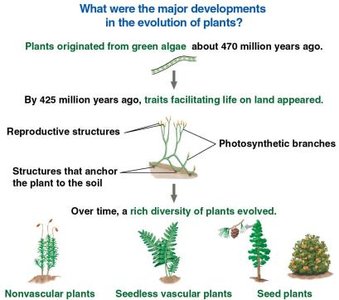
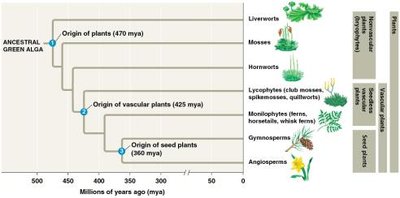
Origin from Green Algae: Plants originated from green algae about 470 million years ago.
Adaptations for Land: By 425 million years ago, plants developed traits for terrestrial life, such as reproductive structures and anchoring organs.
Diversification: Over time, plants diversified into nonvascular plants, seedless vascular plants, and seed plants.
Plant Ancestry and Algal Relatives
Evidence of Algal Ancestry
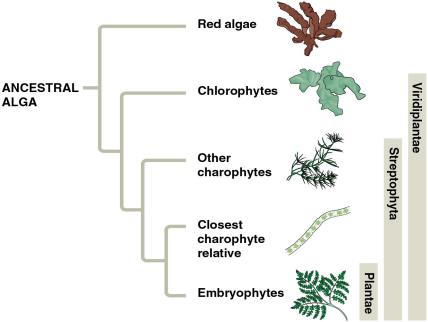
Plants share several key traits with green algae, particularly the charophytes, their closest relatives. Both groups are multicellular, eukaryotic, and photosynthetic autotrophs with cellulose in their cell walls and chloroplasts containing chlorophyll a and b.
Unique Shared Traits with Charophytes:
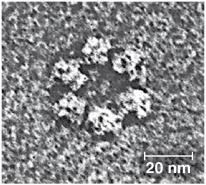
Cellulose-synthesizing proteins arranged in rings
Similar structure of flagellated sperm
Genetic similarities in nuclear, chloroplast, and mitochondrial DNA
Plant Phylogeny
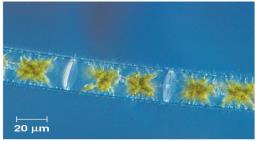
Recent genetic analyses place charophytes in the clade Zygnematophyceae as the closest living relatives of plants. Plants are not descended from modern charophytes but share a common ancestor with them.
Adaptations for Life on Land
Key Adaptations
Sporopollenin: A durable polymer that prevents zygotes from drying out, found in both charophytes and plant spore walls.
Benefits of Terrestrial Life: Unfiltered sunlight, abundant CO2, and nutrient-rich soil.
Challenges: Scarcity of water and lack of structural support.
Derived Traits of Plants (Embryophytes)
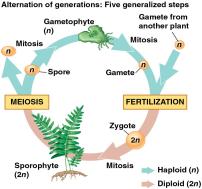
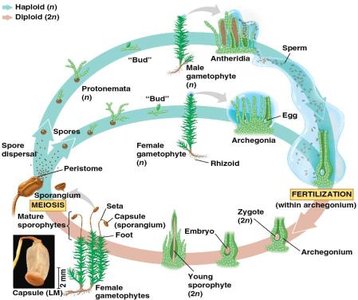
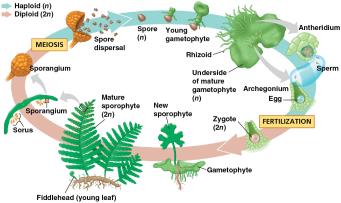
Alternation of Generations: A life cycle with multicellular haploid (gametophyte) and diploid (sporophyte) stages.
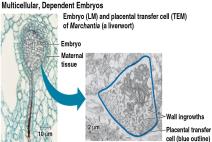
Multicellular, Dependent Embryos: Embryos are retained within female gametophytes and nourished by placental transfer cells.
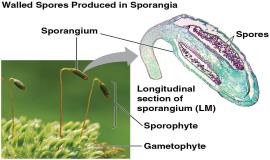
Walled Spores in Sporangia: Spores are produced in multicellular organs (sporangia) and protected by sporopollenin.
Apical Meristems: Regions of cell division at the tips of roots and shoots, enabling growth and resource acquisition.
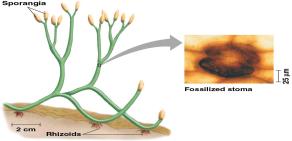
Additional Traits: Cuticle (waxy covering to reduce water loss) and stomata (pores for gas exchange).
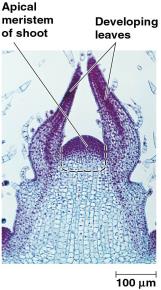
Origin and Diversification of Plants
Fossil Evidence
Plant spores first appear in the fossil record about 470 million years ago.
Fossilized spores and sporophyte tissue have been found in rocks dating back 450 million years.
Cooksonia sporangium fossils date to 425 million years ago, representing early vascular plants.
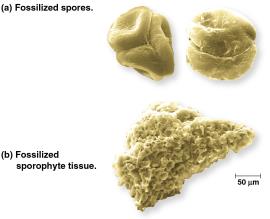
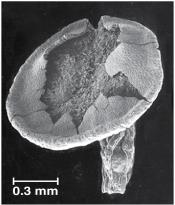
Classification of Extant Plants
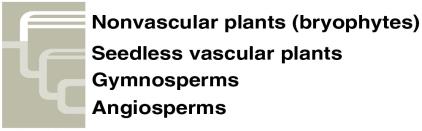
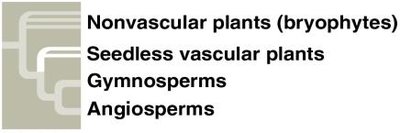
Plants are classified into ten phyla, grouped as nonvascular plants (bryophytes), seedless vascular plants, and seed plants (gymnosperms and angiosperms).
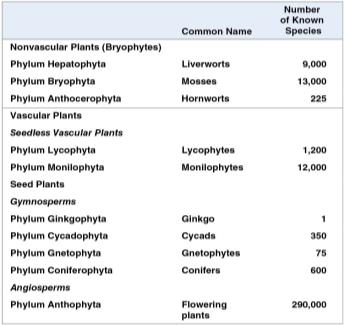
Nonvascular Plants (Bryophytes)
Characteristics and Life Cycle
Bryophytes include liverworts, mosses, and hornworts.
Life cycle is dominated by the haploid gametophyte stage.
Sporophytes are smaller and dependent on gametophytes for nutrition.
Rhizoids anchor gametophytes but do not absorb water or minerals.
Sexual reproduction requires water for sperm motility; asexual reproduction occurs via brood bodies.
Bryophyte Diversity
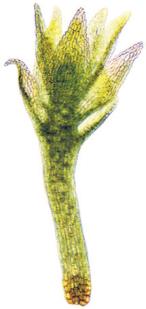
Liverworts (Phylum Hepatophyta): Gametophytes may be thalloid or leafy; some have stalked gametangia.
Hornworts (Phylum Anthocerophyta): Long, tapered sporophytes; form symbioses with nitrogen-fixing bacteria.
Mosses (Phylum Bryophyta): Range in size; sporophytes are visible and photosynthetic when young.
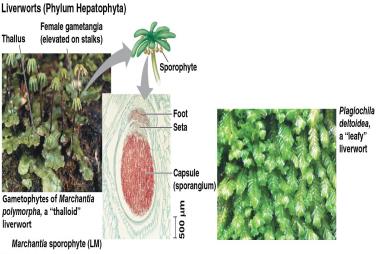
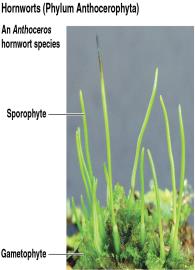
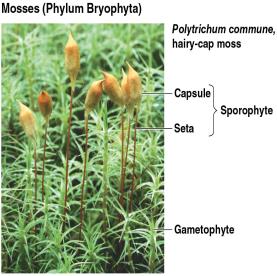
Ecological and Economic Importance of Mosses
Mosses inhabit diverse environments and help retain nitrogen in soils.
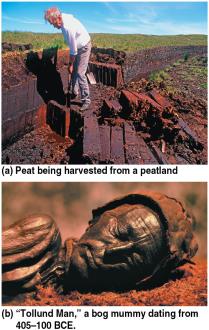
Sphagnum (peat moss): Forms peat, used as fuel and for soil conditioning; peatlands store large amounts of carbon.
Overharvesting and climate change threaten peatlands, potentially releasing stored CO2.
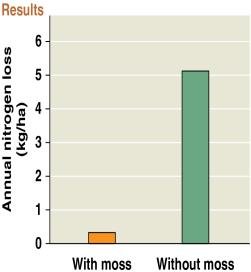
Seedless Vascular Plants
Origins and Traits
First appeared about 425 million years ago; vascular tissue enabled greater height and complexity.
Life cycle dominated by the sporophyte stage, which is larger and more complex than the gametophyte.
Vascular tissue includes xylem (water and minerals, lignified) and phloem (organic nutrients).
Roots anchor plants and absorb water/nutrients; leaves increase photosynthetic surface area.
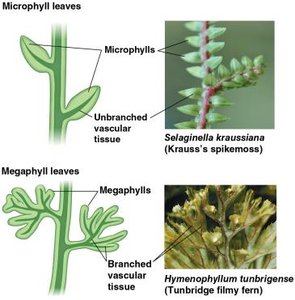
Leaves are classified as microphylls (single vein) or megaphylls (branched veins).
Sporophylls and Spore Variation
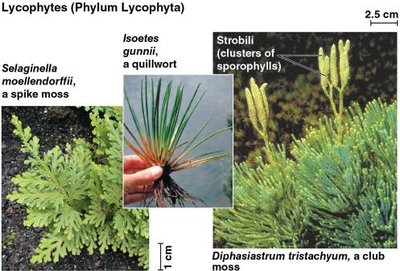
Sporophylls: Modified leaves bearing sporangia; sori (ferns), strobili (lycophytes/gymnosperms), carpels/stamens (angiosperms).
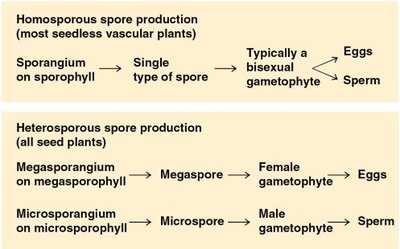
Homosporous plants: Produce one type of spore, usually forming bisexual gametophytes.
Heterosporous plants: Produce megaspores (female gametophytes) and microspores (male gametophytes).
Classification and Diversity of Seedless Vascular Plants
Phylum Lycophyta: Club mosses, spike mosses, quillworts; some are homosporous, others heterosporous.
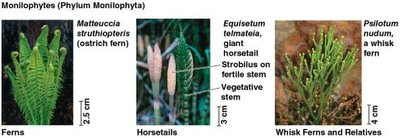
Phylum Monilophyta: Ferns, horsetails, whisk ferns; ferns are the most diverse group.
Significance of Seedless Vascular Plants
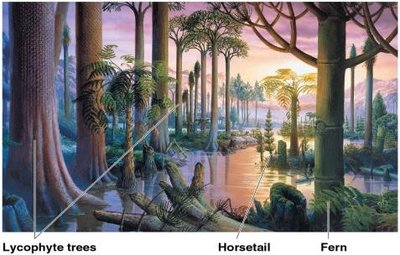
Formed extensive forests during the Devonian and Carboniferous periods, contributing to global cooling by reducing atmospheric CO2.
Peat from these forests eventually formed coal deposits, a major energy resource.
Key Terms and Concepts
Alternation of Generations: Life cycle alternating between multicellular haploid gametophyte and diploid sporophyte stages.
Sporophyte vs. Gametophyte: Sporophyte is diploid (2n), produces spores by meiosis; gametophyte is haploid (n), produces gametes by mitosis.
Microphyll vs. Megaphyll: Microphylls have a single vein; megaphylls have branched veins.
Homosporous vs. Heterosporous: Homosporous plants produce one spore type; heterosporous plants produce two (megaspores and microspores).
Megasporangium: Structure producing megaspores (female gametophytes).
Microsporangium: Structure producing microspores (male gametophytes).
Term | Definition |
|---|---|
Microphyll | Small leaf with a single, unbranched vein |
Megaphyll | Larger leaf with a branched vascular system |
Homosporous | Produces one type of spore |
Heterosporous | Produces two types of spores: megaspores and microspores |
Megasporangium | Produces megaspores (female gametophytes) |
Microsporangium | Produces microspores (male gametophytes) |
Summary Table: Major Plant Groups
Group | Key Features | Examples |
|---|---|---|
Nonvascular plants (Bryophytes) | No vascular tissue, dominant gametophyte | Mosses, liverworts, hornworts |
Seedless vascular plants | Vascular tissue, dominant sporophyte, no seeds | Ferns, horsetails, club mosses |
Gymnosperms | Vascular tissue, seeds not enclosed in fruit | Conifers, cycads, ginkgo |
Angiosperms | Vascular tissue, seeds enclosed in fruit (flowers) | Flowering plants |
