 Indietro
Plant Diversity I: How Plants Colonized Land
Guida di studio - Note intelligenti
 Appunti personalizzati basati sui tuoi materiali, ampliati con definizioni chiave, esempi e contesto.
Introduction to Plant Diversity
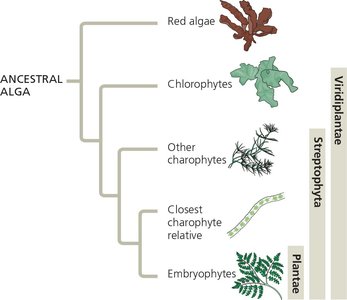
Plants are a diverse group of organisms that have adapted to life on land through a series of evolutionary innovations. This section explores the major adaptations that allowed plants to colonize terrestrial environments, the classification of early land plants, and the life cycles that distinguish them from their algal ancestors.
Major Adaptations of Land Plants
Alternation of Generations: All land plants exhibit a life cycle that alternates between two multicellular generations: the haploid gametophyte (1N) and the diploid sporophyte (2N). This adaptation is found in some algae but not in their closest relatives, the charophytes.
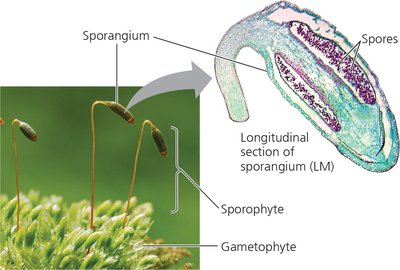
Walled Spores Produced in Sporangia: The sporophyte generation produces spores within multicellular organs called sporangia. Spores are protected by tough walls containing sporopollenin, which helps them survive harsh terrestrial conditions.
Apical Meristems: Plants grow from localized regions of cell division at the tips of roots and shoots, known as apical meristems. These regions allow for continuous growth and increased exposure to resources such as sunlight and water.
Alternation of Generations
The alternation of generations is a defining feature of the plant life cycle. It involves two distinct multicellular stages:
Gametophyte: The haploid (1N) stage that produces gametes (sperm and eggs) by mitosis.
Sporophyte: The diploid (2N) stage that produces haploid spores by meiosis.
This cycle ensures genetic diversity and adaptation to terrestrial environments.
Quick Review: Mitosis vs. Meiosis
Mitosis: Nuclear division resulting in daughter cells with the same number of chromosome sets as the parent cell. Both haploid and diploid cells can undergo mitosis.
Meiosis: Cell division that reduces the chromosome number by half, producing haploid cells from diploid cells. Only diploid cells can undergo meiosis.
Key Equations:
Mitosis: or
Meiosis:
Walled Spores Produced in Sporangia
Sporophytes produce spores in specialized organs called sporangia. Within the sporangium, diploid cells called sporocytes undergo meiosis to generate haploid spores. These spores can survive harsh conditions due to their protective walls.
Apical Meristem
Apical meristems are regions at the tips of roots and shoots where cells continuously divide, allowing plants to grow throughout their lives. This adaptation increases the plant's ability to access sunlight (shoots) and water/nutrients (roots).
Mosses and Nonvascular Plants (Bryophytes)
Bryophyte Diversity and Characteristics
Bryophytes are small, nonwoody plants that lack vascular tissue. They are represented by three phyla:
Phylum Hepatophyta: Liverworts
Phylum Bryophyta: Mosses
Phylum Anthocerophyta: Hornworts
Mosses are the group most closely related to vascular plants. In bryophytes, the gametophyte is the dominant, longer-living generation, while the sporophyte is smaller and dependent on the gametophyte.
Structure and Life Cycle of Mosses
Gametophyte Dominance: The gametophyte is larger and persists longer than the sporophyte.
Lack of Vascular Tissue: Bryophytes do not have xylem or phloem, limiting their size and ability to transport water and nutrients.
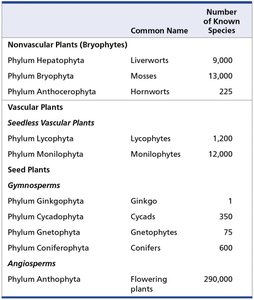
Key Terms: Protonemata, rhizoid, antheridia, archegonia, zygote, seta, capsule, sporangium.


Moss Life Cycle
The moss life cycle illustrates alternation of generations:
A haploid spore germinates into a protonema, which develops into a gametophyte.
Mature gametophytes produce flagellated sperm in antheridia and eggs in archegonia.
Sperm swim through water to fertilize the egg, forming a diploid zygote.
The zygote develops into a sporophyte, which remains attached to the gametophyte and produces spores in the capsule (sporangium).
Examples of Bryophytes
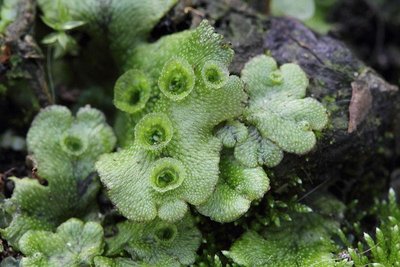
Liverworts (Phylum Hepatophyta): Named for their liver-shaped appearance. "Hepato" means liver.
Hornworts (Phylum Anthocerophyta): Named for their horn-like sporophytes. "Ceras" means horn in Greek.
Seedless Vascular Plants
Introduction to Seedless Vascular Plants
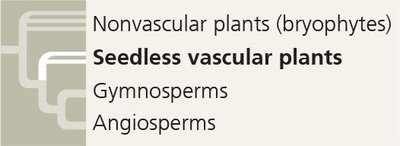
Seedless vascular plants, such as ferns, were the first plants to grow tall due to the evolution of vascular tissues. These plants are characterized by a dominant sporophyte generation, well-developed roots and leaves, and the presence of xylem and phloem.
Vascular Tissue: Xylem and Phloem
Xylem: Conducts water and minerals from roots to the rest of the plant. Contains dead cells called tracheids.
Phloem: Transports sugars, amino acids, and other organic products. Composed of living cells.
Evolutionary Advantage: Vascular tissue allows plants to grow taller and compete more effectively for sunlight.
Classification of Seedless Vascular Plants
Phylum Lycophyta: Includes club mosses, spike mosses, and quillworts. Club mosses are homosporous, while quillworts and spike mosses are heterosporous.
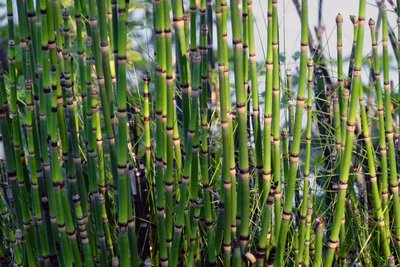
Phylum Monilophyta: Includes ferns, horsetails, and whisk ferns. Many grow on tropical plants as substrates, on forest floors, or even underground. Club-shaped cones called strobili are common reproductive structures.
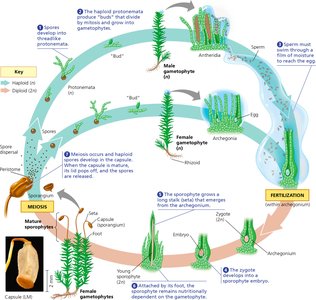
Summary Table: Major Plant Groups
Group | Common Name | Number of Known Species |
|---|---|---|
Phylum Hepatophyta | Liverworts | 9,000 |
Phylum Bryophyta | Mosses | 13,000 |
Phylum Anthocerophyta | Hornworts | 225 |
Phylum Lycophyta | Lycophytes | 1,200 |
Phylum Monilophyta | Monilophytes | 12,000 |
Phylum Ginkgophyta | Ginkgo | 1 |
Phylum Cycadophyta | Cycads | 350 |
Phylum Gnetophyta | Gnetophytes | 75 |
Phylum Coniferophyta | Conifers | 600 |
Phylum Anthophyta | Flowering plants | 290,000 |
Key Terms and Concepts
Protonemata: Early, threadlike stage of the moss gametophyte.
Rhizoid: Root-like structure that anchors bryophytes but does not conduct water or nutrients.
Antheridia: Male gametangia that produce sperm.
Archegonia: Female gametangia that produce eggs.
Zygote: Diploid cell formed by fertilization of egg and sperm.
Seta: Stalk supporting the capsule in moss sporophytes.
Capsule: Sporangium of mosses where spores are produced.
Sporangium: Structure in which spores are formed.
Conclusion
The colonization of land by plants was a pivotal event in Earth's history, made possible by key adaptations such as alternation of generations, walled spores, and apical meristems. Bryophytes represent the earliest lineages of land plants, while seedless vascular plants mark the evolution of vascular tissues and increased complexity. Understanding these groups provides a foundation for studying the diversity and evolution of all land plants.
