Indietro
Plant Evolution, Diversity, and Behavior: Study Notes for General Biology
Guida di studio - Note intelligenti
 Appunti personalizzati basati sui tuoi materiali, ampliati con definizioni chiave, esempi e contesto.
Plant Evolution and Major Developments
Origin and Diversification of Plants
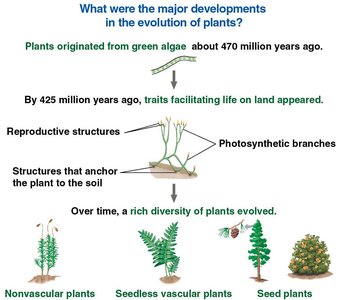
Plants evolved from green algae and began colonizing land approximately 470 million years ago. Over time, plants developed traits that facilitated terrestrial life, such as reproductive structures and anchoring mechanisms. This evolutionary process led to a rich diversity of plant forms, including nonvascular plants, seedless vascular plants, and seed plants.
Key Point 1: Plants originated from green algae, with fossil evidence dating back 470 million years.
Key Point 2: Major developments include reproductive structures, photosynthetic branches, and anchoring tissues.
Example: The transition from aquatic algae to land plants required adaptations for water retention and structural support.
Phylogenetic Relationships
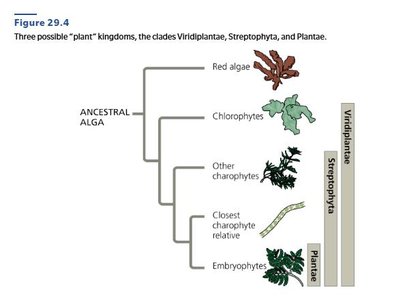
The evolutionary relationships among plant groups are illustrated by phylogenetic trees, showing the divergence from ancestral green algae to modern plant clades.
Key Point 1: Three major clades: Viridiplantae, Streptophyta, and Plantae.
Key Point 2: Embryophytes (land plants) are closely related to charophytes.
Derived Traits of Plants
Alternation of Generations
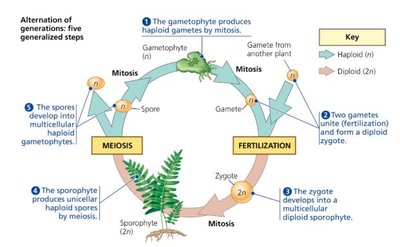
Most land plants exhibit alternation of generations, a life cycle involving both haploid (gametophyte) and diploid (sporophyte) stages.
Key Point 1: Gametophytes produce gametes by mitosis; sporophytes produce spores by meiosis.
Key Point 2: Fertilization produces a diploid zygote, which develops into a sporophyte.
Example: Ferns and mosses display clear alternation of generations.
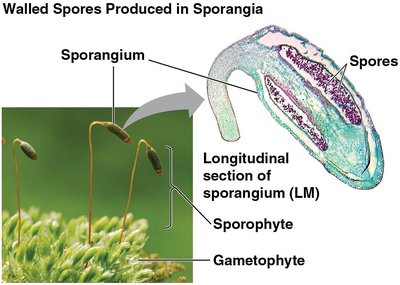
Walled Spores Produced in Sporangia
Plant spores are produced in specialized structures called sporangia, and their walls contain sporopollenin, which provides protection against harsh environments.
Key Point 1: Sporangia are found in the sporophyte generation.
Key Point 2: Walled spores are a distinguishing feature of land plants.
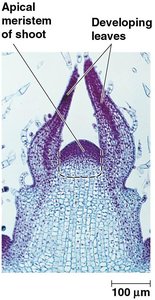
Apical Meristems
Apical meristems are regions of cell division at the tips of roots and shoots, enabling plants to grow and adapt to their environment.
Key Point 1: Apical meristems allow for continuous growth and organ formation.
Key Point 2: They are essential for plant development and regeneration.
Fossil Evidence and Plant Classification
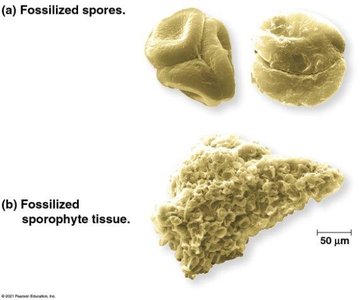
Fossilized Spores and Tissue
Fossilized spores and sporophyte tissue provide evidence for the early colonization of land by plants.
Key Point 1: Fossilized spores date back to 470 million years ago.
Key Point 2: Chemical and structural differences distinguish plant spores from those of algae and fungi.
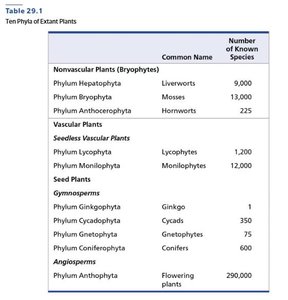
Classification of Extant Plants
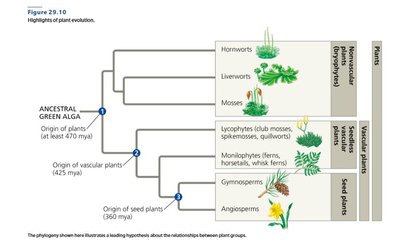
Plants are classified into ten phyla, including nonvascular plants (bryophytes), seedless vascular plants, and seed plants (gymnosperms and angiosperms).
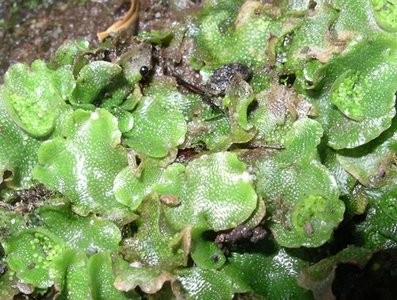
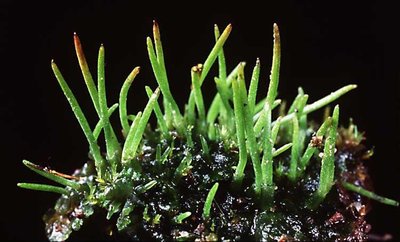
Key Point 1: Nonvascular plants include liverworts, mosses, and hornworts.
Key Point 2: Vascular plants are divided into seedless (lycophytes, monilophytes) and seed plants (gymnosperms, angiosperms).
Group | Phylum | Common Name | Number of Known Species |
|---|---|---|---|
Nonvascular Plants | Hepatophyta | Liverworts | 9,000 |
Nonvascular Plants | Bryophyta | Mosses | 13,000 |
Nonvascular Plants | Anthocerophyta | Hornworts | 225 |
Seedless Vascular Plants | Lycophyta | Lycophytes | 1,200 |
Seedless Vascular Plants | Monilophyta | Monilophytes | 12,000 |
Seed Plants (Gymnosperms) | Ginkgophyta | Ginkgo | 1 |
Seed Plants (Gymnosperms) | Cycadophyta | Cycads | 350 |
Seed Plants (Gymnosperms) | Gnetophyta | Gnetophytes | 75 |
Seed Plants (Gymnosperms) | Coniferophyta | Conifers | 600 |
Seed Plants (Angiosperms) | Anthophyta | Flowering plants | 290,000 |
Nonvascular Plants (Bryophytes)
Characteristics and Life Cycle
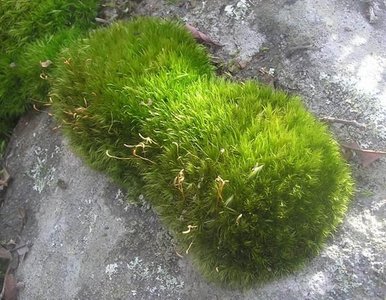
Bryophytes, including mosses, liverworts, and hornworts, are nonvascular plants with life cycles dominated by the gametophyte stage.
Key Point 1: Bryophytes lack vascular tissue and are typically small and found in moist environments.
Key Point 2: The gametophyte is the dominant, photosynthetic stage.
Example: Mosses are common bryophytes that form dense green mats.
Vascular Plants
Origins and Traits
Vascular plants evolved specialized tissues for transport and support, enabling them to grow taller and compete for sunlight.
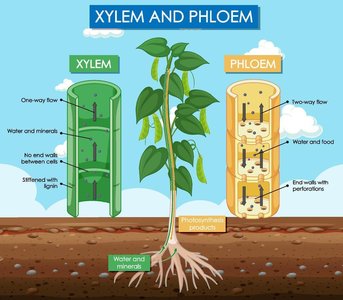
Key Point 1: Vascular tissues include xylem (water/mineral transport) and phloem (organic material transport).
Key Point 2: Vascular plants have dominant sporophyte generations, well-developed roots, and leaves.
Evolution of Roots and Leaves
Roots anchor plants and absorb water/nutrients, while leaves increase surface area for photosynthesis. Leaves are classified as microphylls (single vein) or megaphylls (branched veins).
Key Point 1: Roots evolved from belowground stems.
Key Point 2: Microphylls are found only in lycophytes; megaphylls are found in all other plant groups.
Classification of Seedless Vascular Plants
Seedless vascular plants are divided into two clades: Lycophyta (club mosses, spike mosses, quillworts) and Monilophyta (ferns, horsetails, whisk ferns).
Key Point 1: Early vascular plants had small, branching sporophytes.
Key Point 2: Competition for sunlight drove the evolution of taller forms.
Seed Plants: Gymnosperms and Angiosperms
Seeds and Pollen Grains
Seeds and pollen grains are key adaptations for terrestrial life, providing protection and facilitating dispersal.
Key Point 1: Seeds are multicellular, contain stored food, and can remain dormant.
Key Point 2: Pollen grains enable fertilization without water.
Evolutionary Advantage of Seeds
Seeds offer advantages over spores, including longevity, nourishment, and enhanced dispersal.
Key Point 1: Seeds can be transported long distances by wind or animals.
Key Point 2: Seed plants arose during the late Devonian period.
Angiosperms: Flowering Plants
Angiosperms are the most diverse group of plants, characterized by flowers and fruits.
Key Point 1: Flowers are specialized shoots with sepals, petals, stamens, and carpels.
Key Point 2: Fruits develop from the ovary and aid in seed dispersal.
Example: Tomatoes, plums, and grapes are fleshy fruits; beans, nuts, and grains are dry fruits.
Angiosperm Diversity
Angiosperms are divided into monocots (e.g., grasses, orchids, palms) and eudicots (e.g., legumes, roses, oaks).
Key Point 1: Monocots have one seed leaf; eudicots have two.
Key Point 2: Most familiar flowering trees are eudicots.
Plant Behavior and Responses
Plant Response Methods
Plants respond to environmental stimuli through various mechanisms, including phototropism, gravitropism, thigmotropism, hydrotropism, and nastic movements.
Key Point 1: Phototropism is growth toward light, driven by the hormone auxin.
Key Point 2: Gravitropism is root growth downward and shoot growth upward.
Key Point 3: Thigmotropism is growth in response to touch.
Key Point 4: Nastic movements are rapid, reversible responses independent of stimulus direction.
Defense Responses
Plants defend against pathogens and herbivores at multiple levels, including molecular, cellular, tissue, and community.
Key Point 1: PAMP-triggered and effector-triggered immunity protect against pathogens.
Key Point 2: Plants produce chemical compounds to deter herbivores and attract pollinators.
Human Welfare and Plant Conservation
Importance of Seed Plants
Seed plants are essential for food, fuel, wood, and medicine. Most human calories come from angiosperms, and many medicinal compounds are derived from plants.
Key Point 1: Six crops (wheat, rice, maize, potatoes, cassava, sweet potatoes) provide 80% of human calories.
Key Point 2: Preservation of plant diversity is critical for human welfare.
Threats to Plant Diversity
Habitat destruction, especially in tropical forests, threatens plant species and reduces CO2 absorption, contributing to global warming.
Key Point 1: 63,000 km2 of tropical forests are cleared each year.
Key Point 2: Loss of forests impacts climate and biodiversity.
Summary Table: Major Plant Groups
Group | Key Features | Examples |
|---|---|---|
Nonvascular Plants | No vascular tissue, gametophyte-dominated | Mosses, liverworts, hornworts |
Seedless Vascular Plants | Vascular tissue, sporophyte-dominated, no seeds | Ferns, club mosses, horsetails |
Seed Plants | Vascular tissue, seeds, sporophyte-dominated | Gymnosperms (conifers), angiosperms (flowering plants) |