 Indietro
Plant Evolution, Gymnosperms, and Angiosperms: Structure, Life Cycles, and Evolutionary Trends
Guida di studio - Note intelligenti
 Appunti personalizzati basati sui tuoi materiali, ampliati con definizioni chiave, esempi e contesto.
Plant Phylogeny and Evolutionary Trends
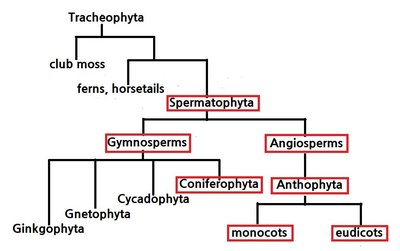
Overview of Plant Evolution
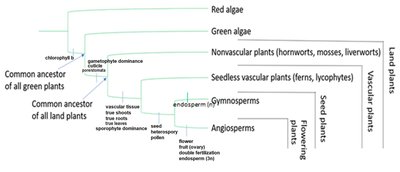
Plant evolution is characterized by the transition from aquatic to terrestrial environments, the development of vascular tissues, and the emergence of seeds and flowers. The phylogeny of plants reveals major evolutionary patterns, including the dominance of the sporophyte generation and the diversification of seed plants.
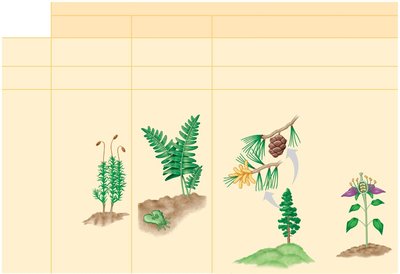
Nonvascular plants (e.g., mosses) are limited to moist environments and have dominant gametophyte generations.
Seedless vascular plants (e.g., ferns) evolved vascular tissues, allowing greater height and sporophyte dominance.
Seed plants (gymnosperms and angiosperms) exhibit further sporophyte dominance and adaptations for reproduction on land.
Major Evolutionary Patterns
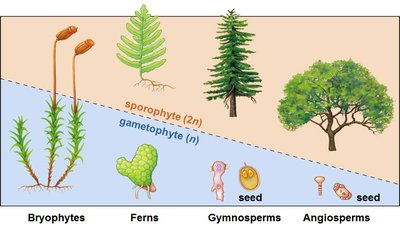
Sporophyte Dominance: Evolutionary trend toward the sporophyte (2n) being the dominant life stage in vascular and seed plants.
Seed Formation: Seeds provide protection and nourishment for the embryo, enabling dispersal and survival in diverse habitats.
Flowering Plants: Angiosperms evolved flowers and fruits, increasing reproductive success and genetic diversity.
Alternation of Generations and Life Cycles
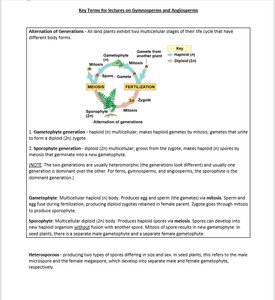
Alternation of Generations
All land plants exhibit alternation of generations, with multicellular haploid (gametophyte) and diploid (sporophyte) stages.
Gametophyte (n): Produces gametes via mitosis; dominant in nonvascular plants.
Sporophyte (2n): Produces spores via meiosis; dominant in vascular and seed plants.
Key Terms in Seed Plant Life Cycles
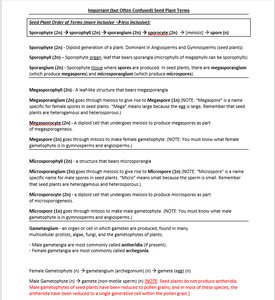
Sporophyte (2n): Diploid generation; produces spores in sporangia.
Gametophyte (n): Haploid generation; produces gametes.
Megasporangium: Produces megaspores (female).
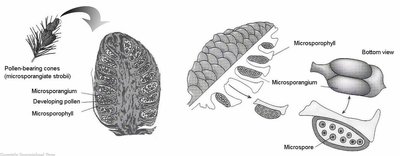
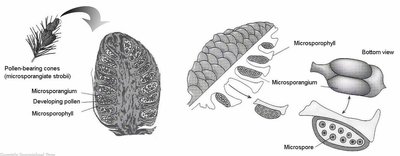
Microsporangium: Produces microspores (male).
Megaspore: Develops into female gametophyte.
Microspore: Develops into male gametophyte.
Gymnosperms: Structure and Life Cycle
Gymnosperm Structures
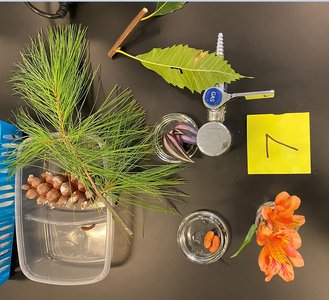
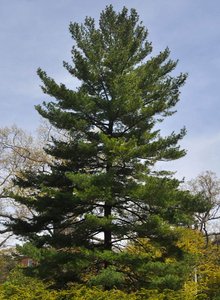
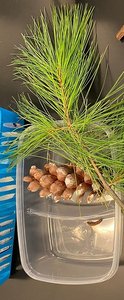
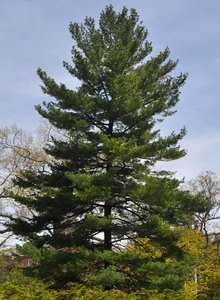
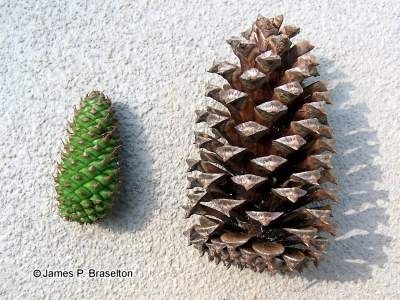
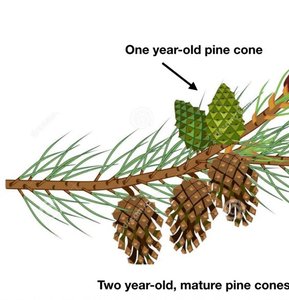
Gymnosperms are seed plants that produce seeds in cones rather than flowers.
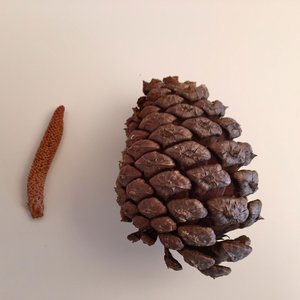
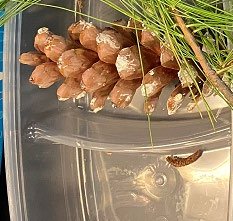
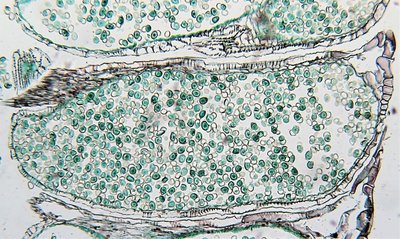
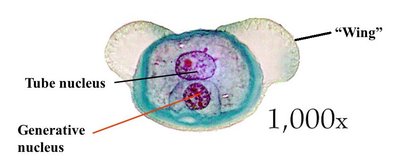
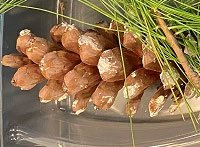
Male cones: Produce pollen grains (microspores).
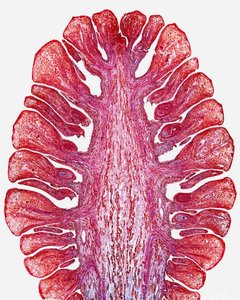
Female cones: Contain ovules (megaspores).
Pine needles: Adapted leaves for water conservation.
Gymnosperm Life Cycle
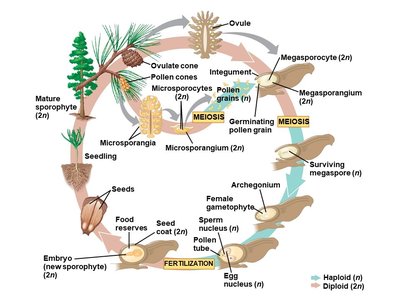
The gymnosperm life cycle involves alternation of generations, with the sporophyte as the dominant stage.
Pollination: Pollen grains are wind-dispersed to the ovule.
Fertilization: Pollen tube delivers sperm to egg; zygote forms.
Seed Formation: Embryo develops, surrounded by seed coat and endosperm.
Germination: Seedling grows into mature sporophyte.
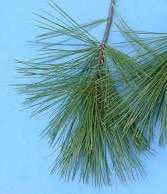
Gymnosperm Reproductive Anatomy
Microsporangium: Produces microspores (pollen grains).
Megasporangium: Produces megaspores (ovules).
Pollen tube: Delivers sperm to egg.
Endosperm: Nutrient supply for embryo.
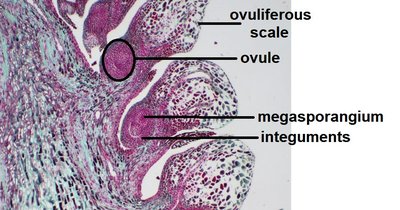
Angiosperms: Structure and Life Cycle
Angiosperm Phylogeny and Diversity
Angiosperms are flowering plants, divided into monocots and eudicots.
Monocots: One cotyledon, parallel leaf veins, flower parts in multiples of three.
Eudicots: Two cotyledons, net-like leaf veins, flower parts in multiples of four or five.
Angiosperm Flower Structure
Flowers are specialized shoots for sexual reproduction, consisting of four types of modified leaves:
Carpels: Female reproductive organs.
Stamens: Male reproductive organs.
Petals: Attract pollinators.
Sepals: Protect flower bud.
Angiosperm Life Cycle and Double Fertilization
The angiosperm life cycle features double fertilization, where two sperm cells fertilize the egg and the polar nuclei, forming the embryo and triploid endosperm.
Embryo (2n): Result of fertilization of egg cell.
Endosperm (3n): Result of fertilization of polar nuclei; provides nutrients.
Seed coat (2n): Protective layer derived from ovule tissues.
Angiosperm Seed and Seedling Anatomy
Seed: Contains embryo, endosperm, and seed coat.
Fruit: Develops from ovary; aids in seed dispersal.
Seedling: Emerges from germinated seed.
Angiosperm Leaf Anatomy and Stomata
Angiosperm leaves have specialized structures for gas exchange and photosynthesis.
Stomata: Pores for gas exchange, regulated by guard cells.
Vascular bundles: Contain xylem and phloem for transport.
Mesophyll cells: Site of photosynthesis.
Cuticle: Waxy layer for water retention.
Summary of Evolutionary Trends in Plants
Key Trends
Transition from aquatic to terrestrial life.
Development of vascular tissues and seeds.
Increasing sporophyte dominance.
Evolution of flowers and fruits in angiosperms.
Greater parental investment and genetic diversity.
Seed Plant Life Cycle Table
Stage | Gymnosperms | Angiosperms |
|---|---|---|
Pollination | Wind-dispersed pollen | Often animal-assisted |
Fertilization | Single fertilization | Double fertilization |
Endosperm | Haploid (n) | Triploid (3n) |
Seed Structure | Seed coat, embryo, endosperm | Seed coat, embryo, endosperm |
Dispersal | Wind | Wind, animals, water |
Key Equations and Concepts
Meiosis: (diploid to haploid)
Mitosis: (haploid to haploid)
Fertilization: (haploid gametes form diploid zygote)
Double Fertilization (Angiosperms): (embryo), (endosperm)
Additional info:
Some content was inferred from standard General Biology knowledge to clarify fragmented notes and supplement missing context.
