 Indietro
Modue3:Plant Form and Function: Adaptations, Tissue Systems, and Growth in Land Plants
Guida di studio - Note intelligenti
 Appunti personalizzati basati sui tuoi materiali, ampliati con definizioni chiave, esempi e contesto.
Plant Form and Function
Introduction to Plant Form and Function
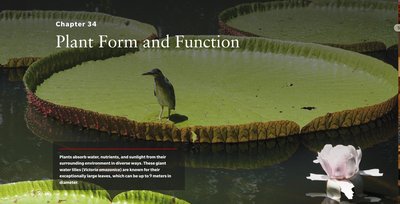
Plants absorb water, nutrients, and sunlight from their environment to drive growth and sustain life. The diversity in plant form and function is a result of evolutionary adaptations that allowed plants to colonize terrestrial environments. Chapter 34 focuses on the organization, diversity, and growth of angiosperms, the most complex group of land plants.
Evolutionary Origins and Diversification of Land Plants
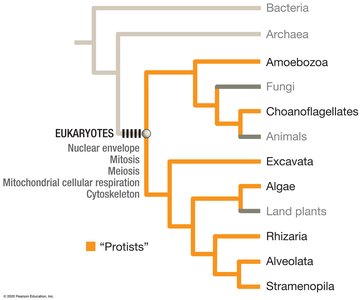
Land plants evolved from aquatic photosynthetic ancestors, specifically green algae. The transition to land required significant adaptations to overcome challenges such as water loss and structural support. The fossil record and molecular phylogenies provide evidence for the evolutionary relationships among major plant groups.
Key Adaptations: Cuticle, stomata, and vascular tissue enabled plants to survive in dry terrestrial environments.
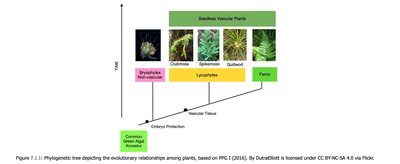
Major Groups: Non-vascular plants (bryophytes), seedless vascular plants (pteridophytes), gymnosperms, and angiosperms.
Fossil Record: Land plants first appeared about 475 million years ago.
Ecological Importance of Plants
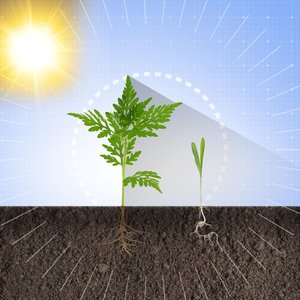
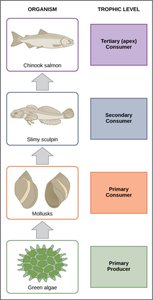
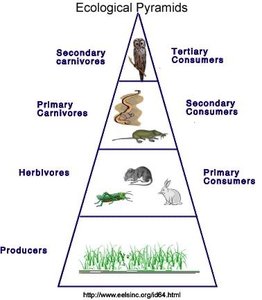
Plants are primary producers in ecosystems, converting sunlight into chemical energy through photosynthesis. They play a crucial role in the carbon cycle and support higher trophic levels.
Primary Producers: Green algae and land plants form the base of food webs.
Oxygen Production: Plants release oxygen as a byproduct of photosynthesis.
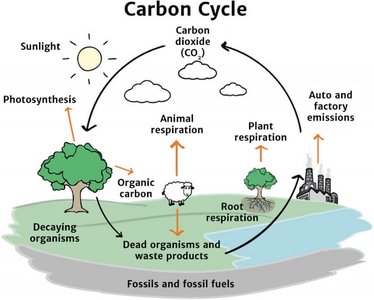
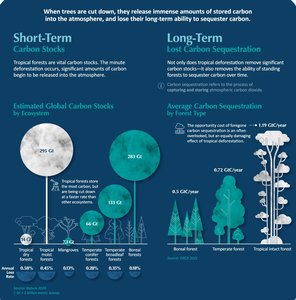
Carbon Cycle: Plants absorb carbon dioxide and contribute to carbon sequestration.
Adaptations for Life on Land
Key Features for Terrestrial Survival
To survive on land, plants developed several adaptations to minimize water loss and maximize resource acquisition.
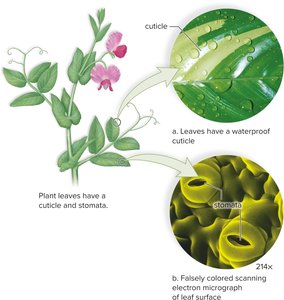
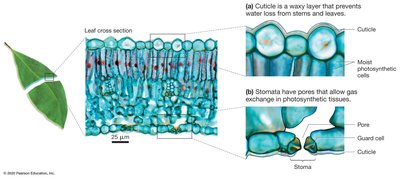
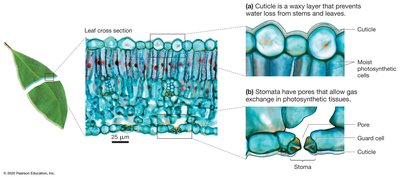
Waxy Cuticle: A waterproof layer covering leaves and stems, preventing water loss and protecting against pathogens.
Stomata: Pores surrounded by guard cells that regulate gas exchange and water vapor loss.
Structural Adaptations and Competition
Early land plants were small and sprawling, but upright growth provided better access to sunlight. Two main challenges were water transport and structural rigidity.
Water Transport: Vascular tissue evolved to move water from roots to leaves.
Support: Lignified cell walls provided rigidity to withstand gravity and wind.
Plant Groups and Vascular Tissue
Classification of Land Plants
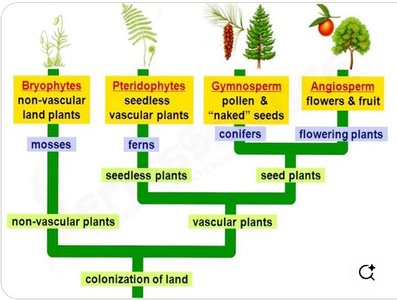
Land plants are classified into four main groups based on the presence of vascular tissue, seeds, and flowers.
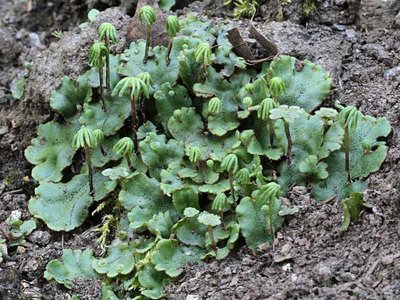
Bryophytes: Non-vascular plants (mosses, liverworts, hornworts).
Pteridophytes: Seedless vascular plants (ferns, club mosses, horsetails).
Gymnosperms: Seed plants with "naked" seeds (conifers).
Angiosperms: Flowering plants with seeds enclosed in fruits.
Vascular Tissue: Xylem and Phloem
Vascular tissue is essential for water, mineral, and nutrient transport in plants. It consists of two main types: xylem and phloem.
Xylem: Transports water and minerals from roots to leaves. Composed of tracheids and vessel elements.
Phloem: Transports sucrose and other organic compounds throughout the plant. Composed of sieve-tube members and companion cells.
Vascular Tissue | Main Function | Cell Types |
|---|---|---|
Xylem | Water and mineral transport | Tracheids, vessel elements |
Phloem | Transport of sugars and organic nutrients | Sieve-tube members, companion cells |
Plant Tissue Systems
Overview of Tissue Systems
Plants have three main tissue systems, each with specialized functions and cell types.
Dermal Tissue: Forms the outer protective covering (epidermis, cuticle, root hairs, trichomes, stomata).
Vascular Tissue: Conducts water, minerals, and nutrients (xylem and phloem).
Ground Tissue: Functions in photosynthesis, storage, and support (parenchyma, collenchyma, sclerenchyma).
Ground Tissue Cell Types
Parenchyma: Least specialized, abundant, involved in photosynthesis and storage.
Collenchyma: Thicker primary walls, provides flexible support for growing regions.
Sclerenchyma: Thick secondary walls with lignin, supports mature regions, nonliving at maturity.
Cell Type | Main Function | Location |
|---|---|---|
Parenchyma | Photosynthesis, storage | All plant organs |
Collenchyma | Flexible support | Immature regions |
Sclerenchyma | Rigid support | Mature regions |
Plant Growth and Meristems
Primary and Secondary Growth
Plants grow throughout their lives via meristems, regions of undifferentiated cells that divide and differentiate into various tissues.
Apical Meristems: Located at root and shoot tips, responsible for primary growth (lengthening).
Lateral Meristems: Responsible for secondary growth (thickening).
Organization of Flowering Plants
The plant body is organized into shoot and root systems. The shoot system includes leaves, stems, flowers, and fruits, while the root system anchors the plant and absorbs water and minerals.
Summary Table: Plant Adaptations and Tissue Systems
Adaptation | Function | Evolutionary Significance |
|---|---|---|
Cuticle | Prevents water loss | Enabled colonization of land |
Stomata | Regulates gas exchange | Essential for photosynthesis |
Vascular Tissue | Transport and support | Allowed upright growth |
Meristems | Growth and differentiation | Continuous growth |
Additional info: The notes expand on brief lecture points to provide context on plant evolution, tissue systems, and adaptations, ensuring completeness for exam preparation.
