 Indietro
Plant Nutrition: Soil, Nutrients, and Symbiotic Relationships
Guida di studio - Note intelligenti
 Appunti personalizzati basati sui tuoi materiali, ampliati con definizioni chiave, esempi e contesto.
Plant Nutrition
Essential Nutrients and Deficiency Symptoms
Plants require a variety of nutrients to sustain growth and development. While carbon, hydrogen, and oxygen are obtained from air and water, other essential nutrients must be absorbed from the soil. These nutrients are classified as macronutrients and micronutrients based on the quantities required.
Macronutrients: Needed in large amounts; include nitrogen (N), phosphorus (P), potassium (K), calcium (Ca), magnesium (Mg), and sulfur (S).
Micronutrients: Needed in trace amounts; include boron (B), chlorine (Cl), manganese (Mn), iron (Fe), zinc (Zn), copper (Cu), sodium (Na), molybdenum (Mo), and nickel (Ni).
Limiting nutrients: Nutrients whose availability restricts plant growth, commonly N, P, and K.
Deficiency symptoms: Nutrient deficiencies manifest as specific symptoms in plant tissues, often first appearing in young or old leaves depending on nutrient mobility.
Example: Deficiency in nitrogen causes pale green leaves, while potassium deficiency leads to yellowing at leaf edges. 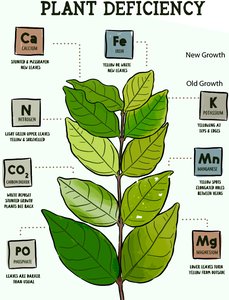
Soil Composition and Properties
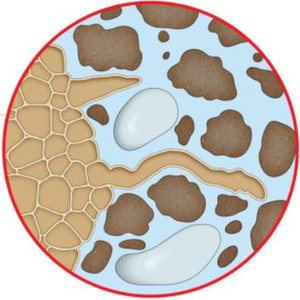
Soil is a complex mixture of inorganic minerals, organic matter, water, gases, and living organisms. The physical and chemical properties of soil influence plant nutrition.
Inorganic minerals: Derived from weathered rock, forming gravel, sand, silt, and clay.
Humus: Decaying organic matter that enriches soil and improves nutrient retention.
Texture: Proportions of sand, silt, and clay affect water retention, aeration, and root penetration.
Loam: Ideal soil with balanced sand, silt, clay, and abundant humus.
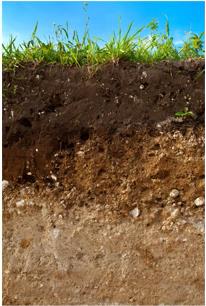
Topsoil: The uppermost layer, rich in organic matter and microorganisms.
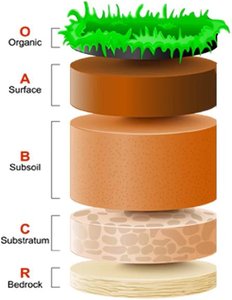
Soil horizons: Layers including topsoil (O/A), subsoil (B), substratum (C), and bedrock (R).
Example: Worms and other organisms help cycle nutrients and improve soil structure. 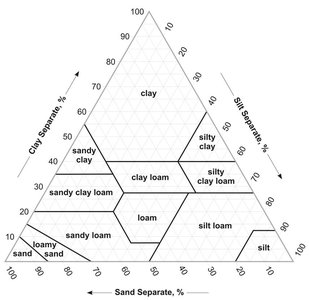
Soil pH and Erosion
Soil pH: Influences nutrient availability; acidic soils have more organic acids, alkaline soils contain more bicarbonate.
Soil erosion: Loss of soil due to wind and water; plant roots help prevent erosion and modify soil pH by excreting acids.
Root Structure and Nutrient Uptake
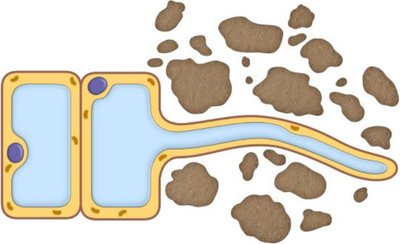
Most nutrient uptake occurs in the zone of maturation, just behind the root tip, where root hairs increase surface area. Plants absorb nutrients as ions, which are classified as anions (negatively charged) and cations (positively charged).
Anions: Dissolved in soil water and readily available, but easily leached.
Cations: Often bound to clay or organic matter, requiring cation exchange for plant uptake.
Cation exchange: Plants release protons (H+) to displace cations from soil particles, making them available for absorption.
Example: Phosphate forms complexes with Fe and Ca, making it less available. 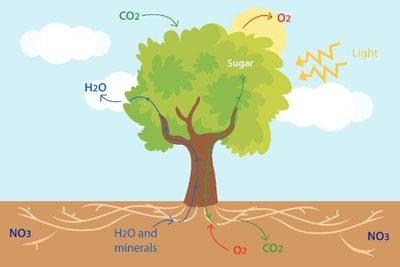
Selective Ion Uptake and Exclusion
The plasma membrane of root cells acts as a selective barrier. Plants use proton pumps to create electrochemical gradients, facilitating ion transport.
Cations: Enter through channels.
Anions: Enter via cotransporters, often coupled with H+ movement.
Ion exclusion: Passive exclusion (lack of transporters) and active exclusion (antiporters and metallothioneins) prevent uptake of harmful ions.
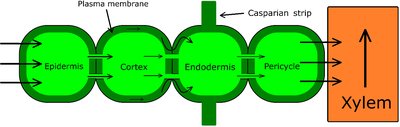
Example: The Casparian strip forces ions through endodermal cells, ensuring selective uptake. 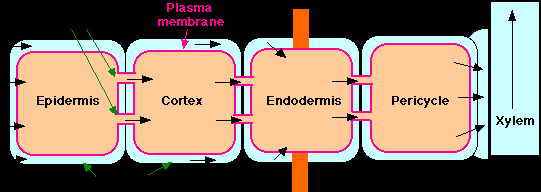
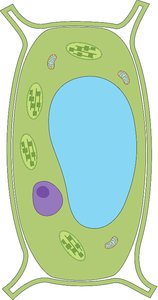
Nitrogen Fixation
The Nitrogen Cycle
Nitrogen is a critical macronutrient, but atmospheric N2 is inaccessible to plants. The nitrogen cycle describes the conversion of nitrogen into usable forms and its movement through ecosystems.
Nitrogen fixation: Conversion of N2 to NH3 by bacteria and archaea.
Usable forms: Plants absorb nitrogen as ammonium (NH4+) and nitrate (NO3-).
Carnivorous plants: Supplement nitrogen intake by digesting insects.
Epiphytes: Absorb nutrients from air, rain, and debris.
Example: Nitrogenase enzyme complex reduces N2 to NH3, requiring 16 ATP and 8 electrons. 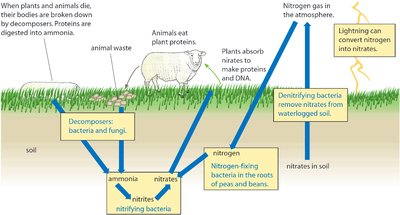
Symbiotic Relationships: Rhizobia and Mycorrhizae
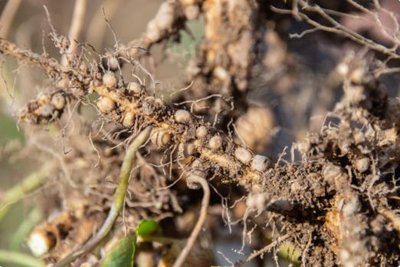
Rhizobia: Gram-negative bacteria that fix nitrogen in root nodules of legumes (Fabaceae).
Nodules: Swollen root structures where bacteria reside; plant releases flavonoids to attract rhizobia, which respond with Nod factors.
Mutualism: Plant provides carbohydrates and protection; bacteria provide usable nitrogen.
Leghemoglobin: Binds oxygen in nodules, protecting nitrogenase from oxygen poisoning.
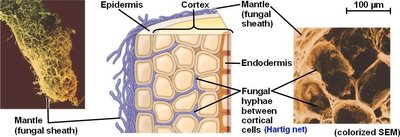
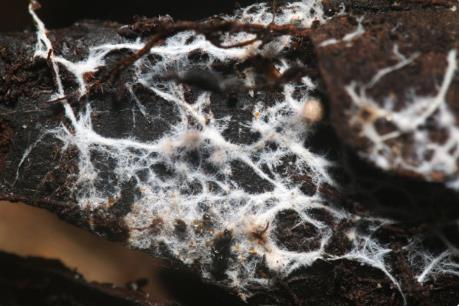
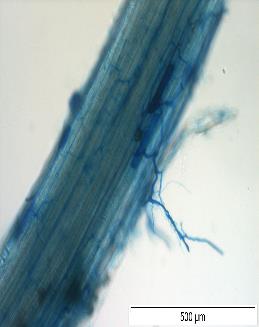
Mycorrhizae: Symbiotic association between fungi and plant roots, enhancing nutrient uptake.
Ectomycorrhizae: Fungal hyphae surround root cells but do not penetrate.
Arbuscular mycorrhizae: Fungal hyphae penetrate root cortical cells.
Example: Mycorrhizal fungi increase surface area for absorption and help plants acquire nutrients from organic matter. 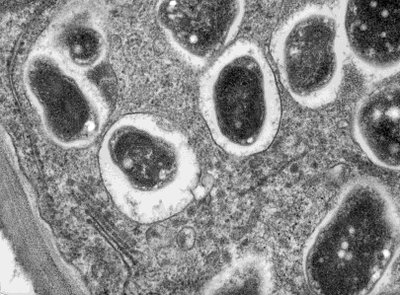
Summary Table: Essential Plant Nutrients
Macronutrient | Function | Deficiency Symptom |
|---|---|---|
Nitrogen (N) | Protein, nucleic acid synthesis | Pale green leaves, stunted growth |
Phosphorus (P) | ATP, nucleic acids | Dark green leaves, poor root growth |
Potassium (K) | Enzyme activation, osmoregulation | Yellowing leaf edges, weak stems |
Calcium (Ca) | Cell wall structure | New leaves distorted |
Magnesium (Mg) | Chlorophyll synthesis | Yellowing between veins |
Sulfur (S) | Protein synthesis | Yellowing of young leaves |
Micronutrient | Function | Deficiency Symptom |
|---|---|---|
Iron (Fe) | Chlorophyll synthesis | Yellowing of new leaves |
Manganese (Mn) | Enzyme activation | Spots on leaves |
Zinc (Zn) | Enzyme function | Small leaves |
Copper (Cu) | Enzyme function | Dieback of stems |
Boron (B) | Cell wall formation | Death of growing points |
Molybdenum (Mo) | Nitrogen metabolism | Leaf yellowing |
Key Equations
Cation Exchange Reaction
Plants release protons to displace cations from soil particles:
Nitrogen Fixation Reaction
Nitrogenase catalyzes the reduction of atmospheric nitrogen:
Additional info:
Soil organisms such as bacteria, fungi, nematodes, and insects play crucial roles in nutrient cycling and soil health.
Root hairs are essential for maximizing nutrient and water absorption.
Symbiotic relationships with rhizobia and mycorrhizal fungi are vital for plant access to nitrogen and phosphorus.
