 Indietro
Plant Reproduction and Evolution: Angiosperms, Seed Plants, and Their Importance
Guida di studio - Note intelligenti
 Appunti personalizzati basati sui tuoi materiali, ampliati con definizioni chiave, esempi e contesto.
Plant Reproduction: Angiosperm Life Cycle
Overview of Angiosperm Reproduction
Angiosperms, or flowering plants, reproduce through a complex life cycle involving alternation of generations. This cycle includes both diploid (sporophyte) and haploid (gametophyte) stages, with meiosis and fertilization as key transitions.
Sporophyte (2n): The mature flowering plant is the diploid sporophyte.
Microsporangia: Located in the anthers, produce microspores (pollen grains) via meiosis.
Male Gametophyte: Develops within pollen grains.
Megasporangia: Located in ovules, produce megaspores via meiosis.
Female Gametophyte: Develops from the megaspore within the ovule.
Pollination: Pollen is transferred to the stigma, and a pollen tube grows toward the ovule.
Double Fertilization: One sperm fertilizes the egg (forming the zygote), and another fuses with two polar nuclei to form the triploid endosperm.
Seed Formation: The fertilized ovule develops into a seed containing the embryo and endosperm.


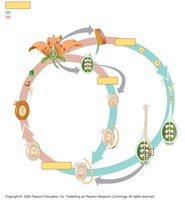


Alternation of Generations in Plants
Comparing Bryophytes, Seedless Vascular Plants, and Seed Plants
All land plants exhibit alternation of generations, but the dominance of sporophyte or gametophyte varies among groups.
Bryophytes: Gametophyte is dominant and independent; sporophyte is dependent.
Seedless Vascular Plants: Sporophyte is dominant; gametophyte is independent but only initially dependent.
Seed Plants: Sporophyte is dominant and independent; gametophyte is microscopic and dependent.




Evolution of Seed Plants
Seed Plant Groups and Gametophyte Development
Seed plants include gymnosperms and angiosperms. Their gametophytes develop from spores retained within sporangia of the parental sporophyte, providing protection and nourishment.
Gymnosperms: Gametophytes develop inside cones.
Angiosperms: Gametophytes develop inside flowers.
Evolutionary Trend: Increasing dominance of the sporophyte and reduction of the gametophyte.
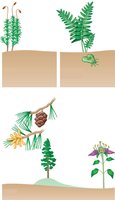
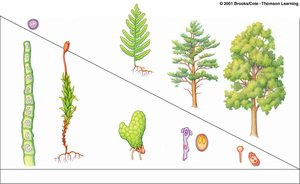

Angiosperm Diversity and Evolution
Monocots, Dicots, and Basal Groups
Angiosperms are historically divided into monocots and dicots based on the number of cotyledons. Recent evidence shows that dicots are not a natural evolutionary group, and monocots descended from a common ancestor. Basal groups include Amborella, water lilies, star anise, and magnoliids.
Monocots: One cotyledon, parallel leaf veins, floral organs in multiples of three.
Eudicots: Two cotyledons, netlike leaf veins, floral organs in multiples of four or five.
Basal Groups: Early-diverging angiosperms such as Amborella and water lilies.

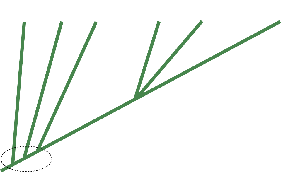
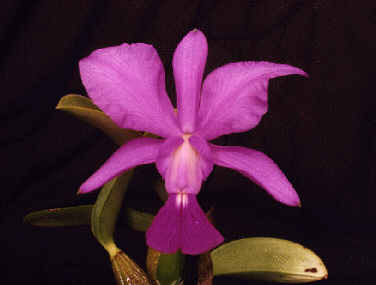
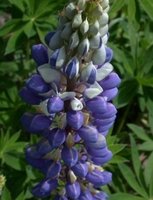
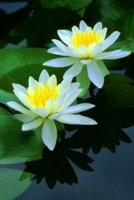
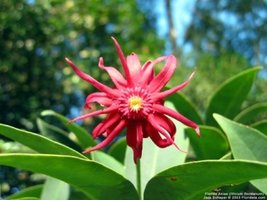
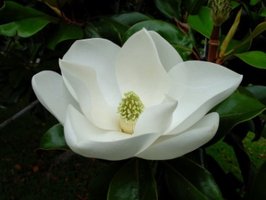

Monocot vs. Dicot Characteristics
Key Differences
Monocots and dicots differ in several structural features, which are summarized in the table below.
Characteristic | Monocots | Dicots/Eudicots |
|---|---|---|
Embryos | One cotyledon | Two cotyledons |
Leaf venation | Veins usually parallel | Veins usually netlike |
Stems | Vascular tissue scattered | Vascular tissue arranged in ring |
Roots | Fibrous root system | Taproot usually present |
Pollen | Pollen grain with one opening | Pollen grain with three openings |
Flowers | Floral organs in multiples of three | Floral organs in multiples of four or five |

Human Welfare and Seed Plants
Importance of Monocots and Eudicots
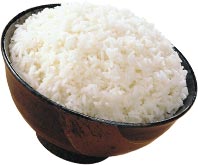
Human welfare depends greatly on seed plants, especially monocots and eudicots. Major food crops such as wheat, rice, maize (monocots), and potatoes, sweet potatoes, cassava (eudicots) provide 80% of all calories consumed by humans.
Monocots: Wheat, rice, maize (corn)
Eudicots: Potatoes, sweet potatoes, cassava (manioc)
Global Impact: Seed plants are essential for food security and human nutrition.
 Additional info: The notes above expand on the original content by providing definitions, context, and examples for each topic, ensuring completeness and academic quality for General Biology students.
