 Indietro
Plasma Membrane Function and Transport Mechanisms
Guida di studio - Note intelligenti
 Appunti personalizzati basati sui tuoi materiali, ampliati con definizioni chiave, esempi e contesto.
Plasma Membrane Function
Selective Permeability
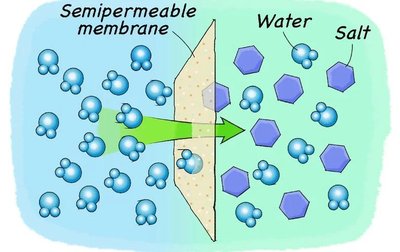
The plasma membrane is a selectively permeable barrier that regulates the movement of substances into and out of the cell. This property allows cells to maintain internal conditions distinct from the external environment, which is essential for life.
Selective permeability: Only certain molecules can cross the membrane easily, while others require assistance or cannot cross at all.
Examples: Small, nonpolar molecules (e.g., O2, CO2) pass freely; ions and large polar molecules require transport proteins.
Structure of the Plasma Membrane
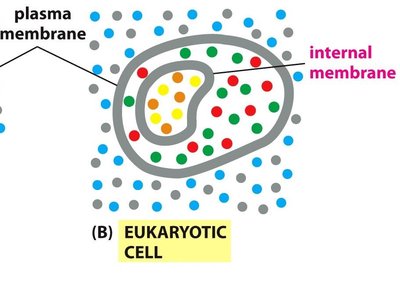
The plasma membrane is composed of a phospholipid bilayer with embedded proteins. This structure provides both fluidity and mechanical stability, as well as the basis for selective permeability.
Phospholipid bilayer: Hydrophobic tails face inward, hydrophilic heads face outward.
Proteins: Integral and peripheral proteins serve as channels, carriers, receptors, and enzymes.
Transport Across the Membrane
Types of Transport
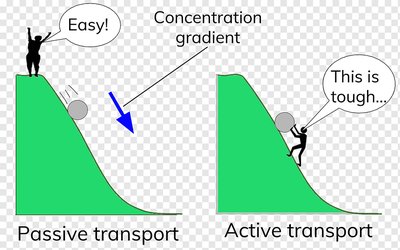
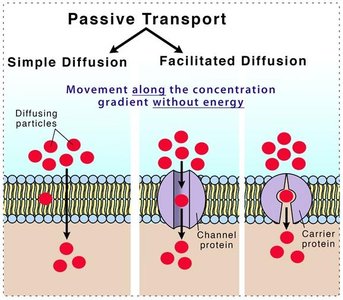
Transport across the plasma membrane can be classified as passive or active based on energy requirements and direction relative to the concentration gradient.
Passive transport: Movement down the concentration gradient (high to low), no energy required.
Active transport: Movement against the concentration gradient (low to high), requires energy (usually ATP).
Permeability of the Lipid Bilayer
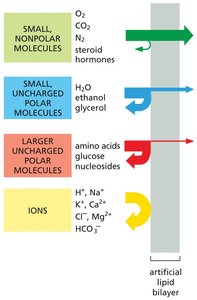
The ability of a molecule to cross the lipid bilayer depends on its size, polarity, and charge.
Type of Molecule | Examples | Permeability |
|---|---|---|
Small, nonpolar | O2, CO2, N2 | High |
Small, uncharged polar | H2O, ethanol | Moderate |
Larger uncharged polar | Glucose, amino acids | Low |
Ions | Na+, K+, Cl- | Very low |
Passive Transport
Diffusion
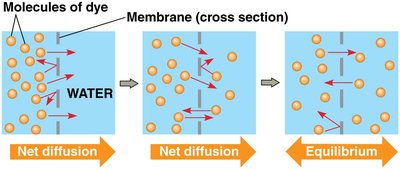
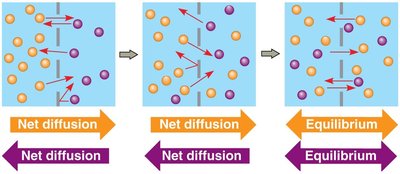
Diffusion is the movement of molecules from an area of higher concentration to an area of lower concentration, driven by the random motion of particles (thermal energy). This process continues until equilibrium is reached.
Net movement: Always from high to low concentration.
No energy required: Diffusion is a passive process.
Facilitated Diffusion
Some molecules cannot diffuse directly through the lipid bilayer and require the help of transport proteins. Facilitated diffusion uses channel or carrier proteins to move substances down their concentration gradient without energy input.
Channel proteins: Form hydrophilic tunnels for specific molecules or ions.
Carrier proteins: Bind to molecules and change shape to shuttle them across the membrane.
Osmosis
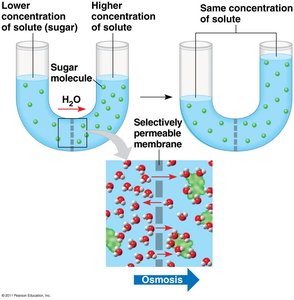
Osmosis is the diffusion of water across a selectively permeable membrane. Water moves from an area of lower solute concentration (higher free water) to an area of higher solute concentration (lower free water) until equilibrium is reached.
Semipermeable membrane: Allows water but not solute to pass.
Direction of water movement: Toward the side with higher solute concentration.
Tonicity and Its Effects on Cells
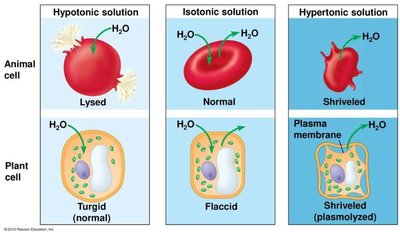
Tonicity describes the ability of a surrounding solution to cause a cell to gain or lose water. It depends on the relative concentrations of solutes inside and outside the cell.
Isotonic: Equal solute concentration; no net water movement.
Hypertonic: Higher solute concentration outside; cell loses water and shrivels.
Hypotonic: Lower solute concentration outside; cell gains water and may burst (animal cells) or become turgid (plant cells).
Osmoregulation
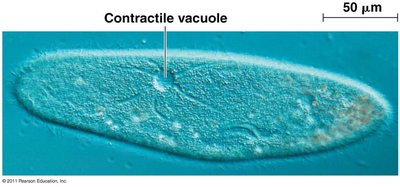
Osmoregulation is the control of water and solute concentrations by cells and organisms. Some unicellular organisms, such as Paramecium, use contractile vacuoles to expel excess water in hypotonic environments.
Contractile vacuole: Organelle that pumps water out of the cell to prevent bursting.
Active Transport
Active Transport Mechanisms
Active transport moves substances against their concentration gradients, from low to high concentration, using energy (usually ATP). This process is essential for maintaining cellular homeostasis.
Transport proteins: Molecule-specific proteins mediate active transport.
Examples: Sodium-potassium pump, proton pumps.
Sodium-Potassium Pump
The sodium-potassium pump is a classic example of active transport in animal cells. It moves three Na+ ions out of the cell and two K+ ions into the cell, both against their concentration gradients, using ATP.
Maintains membrane potential: Creates a charge difference across the membrane (inside negative relative to outside).
Essential for: Nerve impulse transmission, muscle contraction, and overall cell function.
Membrane Potential and Electrochemical Gradient
The membrane potential is the voltage difference across a cell membrane, resulting from the unequal distribution of ions. The electrochemical gradient combines the concentration gradient and the electrical gradient, influencing the movement of ions.
Resting potential: Typically -40 to -80 mV in animal cells.
Electrogenic pumps: Transport proteins that generate voltage across a membrane (e.g., Na+/K+ pump, proton pump).
Cotransport
Cotransport occurs when the movement of one substance down its electrochemical gradient drives the transport of another substance against its gradient. This is a form of secondary active transport.
Example: Sucrose-H+ cotransporter in plants.
Bulk Transport
Large molecules and particles are transported across the membrane via vesicles in processes called exocytosis and endocytosis.
Exocytosis: Secretion of materials out of the cell by vesicle fusion with the plasma membrane.
Endocytosis: Uptake of materials into the cell by vesicle formation from the plasma membrane.
Types of endocytosis:
Phagocytosis: "Cell eating"; uptake of large particles or cells.
Pinocytosis: "Cell drinking"; uptake of extracellular fluid and dissolved solutes.
Receptor-mediated endocytosis: Specific uptake of molecules via receptor proteins.
Summary Table: Types of Membrane Transport
Type | Energy Required? | Direction | Examples |
|---|---|---|---|
Simple Diffusion | No | High to Low | O2, CO2 |
Facilitated Diffusion | No | High to Low | Glucose, ions via channels |
Osmosis | No | High to Low (water) | Water movement |
Active Transport | Yes (ATP) | Low to High | Na+/K+ pump |
Bulk Transport | Yes (ATP) | In or Out | Endocytosis, exocytosis |
Additional info: The concepts covered here are foundational for understanding cell physiology, signaling, and homeostasis, and are directly relevant to General Biology topics such as membrane structure and function, osmoregulation, and cellular transport mechanisms.
