 Indietro
Plasma Membrane Structure and Function: General Biology Study Notes
Guida di studio - Note intelligenti
 Appunti personalizzati basati sui tuoi materiali, ampliati con definizioni chiave, esempi e contesto.
Plasma Membrane
Overview and Functions
The plasma membrane is a dynamic boundary that separates the cell's internal environment from the external surroundings. It plays a crucial role in controlling the transport of substances, receiving signals, and maintaining internal conditions. The membrane is fluid, allowing components to move within it, and is essential for cellular homeostasis.
Boundary Function: Separates cell interior from external environment.
Transport Control: Regulates entry and exit of molecules.
Signal Reception: Receives and transmits signals from outside.
Fluidity: Components can move laterally within the membrane.
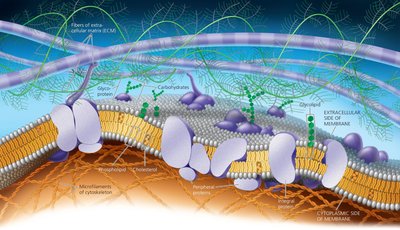
The Fluid Mosaic Model
The fluid mosaic model describes the plasma membrane as a flexible, dynamic structure composed of a phospholipid bilayer with embedded proteins, steroids, glycoproteins, and glycolipids.
Fluid: Lipids and proteins can move within the layer.
Mosaic: Diverse proteins and other molecules are embedded throughout.
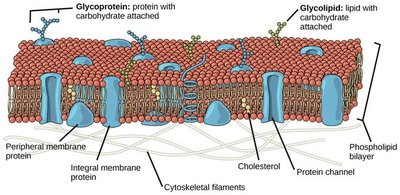
Phospholipid Bilayer
The core of the plasma membrane is the phospholipid bilayer, which forms a double layer with hydrophobic (water-repelling) tails facing inward and hydrophilic (water-attracting) heads facing outward toward aqueous environments.
Amphipathic Nature: Phospholipids have both polar (head) and nonpolar (tail) regions.
Hydrophobic Interior: Prevents passage of polar molecules and ions.
Fluidity: Phospholipids can move laterally, contributing to membrane flexibility.
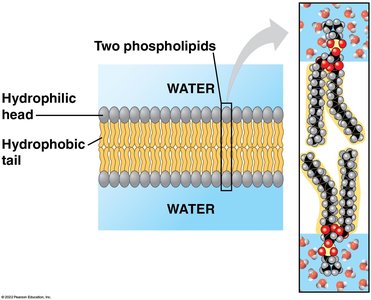
Phospholipid Properties
Saturated Tails: Solidify at lower temperatures, decreasing fluidity.
Unsaturated Tails: Remain fluid at lower temperatures, increasing flexibility.
Cholesterol in the Membrane
Cholesterol molecules are interspersed between phospholipids and help regulate membrane fluidity.
Low Temperatures: Prevents phospholipids from packing tightly, maintaining fluidity.
High Temperatures: Restrains movement of phospholipids, preventing excessive fluidity.
Membrane Proteins
Proteins are critical for membrane function and are classified as integral or peripheral.
Integral Proteins: Span the membrane or extend into it; have hydrophobic regions inside the membrane and hydrophilic regions exposed to aqueous environments.
Peripheral Proteins: Loosely bound to the membrane surface; can attach to cytoskeleton or extracellular matrix.
Protein Functions
Transport: Move substances across the membrane.
Cell-Cell Recognition: Identify and interact with other cells.
Enzymatic Activity: Catalyze reactions at the membrane surface.
Signal Transduction: Relay signals from outside to inside the cell.
Intercellular Joining: Connect cells together.
Attachment: Anchor membrane to cytoskeleton or ECM.
Membrane Permeability
Selective Permeability
The plasma membrane is selectively permeable, allowing some substances to pass freely while blocking others.
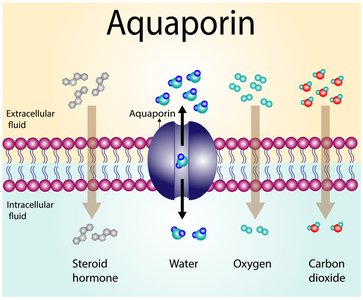
Freely Pass: Small, nonpolar molecules (e.g., N2, O2, CO2).
Slow Passage: Larger nonpolar molecules.
Blocked: Polar molecules and ions, unless assisted by transport proteins.
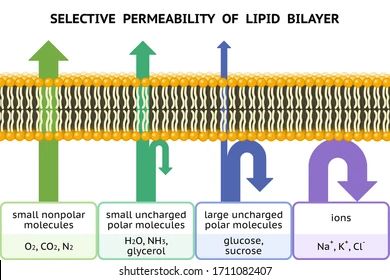
Transport Proteins
Large polar molecules and ions require transport proteins to cross the membrane.
Channels: Provide tunnels for specific molecules.
Carriers: Change shape to move substances across.
Cell Walls and Extracellular Matrix
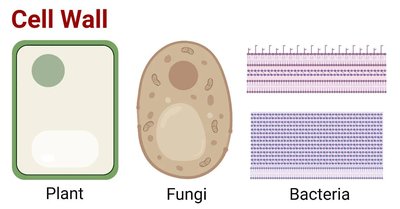
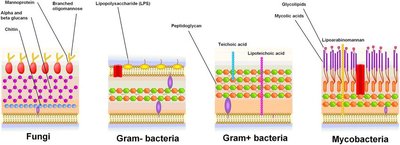
Cell Walls: Structural barriers outside the membrane; made of polysaccharides (cellulose in plants, chitin in fungi, peptidoglycan in bacteria).
Extracellular Matrix (ECM): Network of glycoproteins and carbohydrates in animal cells; organizes cells into tissues.
Membrane Transport
Passive Transport
Passive transport does not require energy and moves substances from high to low concentration, reaching equilibrium.
Diffusion: Direct movement across the membrane.
Facilitated Diffusion: Uses proteins to help substances cross.
Active Transport
Active transport requires energy (ATP) and moves substances from low to high concentration, against the gradient.
Endocytosis: Cell takes in particles by forming vesicles.
Exocytosis: Cell releases materials by fusing vesicles with the membrane.
Facilitated Diffusion
Mechanism and Importance
Facilitated diffusion is a passive process that moves ions and large polar molecules across the membrane with the help of proteins. It can be combined with active transport to create electrical and chemical gradients.
Aquaporins: Specialized channels for water transport.
Tonicity and Osmolarity
Osmosis
Osmosis is the movement of water across a selectively permeable membrane from low solute concentration to high solute concentration.
Isotonic: Equal solute concentration; no net water movement.
Hypotonic: Lower solute concentration; water enters cell.
Hypertonic: Higher solute concentration; water leaves cell.
Water Potential
Water potential () determines the direction of water movement and is affected by solute concentration and pressure.
Formula:
Solute Potential:
Ionization Constant (i): Number of particles solute breaks into.
Pressure Constant (R):
Temperature (T): In Kelvin ()
Mechanisms of Transport
Electrochemical Gradients
Active transport of ions creates and maintains an electrochemical gradient, which is used for various cellular tasks.
Na+/K+ Pump: Maintains membrane potential by moving sodium and potassium ions across the membrane.
Summary Table: Membrane Components and Functions
Component | Structure | Function |
|---|---|---|
Phospholipid Bilayer | Double layer, amphipathic | Barrier, selective permeability |
Cholesterol | Between phospholipids | Regulates fluidity |
Integral Proteins | Span membrane | Transport, signaling |
Peripheral Proteins | Surface-bound | Support, cell communication |
Glycoproteins | Protein + carbohydrate | Cell recognition |
Glycolipids | Lipid + carbohydrate | Cell recognition |
ECM | Glycoprotein network | Tissue organization |
Cell Wall | Polysaccharide structure | Protection, support |
Key Equations
Water Potential:
Solute Potential:
Additional info:
Membrane fluidity is essential for cell signaling, transport, and adaptation to environmental changes.
Cell walls and ECM provide structural support and facilitate communication between cells.
