 Indietro
Plasma Membrane Structure and Function: Study Guide
Guida di studio - Note intelligenti
 Appunti personalizzati basati sui tuoi materiali, ampliati con definizioni chiave, esempi e contesto.
The Membrane
Plasma Membrane Structure
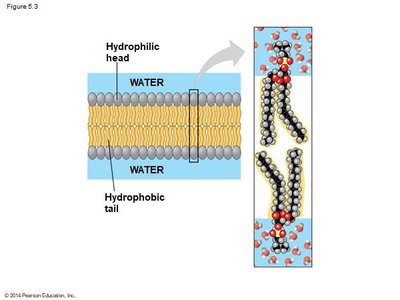
The plasma membrane is a fundamental cellular structure that separates the internal environment of the cell from the external environment. It is primarily composed of phospholipids, which are amphipathic molecules containing both hydrophilic (water-loving) and hydrophobic (water-fearing) regions. This unique arrangement allows the membrane to form a stable bilayer in aqueous environments.
Phospholipid Bilayer: Consists of two layers of phospholipids with hydrophilic heads facing outward toward water and hydrophobic tails facing inward, away from water.
Amphipathic Nature: Enables the membrane to act as a selective barrier.
Selective Permeability: The membrane regulates which substances can enter or exit the cell.
Fluid Mosaic Model
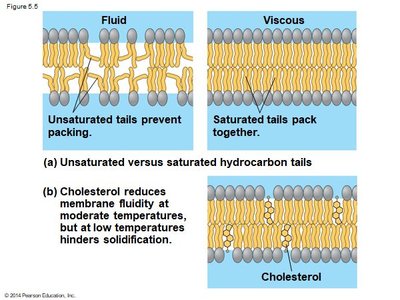
The fluid mosaic model describes the dynamic and complex structure of the plasma membrane. The membrane is not static; it is held together by weak hydrophobic interactions, allowing movement and flexibility.
Fluidity: Lipids and some proteins move laterally within the membrane. Unsaturated hydrocarbon tails (with kinks) prevent tight packing, maintaining fluidity at low temperatures.
Cholesterol: Acts as a buffer, reducing movement at high temperatures and preventing solidification at low temperatures.
Mosaic: The membrane is a collage of proteins, lipids, and carbohydrates.
Membrane Lipid Composition and Adaptation
Variations in membrane lipid composition are evolutionary adaptations to environmental conditions. Organisms can alter their membrane lipids in response to temperature changes, ensuring proper membrane function.
Adaptation: Species living in cold environments often have membranes rich in unsaturated fatty acids to maintain fluidity.
Environmental Response: Ability to change lipid composition is crucial for survival in varying temperatures.
Membrane Proteins
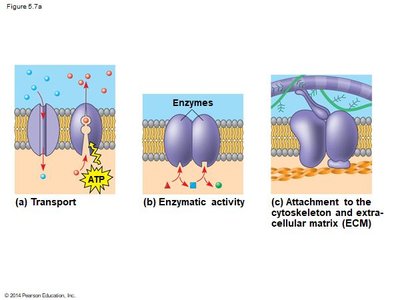
Proteins embedded in the plasma membrane are responsible for most of its specific functions. There are two main categories:
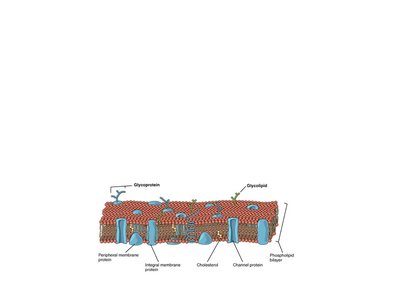
Integral Proteins: Embedded within the lipid bilayer, often spanning the membrane (transmembrane proteins). Amphipathic, with hydrophobic regions interacting with the lipid tails.
Peripheral Proteins: Loosely attached to the membrane surface, not embedded in the bilayer.
Functions of Membrane Proteins
Membrane proteins perform six major functions:
Transport: Move substances across the membrane.
Enzymatic Activity: Catalyze reactions at the membrane surface.
Attachment to Cytoskeleton and ECM: Maintain cell shape and stabilize membrane.
Cell-Cell Recognition: Allow cells to identify each other.
Intercellular Joining: Connect adjacent cells.
Signal Transduction: Relay signals from outside to inside the cell.
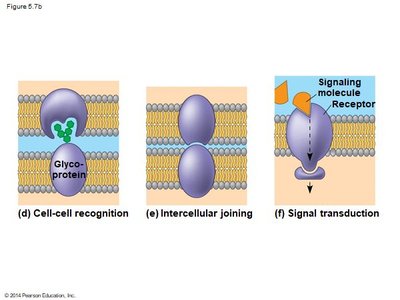
Membrane Carbohydrates and Asymmetry
Membrane carbohydrates are found on the extracellular surface and play a role in cell recognition and signaling. The plasma membrane is asymmetrical, with distinct inside and outside faces, determined during membrane synthesis in the ER and Golgi apparatus.
Glycoproteins and Glycolipids: Carbohydrates attached to proteins and lipids, respectively, are involved in cell-cell recognition.
Asymmetry: Distribution of proteins, lipids, and carbohydrates is established during membrane assembly.
Plant Cells
Cell Wall Structure and Function
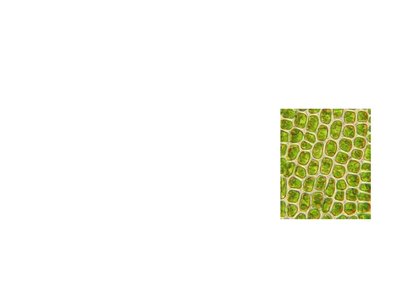
Plant cells possess a cell wall that covers their plasma membrane, providing additional support and protection. The cell wall is an extracellular structure composed mainly of cellulose and is much thicker than the plasma membrane.
Shape and Structure: Maintains cell shape and prevents excessive water uptake.
Protection: Shields the cell from mechanical stress and pathogens.
Plasmodesmata: Channels filled with cytosol that connect adjacent plant cells, facilitating communication and transport.
Practice Questions
Organelle Function in Disease and Adaptation
Hepatitis C and Albumin Production:
(a) The organelle most likely affected is the endoplasmic reticulum (ER), which is responsible for protein synthesis, including albumin.
(b) Justification: Hepatitis C damages liver cells, impairing the ER's ability to produce albumin, leading to decreased blood-albumin levels.
Insulin Production in Pancreatic Cells:
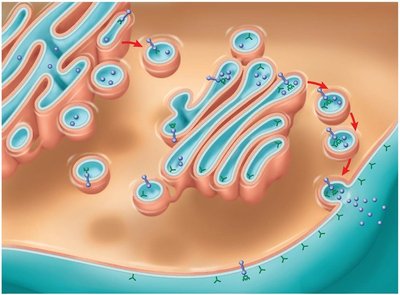
Insulin is synthesized in the ER, processed in the Golgi apparatus, and then secreted via vesicles through the plasma membrane.
Steps:
Translation of insulin mRNA in the rough ER.
Transport to the Golgi for modification and packaging.
Vesicle-mediated exocytosis releases insulin into the bloodstream.
Alcohol Detoxification in Liver Cells:
(a) The smooth endoplasmic reticulum (SER) is responsible for detoxifying alcohol.
(b) In sample 3, the lysosome would remove damaged organelle parts.
(c) Steps:
Damaged organelles are enclosed in a vesicle.
Lysosome fuses with the vesicle, releasing hydrolytic enzymes.
Enzymes break down damaged components for recycling.
Membrane Lipid Composition in Antarctic Fish:
(a) Cells would have membranes rich in unsaturated fatty acids.
(b) Justification: Unsaturated fatty acids maintain membrane fluidity at low temperatures, preventing solidification and ensuring proper function.
Summary Table: Membrane Components and Functions
Component | Structure | Function |
|---|---|---|
Phospholipid | Bilayer, amphipathic | Barrier, selective permeability |
Cholesterol | Interspersed in bilayer | Regulates fluidity |
Integral Protein | Embedded, transmembrane | Transport, signaling |
Peripheral Protein | Surface-bound | Support, cell shape |
Carbohydrate | Attached to proteins/lipids | Cell recognition |
Cell Wall (plants) | Cellulose, thick | Structure, protection |
Key Equations
Fluidity and Temperature:
Selective Permeability:
Additional info: Academic context was added to clarify the role of membrane components, adaptation mechanisms, and organelle functions in disease and detoxification.
