 Indietro
Plasmid Biology: Structure, Function, and Types in Bacteria
Guida di studio - Note intelligenti
 Appunti personalizzati basati sui tuoi materiali, ampliati con definizioni chiave, esempi e contesto.
Plasmid Biology in Bacteria
Overview of Bacterial Cell Structure
Bacteria are unicellular organisms with relatively small cell sizes and genomes compared to eukaryotes. Their rapid reproduction and adaptability are partly due to their ability to regulate gene transcription and acquire genetic material from external sources, such as plasmids.
Cell Components: Bacterial cells contain a cell wall, plasma membrane, cytoplasm, ribosomes, nucleoid (chromosomal DNA), plasmids, pili, capsule, and flagella.
Plasmids: Plasmids are distinct from the chromosomal DNA and exist as separate, circular, double-stranded DNA molecules in the cytoplasm.
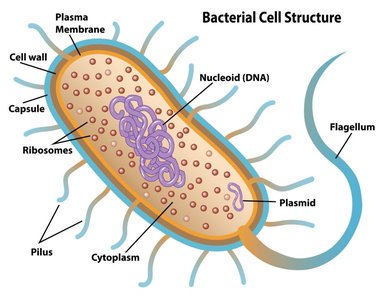
What Are Plasmids?
Plasmids are self-replicating genetic elements found in the cytoplasm of most bacterial species. They are smaller than the bacterial chromosome and are typically circular and supercoiled.
Structure: Double-stranded, circular DNA, ranging from 1,000 to 100,000 base pairs.
Replication: Plasmids replicate independently of the chromosome but require host cell resources.
Genes: Plasmids carry 2–400 genes, often encoding proteins that benefit the host cell.
Natural Plasmids: Many types exist in environmental bacteria, called natural plasmids.
Plasmid vs. Chromosome: Key Differences
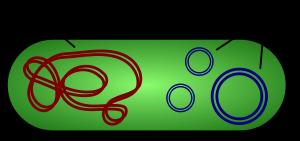
The bacterial chromosome is essential for cell survival, while plasmids are not. Plasmids must have an origin of replication (ori) and carry ancillary genes that can benefit the host cell under certain conditions.
Chromosome: 4–5 million base pairs, ~4,300 genes, essential for survival.
Plasmid: 1,000–100,000 base pairs, 2–400 genes, not essential but beneficial.
Replication: Both require an origin of replication, but plasmids replicate independently.
Transmission of Plasmids
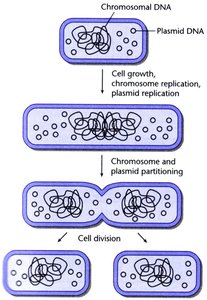
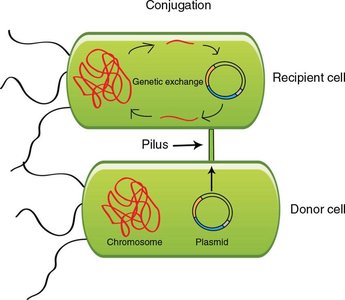
Plasmids are transmitted to progeny cells during cell division (vertical transmission) and, in some cases, can move between cells via conjugation (horizontal transmission).
Vertical Transmission: Plasmids are passed to daughter cells during binary fission.
Horizontal Transmission: Conjugative plasmids can transfer between cells via cell-to-cell contact.
Benefits of Plasmids to Bacterial Cells
Plasmids often carry genes that confer advantages under specific environmental conditions, such as antibiotic resistance, metal resistance, virulence, metabolic capabilities, and bacteriocin production.
Antibiotic Resistance: Genes that make bacteria resistant to antibiotics.
Metal Resistance: Genes for resistance to toxic metals (e.g., mercury, cadmium).
Virulence: Genes that enable invasion and survival in hosts.
Metabolic Genes: Enable growth on different nutrient sources.
Bacteriocins: Encode antibacterial agents that kill competing bacteria.
Specific Characteristics of Natural Plasmids
Replication and Propagation
Plasmids must contain an origin of replication (ori) to replicate. The ori is a small region of DNA where replication initiates, binding specific proteins (mostly from the host cell).
Key Host Proteins: DNA polymerases, gyrases, helicases, topoisomerases, primases, single-stranded DNA binding proteins.
Transcription: Plasmids use host cell enzymes for gene transcription.

Host Range
Plasmids have a host range, which is the spectrum of bacterial species in which they can replicate and be maintained.
Narrow Host Range: Replicate in a few closely related species.
Broad Host Range: Replicate in many species; often large plasmids responsible for pathogenicity and resistance.
Determined by: Origin of replication and plasmid size.
Copy Number
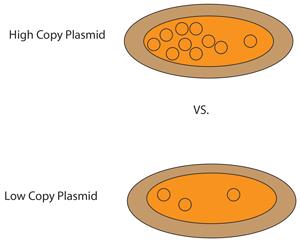
Plasmids can exist in multiple copies within a single cell, unlike the chromosome, which is present in one copy.
Stringent/Low Copy Number: 1–2 per cell; usually large plasmids.
Relaxed/High Copy Number: 10–100s per cell; usually small plasmids.
Resource Limitation: Large plasmids are limited by cell resources and space.
Replication Control and Partitioning
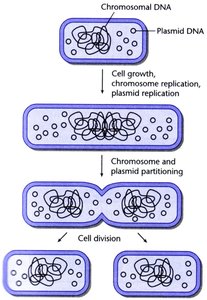
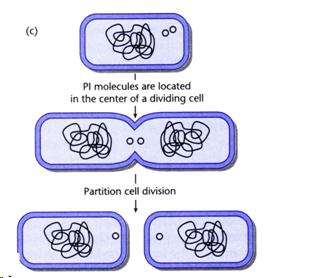
Plasmid partitioning into progeny cells depends on copy number. High copy number plasmids distribute randomly, while low copy number plasmids require partitioning mechanisms.
High Copy Number: Random distribution; replication adjusts to maintain correct copy number.
Low Copy Number: Partition proteins ensure each daughter cell receives at least one plasmid.
Types of Natural Plasmids and Their Functions
Resistance (R) Plasmids
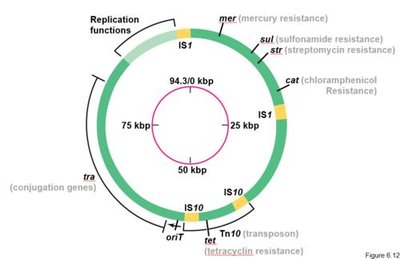
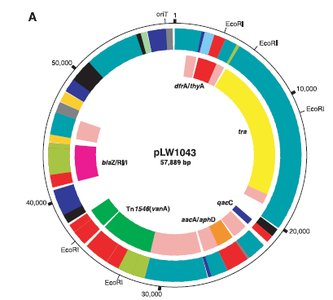
R plasmids carry genes that confer resistance to antibiotics and other antimicrobial agents. They are often large, low copy number, and have a broad host range.
Example: Plasmid R100 (89,000 bp) carries resistance to mercury, tetracycline, streptomycin, chloramphenicol, and sulphonamides.
Transfer: Can move between cells by conjugation, spreading resistance.
Bacteriocinogenic Plasmids
Bacteriocinogenic plasmids encode bacteriocins, which are proteins or peptides that kill closely related bacterial species, giving the host a competitive advantage.
Application: Used in food manufacturing, agriculture, and aquaculture.
Immunity: The producing cell is immune to its own bacteriocins.

Virulence Plasmids
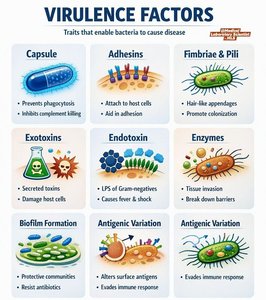
Virulence plasmids carry genes that enable bacteria to invade and colonize hosts, often by encoding toxins.
Examples: Enterotoxins in E. coli, tetanus toxin in Clostridium tetani.
Benefit: Facilitate disease-causing ability in host organisms.
Metabolic Plasmids
Metabolic plasmids expand the metabolic capabilities of bacteria, allowing them to utilize new nutrient sources or synthesize essential compounds.
Examples: Genes for lactose fermentation (lac operon), sucrose fermentation, urea hydrolysis, H2S production, vitamin synthesis.
Fertility (F) Plasmid
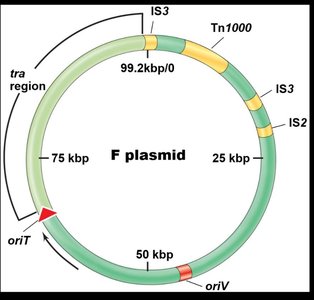
The F plasmid is a large plasmid responsible for genetic exchange in bacteria via conjugation. It can exist free in the cytoplasm or integrate into the chromosome (episome).
Function: Transfers itself and chromosomal genes between bacteria.
Structure: Contains tra region and oriT for conjugation.
Summary of Natural Plasmids
Circular, supercoiled, double-stranded DNA molecules, smaller than the bacterial chromosome.
Replicate independently but require their own origin of replication.
Exist free of the chromosome, passed to progeny cells upon division.
Encode some, but not all, proteins necessary for survival and propagation.
Not classified as parasites; do not kill the cell.
Varied in size, copy number, and host range.
Types include resistance, virulence, bactericidal, metabolic, and F plasmids.
Some are capable of conjugation, moving between cells.
Must be beneficial to the host cell to be maintained in the population.
