 Indietro
Polymerase Chain Reaction (PCR) and Its Applications
Guida di studio - Note intelligenti
 Appunti personalizzati basati sui tuoi materiali, ampliati con definizioni chiave, esempi e contesto.
Polymerase Chain Reaction (PCR)
Overview and Purpose of PCR
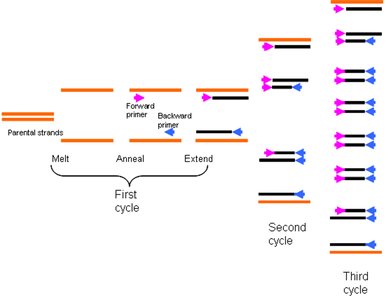
The Polymerase Chain Reaction (PCR) is a revolutionary molecular biology technique that enables the amplification of specific DNA sequences from minute amounts of starting material. Invented in 1983 by Kary Mullis, PCR allows researchers to generate millions to billions of copies of a particular DNA segment, making it possible to analyze genes, diagnose diseases, and identify organisms.
Purpose: To selectively amplify a target DNA sequence from a complex mixture, such as the human genome.
Analogy: Finding a short sentence in a library of books by making millions of copies of just that sentence.
Applications: Forensics, medical diagnostics, ancestry testing, research, and more.
History and Discovery of PCR
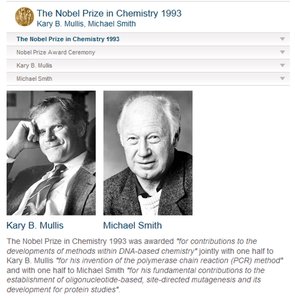
PCR was developed by Kary Mullis in 1983, for which he was awarded the Nobel Prize in Chemistry in 1993. The technique revolutionized molecular biology by providing a simple, rapid, and inexpensive method for DNA amplification.
Key Contributors: Kary Mullis (PCR invention), Michael Smith (site-directed mutagenesis).
Significance: Enabled advances in genetics, biotechnology, and medicine.
PCR Process and Components
Essential Components of PCR
To perform PCR, several key reagents are required:
DNA Template: The DNA containing the target sequence to be amplified.
Primers: Short, single-stranded DNA oligonucleotides that flank the target region and provide starting points for DNA synthesis.
DNA Polymerase: An enzyme that synthesizes new DNA strands. Taq polymerase from Thermus aquaticus is commonly used due to its heat stability.
dNTPs: Deoxynucleotide triphosphates (A, T, G, C) are the building blocks for new DNA synthesis.
Mg2+: A cofactor required for polymerase activity.
Buffer: Maintains optimal pH and ionic strength for the reaction.
PCR Steps
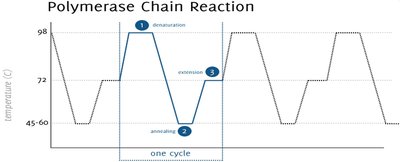
PCR consists of repeated cycles of three main steps:
Denaturation: Heating the reaction to 94–98°C to separate double-stranded DNA into single strands.
Annealing: Cooling to 50–65°C to allow primers to bind (anneal) to their complementary sequences on the template DNA.
Extension: Raising the temperature to 72°C for DNA polymerase to synthesize new DNA strands from the primers.
This cycle is repeated 30–40 times, resulting in exponential amplification of the target DNA.
Role of Taq Polymerase
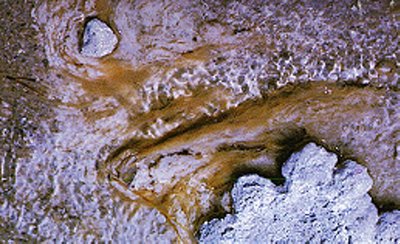
Taq polymerase is a thermostable DNA polymerase isolated from the thermophilic bacterium Thermus aquaticus, which thrives in hot springs such as those in Yellowstone National Park. Its heat resistance allows it to withstand the high temperatures of the denaturation step, making it ideal for PCR.
Optimal Temperature: 72°C for DNA synthesis.
Source: Hot spring bacteria.
Applications of PCR
Forensic DNA Typing and Ancestry Testing
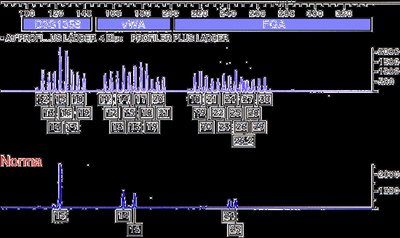
PCR is widely used in forensic science to analyze DNA from crime scenes, as well as in ancestry testing to determine genetic heritage. Short Tandem Repeat (STR) analysis is a common method for individual identification.
Forensics: Identifying suspects or victims from trace DNA evidence.
Ancestry: Determining genetic lineage and relationships.

Medical Diagnostics: COVID-19 Testing
PCR is a cornerstone of molecular diagnostics, including the detection of viral RNA in diseases such as COVID-19. Reverse transcription PCR (RT-PCR) is used to convert viral RNA into DNA before amplification.
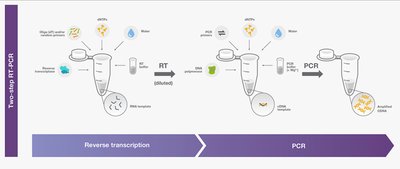
RT-PCR: Used for detecting RNA viruses by first synthesizing complementary DNA (cDNA) from RNA.
COVID-19: RT-PCR is the gold standard for SARS-CoV-2 detection.
Advanced PCR Techniques
Reverse Transcription PCR (RT-PCR)
RT-PCR is used to measure gene expression by converting RNA into cDNA using reverse transcriptase, followed by PCR amplification. This technique is essential for studying mRNA levels in cells.
Ingredients: Reverse transcriptase, dNTPs, primers (polyT or random hexamers).
Applications: Gene expression analysis, viral RNA detection.
Quantitative PCR (qPCR) and qRT-PCR
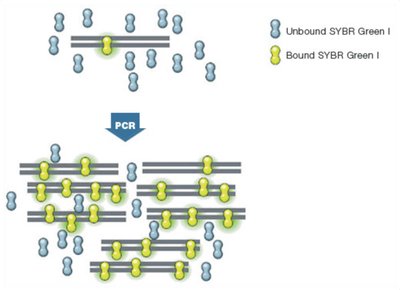
Quantitative PCR (qPCR) allows for the real-time measurement of DNA amplification, enabling quantification of DNA or RNA in a sample. Fluorescent dyes (e.g., SYBR Green) or probe-based methods are used to monitor the reaction.
SYBR Green: A dye that fluoresces when bound to double-stranded DNA, allowing quantification of PCR products.
Probe-based qPCR: Uses fluorescently labeled probes for specific detection and quantification.
qRT-PCR: Combines reverse transcription and qPCR for quantitative RNA analysis.
Multiplex qPCR
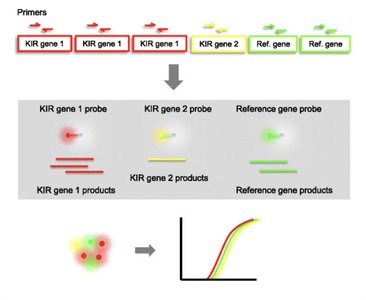
Multiplex qPCR enables the simultaneous amplification and quantification of multiple target sequences in a single reaction by using different probes labeled with distinct fluorophores. This is useful for detecting multiple genes or pathogens at once.
Application: High-throughput gene copy number and haplotype determination.
Summary Table: Types of PCR and Their Applications
Type of PCR | Main Purpose | Key Features | Example Application |
|---|---|---|---|
Standard PCR | Amplify DNA | Exponential amplification, DNA template | Cloning, genotyping |
RT-PCR | Amplify RNA (via cDNA) | Reverse transcription step | Gene expression, viral RNA detection |
qPCR | Quantify DNA | Real-time fluorescence detection | Pathogen load, gene copy number |
qRT-PCR | Quantify RNA | Reverse transcription + real-time detection | Gene expression profiling |
Multiplex qPCR | Quantify multiple targets | Multiple probes/fluorophores | Pathogen panels, genetic testing |
Key Equations
Exponential Amplification:
Where N is the number of DNA molecules after n cycles, and N0 is the initial number of template molecules.
Conclusion
PCR and its advanced forms (RT-PCR, qPCR, multiplex qPCR) are foundational techniques in modern biology, enabling sensitive, specific, and quantitative analysis of DNA and RNA. Their applications span research, medicine, forensics, and biotechnology, making them essential tools for biologists.
