 Indietro
Principles of Evolution: Darwin’s Theory and Mechanisms of Population Change
Guida di studio - Note intelligenti
 Appunti personalizzati basati sui tuoi materiali, ampliati con definizioni chiave, esempi e contesto.
Principles of Evolution
Introduction to Evolution
Evolution is the central concept in biology, explaining the diversity of life and the adaptation of organisms to their environments. The theory of evolution states that living species are descendants of ancestral species that were different from present-day ones. Evolution is a continuous process, influenced by environmental factors and genetic variation.
Evolution: The process by which populations of organisms change over generations through variations in heritable traits.
Natural selection: The mechanism proposed by Charles Darwin, where individuals with traits better suited to their environment tend to survive and reproduce, passing those traits to the next generation.
Adaptation: Traits that enhance an organism’s survival and reproductive success in a particular environment.
“Nothing in Biology makes sense except in the light of evolution.” – Theodus Dobzhansky
Darwin’s Voyage and Observations
Charles Darwin’s journey on the HMS Beagle was pivotal in shaping his theory of evolution. During his travels, especially to the Galápagos Islands, Darwin observed unique species and adaptations, leading him to propose the concept of descent with modification.
Descent with modification: All life is connected by common ancestry, and descendants accumulate adaptations over time.
Darwin’s theory challenged the notion of a young Earth with unchanging species.
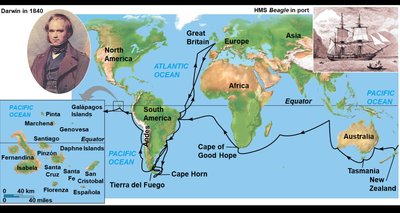
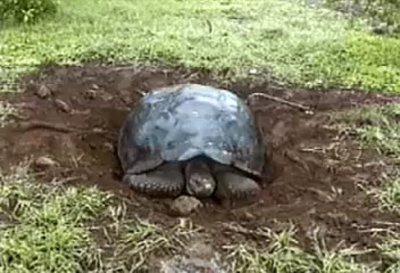
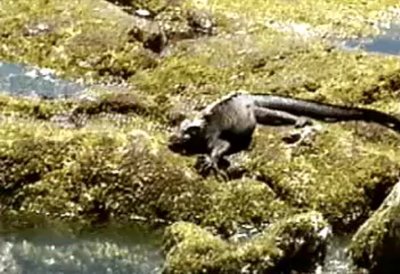
Darwin’s observations of Galápagos tortoises and iguanas provided evidence for adaptation and speciation.
Natural Selection: Mechanism and Characteristics
Natural selection is the primary mechanism of evolution. It acts on heritable variations within populations, favoring traits that enhance survival and reproduction in a specific environment.
Natural selection is an editing process, not a creative one.
It is contingent on time and place, favoring traits that fit the current environment.
Populations, not individuals, evolve over time.
Only heritable traits are affected by natural selection.
Evolution is not goal-directed and does not produce perfectly adapted organisms.
Evolution and Disease Resistance
Evolution can lead to both favorable and unfavorable traits, such as drug or pesticide resistance. Attempts to eradicate diseases like malaria have been hindered by the evolution of resistance in mosquitoes and parasites.
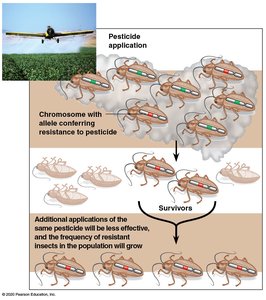
Resistance to DDT in mosquitoes and chloroquine in malaria parasites are examples of evolution in action.
Understanding evolution is crucial for addressing challenges in medicine and agriculture.
Evidence for Evolution
Fossil Evidence
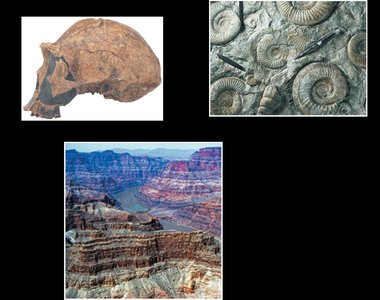
Fossils provide direct evidence for evolution, documenting differences between past and present organisms and revealing the historical sequence of evolutionary events.
Fossils are imprints or remains of organisms from the past.
The fossil record shows that many species have become extinct.
Transitional Fossils
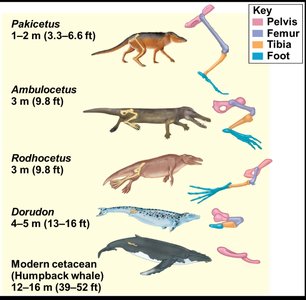
Transitional fossils link extinct species with living species, illustrating evolutionary changes such as the transition from land to sea in cetacean ancestors.
Transitional forms provide insight into evolutionary origins of groups.
Homology: Structural and Molecular Evidence
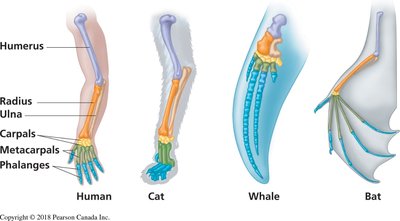
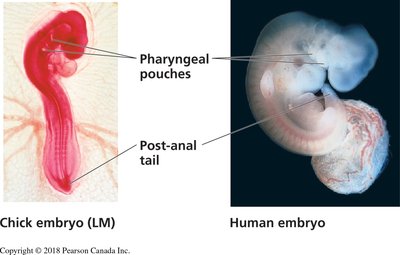
Homology refers to similarities resulting from common ancestry. Structural homologies are anatomical resemblances, while molecular homologies involve shared genes and DNA sequences.
Homologous structures: Variations on a structural theme present in a common ancestor.
Vestigial structures: Remnants of features that served important functions in ancestors.
Molecular homology: Genes shared among organisms inherited from a common ancestor.
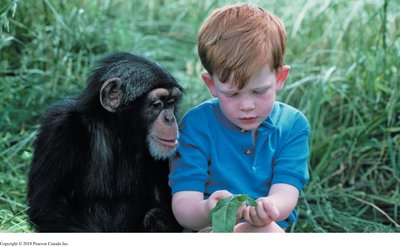
Humans and chimpanzees share 98.8% of their DNA, highlighting molecular homology.
Evolutionary Trees
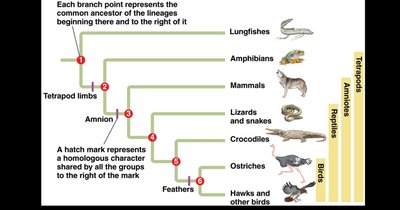
Biologists use evolutionary trees to represent patterns of descent. Homologous structures and molecular data help determine branching sequences and relationships among species.
Evolutionary trees illustrate common ancestry and divergence of lineages.
Artificial Selection
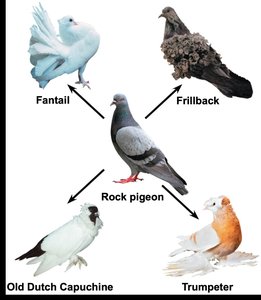
Artificial selection, the selective breeding of organisms by humans, demonstrates how incremental changes can accumulate rapidly. Darwin used artificial selection as a model for natural selection.
Artificial selection can produce significant changes in a short time.
How Populations Evolve
Genetic Variation in Populations
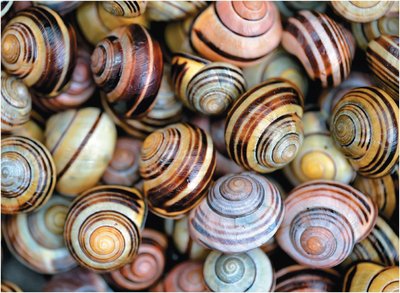
Variation within populations is essential for evolution. The ultimate source of genetic variation is mutation, while sexual reproduction creates unique combinations of alleles.
Mutation: The original source of genetic variation.
Sexual reproduction: Shuffles alleles to produce new combinations.
Population Genetics and Microevolution
Microevolution refers to changes in allele frequencies within a population’s gene pool. A population is a group of individuals of the same species living in the same area and interbreeding.
Gene pool: All copies of every type of allele at every locus in all members of the population.
Microevolution: Change in allele frequencies over time.
The Hardy-Weinberg Equilibrium
The Hardy-Weinberg equilibrium describes a population in which allele and genotype frequencies remain constant from generation to generation, provided certain conditions are met.
Conditions: Large population, random mating, no mutation, no gene flow, no natural selection.
Used to test whether evolution is occurring in a population.
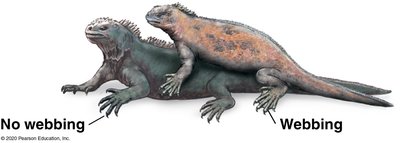
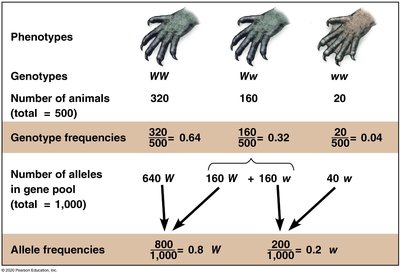
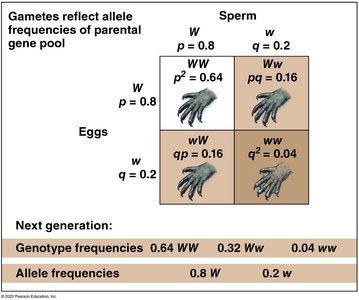
Hardy-Weinberg equation:
Where p and q are the frequencies of two alleles in the population.
Mechanisms of Microevolution
Microevolution is driven by three main mechanisms: natural selection, genetic drift, and gene flow.
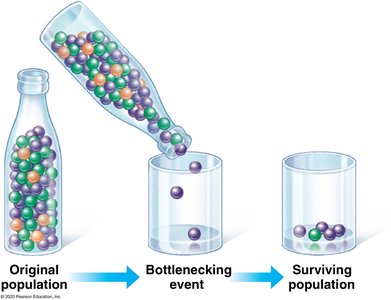
Genetic drift: Random changes in allele frequencies, especially in small populations.
Bottleneck effect: Loss of genetic diversity when a population is greatly reduced.
Founder effect: Genetic drift when a few individuals colonize a new habitat.
Gene flow: Movement of alleles between populations.
Adaptive Evolution and Fitness
Natural selection is the only mechanism that consistently leads to adaptive evolution, resulting in a better fit between organisms and their environment. Relative fitness measures an individual’s contribution to the gene pool of the next generation.
Favorable traits increase in frequency due to natural selection.
Types of Natural Selection
Natural selection can alter variation in a population in three ways:
Stabilizing selection: Favors intermediate phenotypes.
Directional selection: Favors one extreme phenotype.
Disruptive selection: Favors both extreme phenotypes.
Example: The shift in coloration of peppered moths during the Industrial Revolution is an example of directional selection.
Sexual Selection
Sexual selection is a form of natural selection where individuals with certain traits are more likely to obtain mates. It can lead to phenotypic differences between males and females (sexual dimorphism).
Intersexual selection: Mate choice, usually by females.
Intrasexual selection: Competition among individuals of the same sex.
Secondary sex characteristics can give individuals an advantage in mating.
Summary Table: Mechanisms of Microevolution
Mechanism | Description | Effect on Population |
|---|---|---|
Natural Selection | Favors traits that enhance survival and reproduction | Adaptive evolution |
Genetic Drift | Random changes in allele frequencies | Loss of genetic diversity |
Gene Flow | Movement of alleles between populations | Increases genetic variation |
Additional info: These notes expand on brief points from the original materials, providing definitions, examples, and context for key concepts in evolutionary biology. All included images directly reinforce the explanations adjacent to their placement.
