 Indietro
Prokaryotes: Bacteria and Archaea – Structure, Diversity, and Impact
Guida di studio - Note intelligenti
 Appunti personalizzati basati sui tuoi materiali, ampliati con definizioni chiave, esempi e contesto.
Prokaryotes: Bacteria and Archaea
Overview of Prokaryotes
Prokaryotes are unicellular organisms that lack a nucleus and membrane-bound organelles. They are classified into two domains: Bacteria and Archaea. Prokaryotes are fundamental to life on Earth due to their ancient origins, diversity, abundance, and ubiquity in various environments.
Unicellular: Each organism consists of a single cell.
No nucleus: DNA is located in a region called the nucleoid.
Domains: Bacteria and Archaea.
Size: Typically 1–5 µm.
Some have flagella for movement.
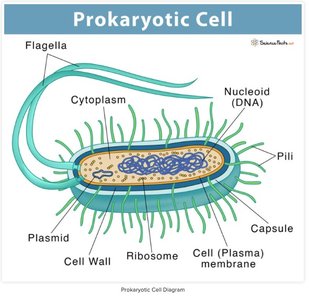
Key Characteristics and Morphology
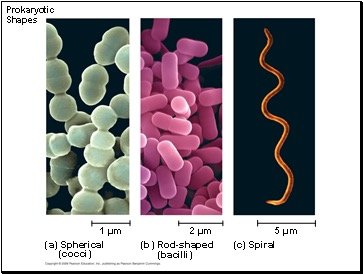
Prokaryotes are microorganisms, meaning they are too small to be seen without a microscope. They exhibit three main morphological shapes:
Cocci: Spherical
Bacillus: Rod-shaped
Spirochetes: Spiral-shaped
Biological Impact and Importance
Prokaryotes have a large biological impact due to their ancient origins, diversity, and abundance. They thrive in environments where many other organisms cannot survive and play crucial roles in medicine and environmental processes.
Ancient: First life-forms on Earth, appearing about 3.5 billion years ago.
Diverse: Found in nearly every environment.
Abundant: Most of life on Earth is prokaryotic.
Ubiquitous: Present globally, including extreme environments.
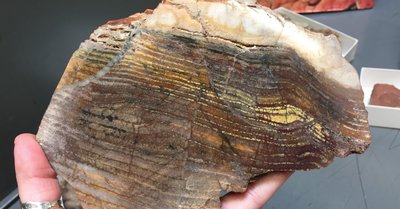
Stromatolites: Evidence of Ancient Prokaryotes
Stromatolites are layered fossil structures formed by ancient communities of bacteria and archaea. They provide evidence of early prokaryotic life and are among the oldest fossils known.
Formation: Created by cyanobacteria through photosynthesis.
Age: Some stromatolites are about 3.4 billion years old.
Modern examples: Still found in places like Australia.
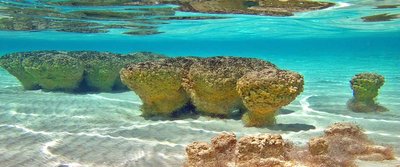
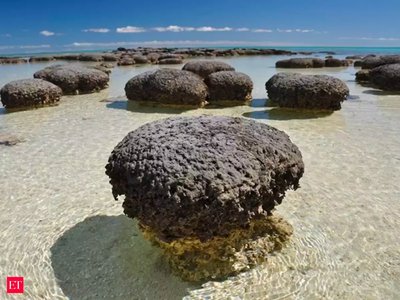



Prokaryotes in Extreme Environments
Some prokaryotes are extremophiles, capable of surviving and reproducing in extreme conditions such as hot springs, bioluminescent oceans, and environments resembling early Earth.
Types of extremophiles: Thermophiles (heat), halophiles (salt), acidophiles (acidic), etc.
Photosynthetic bacteria: Cyanobacteria perform oxygen-producing photosynthesis.
Global impact: Cyanobacteria increased atmospheric oxygen, enabling aerobic life.
Ecological and Environmental Roles
Prokaryotes are essential for global nutrient cycling, bioremediation, and supporting food webs. They transform elements into usable forms and can degrade pollutants.
Photosynthetic bacteria: Fix CO2 and produce O2.
Decomposers: Break down organic matter.
Methanogenic archaea: Produce methane.
Bioremediation: Remove or neutralize environmental pollutants.
Medical Importance of Prokaryotes
Bacteria are medically important, both as pathogens and as beneficial organisms. The understanding of their role in disease evolved from the miasma theory to the germ theory of disease.
Miasma theory: Belief that "bad air" caused disease.
Germ theory: Microorganisms cause disease by invading hosts.
Koch's postulates: Criteria to link specific microbes to specific diseases.
Discovery and Study of Microbes
The invention of the microscope enabled the first observations of cells and living microbes. Robert Hooke described cells, and Antonie van Leeuwenhoek observed living microorganisms, leading to the birth of microbiology.
Microscope invention: 1590, Janssen Brothers.
Robert Hooke: First described cells (1665).
Antonie van Leeuwenhoek: First observed living microbes (1670).
Methods for Studying Prokaryotes
Prokaryotes are studied using culture-based and non-culture-based methods. Culture-based methods involve growing organisms in the lab, while non-culture-based methods use DNA and chemical analysis to study environmental samples.
Culture-based: Grow prokaryotes, describe morphology, use stains.
Non-culture-based: Extract DNA, analyze chemical signatures, build phylogenetic trees.
Reproduction and Genetic Variation in Prokaryotes
Prokaryotes reproduce by binary fission, producing genetically identical cells. However, genetic variation and recombination occur through four main processes:
Transformation: Uptake of DNA from the environment.
Transduction: Transfer of DNA by viruses (bacteriophages).
Conjugation: Transfer of DNA between cells via pili.
Mutation: Spontaneous changes in DNA sequence.
Binary fission equation:
$N = N_0 \times 2^n$ Where $N$ is the final number of cells, $N_0$ is the initial number, and $n$ is the number of generations.
Themes in Diversification of Bacteria and Archaea
Bacteria and Archaea exhibit genetic variation through gene transfer, morphological diversity, differences in cell wall composition, metabolic diversity, and ecological diversity with global impacts.
Gene transfer: Horizontal gene transfer increases diversity.
Morphological diversity: Variety in cell shapes and structures.
Cell wall composition: Differences between Bacteria and Archaea.
Metabolic diversity: Range of energy sources and metabolic pathways.
Ecological diversity: Occupy diverse habitats and play key roles in ecosystems.
Example: Cyanobacteria are photosynthetic bacteria that contributed to the oxygenation of Earth's atmosphere, enabling the evolution of aerobic organisms.
