 Indietro
Ch.26 PT2Prokaryotes: Bacteria and Archaea – Structure, Diversity, and Ecological Roles
Guida di studio - Note intelligenti
 Appunti personalizzati basati sui tuoi materiali, ampliati con definizioni chiave, esempi e contesto.
Prokaryotes: Bacteria and Archaea
Introduction to Prokaryotes
Prokaryotes, which include Bacteria and Archaea, are single-celled organisms that lack a nucleus and membrane-bound organelles. They are among the most ancient and diverse forms of life, playing essential roles in ecosystems and human health.
Bacteria and Archaea are both classified as prokaryotes but differ in cell chemistry and genetic machinery.
Prokaryotes reproduce asexually by binary fission, producing genetically identical cells.
Despite asexual reproduction, genetic variation arises through several mechanisms.
Genetic Variation and Recombination in Prokaryotes
Mechanisms of Genetic Variation
Genetic diversity in prokaryotes is crucial for adaptation and evolution. Four main processes contribute to genetic variation:
Transformation: Uptake of free DNA from the environment, which is then incorporated into the genome by recombination.
Transduction: Transfer of DNA between prokaryotic cells via bacteriophages (viruses that infect bacteria).
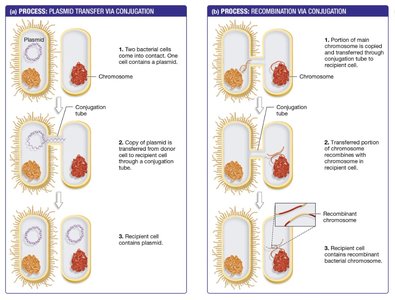
Conjugation: Direct transfer of DNA between two prokaryotic cells through cell-to-cell contact, often involving plasmids.
Mutation: Random changes in DNA sequence that can be inherited during binary fission.
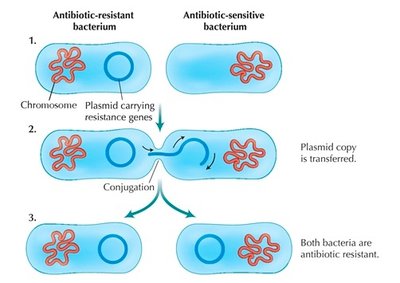
These processes allow prokaryotes to adapt rapidly to changing environments, including the spread of antibiotic resistance.
Conjugation and Plasmids
Conjugation is a major mechanism for horizontal gene transfer in bacteria. It involves the transfer of plasmids—small, circular DNA molecules that often carry accessory genes, such as those conferring antibiotic resistance.
Conjugation is not sexual reproduction; it is a one-way transfer of genetic material.
Genes can move between individuals, resulting in new genetic combinations.
Antibiotic resistance genes are frequently spread through conjugation.
Pili and Their Functions
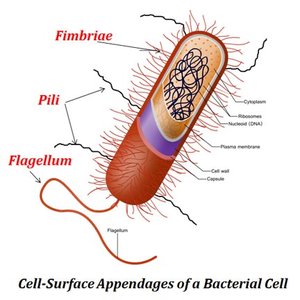
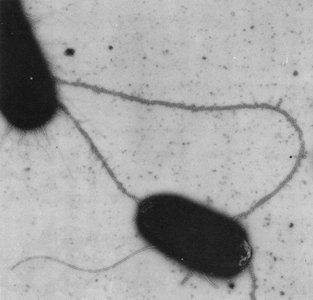
Pili (singular: pilus) are hair-like structures on the surface of bacterial cells that play a key role in conjugation by forming a bridge between cells for DNA transfer. They also assist in movement and attachment to surfaces.
Morphological Diversity of Prokaryotes
Cell Shapes and Arrangements
Prokaryotes exhibit a variety of cell shapes and arrangements, which are important for classification and identification:
Cocci: Spherical cells (e.g., Staphylococcus, Streptococcus)
Bacilli: Rod-shaped cells (e.g., Escherichia coli)
Spirilla: Spiral-shaped cells
Cells may occur singly, in pairs (diplo-), chains (strepto-), or clusters (staphylo-).
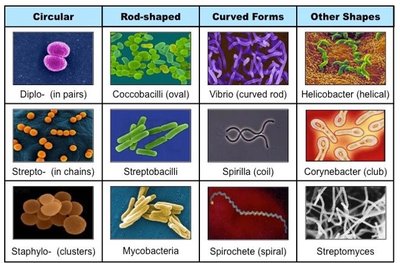
Typical Anatomy of a Prokaryotic Cell
Prokaryotic cells have a simple internal structure:
One circular chromosome (no nucleus)
Cell wall for structural support
Surface structures such as pili, fimbriae, and flagella
Cell Wall Composition and Gram Staining
Gram-Positive vs. Gram-Negative Bacteria
Bacteria are classified based on their cell wall structure and response to the Gram stain:
Gram-Positive Bacteria: Thick peptidoglycan layer, no outer membrane, stain purple.
Gram-Negative Bacteria: Thin peptidoglycan layer, outer membrane present, stain pink/red.
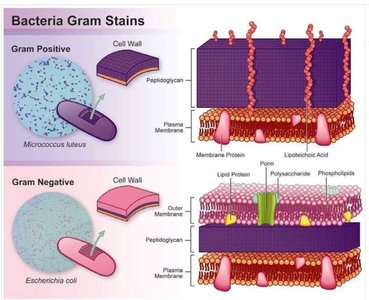
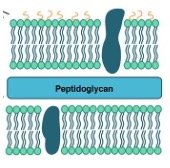
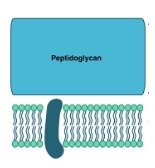
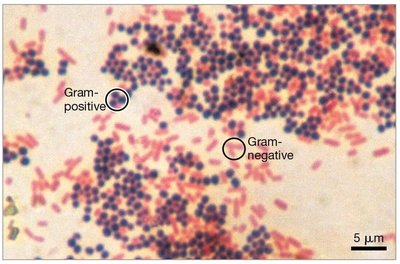
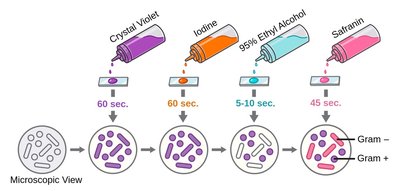
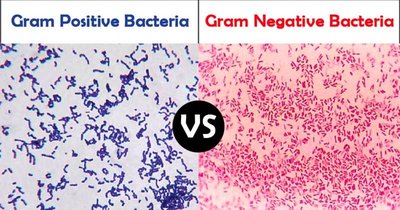
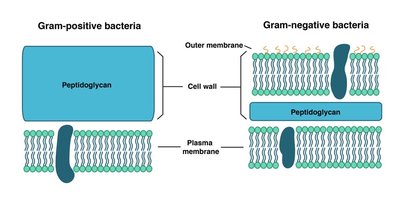
Table: Comparison of Gram-Positive and Gram-Negative Bacteria
Feature | Gram-Positive | Gram-Negative |
|---|---|---|
Peptidoglycan Layer | Thick | Thin |
Outer Membrane | Absent | Present |
Stain Color | Purple | Pink/Red |
Susceptibility | More susceptible to antibiotics | More resistant to antibiotics |
Protection | Protects against desiccation, acidic environments | Protects against antibiotics, toxins |
Metabolic Diversity in Prokaryotes
Types of Metabolism
Prokaryotes display remarkable metabolic diversity, allowing them to thrive in diverse environments. They are classified based on their sources of energy, electrons, and carbon:
Phototrophs: Obtain energy from sunlight
Chemotrophs: Obtain energy from chemical compounds
Autotrophs: Use inorganic carbon (CO2) as a carbon source
Heterotrophs: Use organic molecules as a carbon source
Some prokaryotes can switch between metabolic modes depending on environmental conditions (metabolic versatility).
Respiration and Fermentation
Aerobic Respiration: Uses oxygen as the final electron acceptor.
Anaerobic Respiration: Uses molecules other than oxygen as the final electron acceptor.
Fermentation: ATP is produced by substrate-level phosphorylation without an electron transport chain; organic molecules accept electrons.
Specialized Metabolisms
Methanotrophs: Use methane (CH4) as a source of carbon and energy.
Cyanobacteria: Perform oxygenic photosynthesis, producing O2 and fixing CO2.
Ecological Diversity and Global Impacts
Oxygen Revolution
Cyanobacteria were the first organisms to produce significant amounts of oxygen through photosynthesis, transforming Earth's atmosphere and enabling the evolution of aerobic life forms.
Nitrogen Cycle and Nitrate Pollution
Bacteria and Archaea are essential for the nitrogen cycle, converting atmospheric nitrogen into forms usable by plants and other organisms. However, agricultural practices can lead to nitrate pollution, causing eutrophication and dead zones in aquatic environments.
Nitrogen fixation: Conversion of atmospheric N2 to ammonia (NH3).
Nitrate pollution: Excess nitrate from fertilizers leads to algal blooms and oxygen depletion in water bodies.
Summary Table: Key Features of Prokaryotes
Feature | Bacteria | Archaea |
|---|---|---|
Cell Wall | Peptidoglycan present | No peptidoglycan |
Membrane Lipids | Ester-linked | Ether-linked |
Genetic Machinery | Distinct from Archaea and Eukarya | More similar to Eukarya |
Habitat | Wide range, including pathogens | Often extreme environments |
Additional info: Prokaryotes are foundational to all ecosystems, driving biogeochemical cycles and influencing the evolution of life on Earth. Their metabolic and genetic diversity underpins their ecological success and adaptability.
