 Indietro
Ch.26 Prokaryotes: Diversity, Structure, and Importance
Guida di studio - Note intelligenti
 Appunti personalizzati basati sui tuoi materiali, ampliati con definizioni chiave, esempi e contesto.
Prokaryotes: Bacteria and Archaea
Introduction to Prokaryotes
Prokaryotes are unicellular organisms that lack a nucleus and membrane-bound organelles. They are classified into two domains: Bacteria and Archaea. Prokaryotes are among the most ancient, diverse, abundant, and ubiquitous forms of life on Earth.
Unicellular: Each organism consists of a single cell.
No nucleus: Genetic material is located in a region called the nucleoid.
Domains: Bacteria and Archaea.
Size: Typically 1–5 µm in diameter, much smaller than eukaryotic cells.
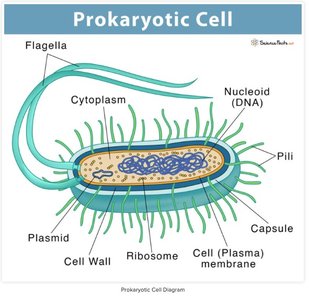
Key Characteristics of Prokaryotes
Microscopic: Require a microscope to observe.
Three main shapes:
Cocci: Spherical
Bacilli: Rod-shaped
Spirochetes: Spiral-shaped
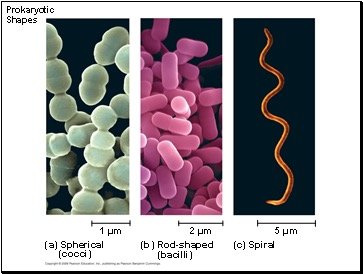
Why Study Prokaryotes?
Prokaryotes have a profound biological impact due to their ancient origins, diversity, abundance, and ability to thrive in extreme environments. They are crucial for medical, environmental, and evolutionary studies.
Ancient: First life forms on Earth, appearing about 3.5 billion years ago.
Diverse and Ubiquitous: Found in nearly every environment, including extreme habitats.
Medically Important: Some cause disease, others are essential for health.
Environmentally Important: Involved in nutrient cycling and bioremediation.
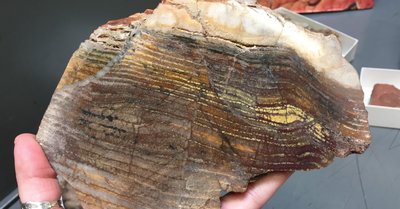
Stromatolites: Evidence of Ancient Prokaryotes
Stromatolites are layered fossil structures formed by ancient communities of bacteria and archaea, primarily cyanobacteria. These fossils provide evidence of some of the earliest life on Earth.
Formed by layers of cyanobacteria over time.
Modern stromatolites still exist in places like Australia.
Oldest known stromatolites are about 3.4–3.5 billion years old.
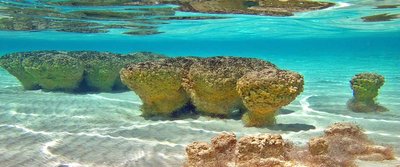
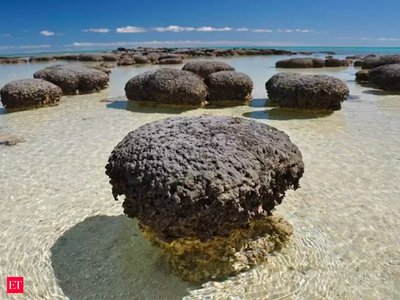
Prokaryotic Diversity and Extremophiles
Prokaryotes are found in almost every environment on Earth, including extreme environments where few other organisms can survive. These organisms are called extremophiles.
Extremophiles: Thrive in extreme conditions (e.g., high temperature, salinity, acidity).
Anaerobic prokaryotes: Can survive without oxygen, using other molecules for respiration.
Cyanobacteria: Photosynthetic bacteria that produce oxygen, playing a key role in transforming Earth's atmosphere.
Ecological and Global Importance
Prokaryotes are essential for global nutrient cycling, decomposition, and environmental processes such as bioremediation.
Global nutrient cycling: Transform elements into usable forms for other organisms.
Bioremediation: Breakdown or neutralization of pollutants.
Symbiosis: Aid in digestion, vitamin production, and immunity in animals.
Medical Importance and Historical Perspectives
Prokaryotes, especially bacteria, are medically significant as both pathogens and beneficial organisms. The understanding of their role in disease evolved over time, replacing earlier theories such as miasma and spontaneous generation.
Miasma Theory: Diseases were once thought to be caused by "bad air" or miasma.
Spontaneous Generation: The belief that life could arise from non-living matter.
Germ Theory of Disease: Microorganisms are the cause of many diseases, established through the work of scientists like Robert Koch.
Discovery of Microbes
The invention of the microscope enabled the discovery of cells and microorganisms, leading to the birth of microbiology.
Robert Hooke (1665): First described cells.
Antonie van Leeuwenhoek (1670s): First observed living microbes ("animalcules").
Studying Prokaryotes: Methods
Prokaryotes are studied using both culture-based and non-culture-based methods.
Culture-based methods: Grow prokaryotes in the lab, observe morphology, use stains for visualization.
Non-culture-based methods: Extract DNA from environmental samples, analyze genetic material to determine relationships and diversity.
Reproduction and Genetic Variation in Prokaryotes
Prokaryotes reproduce asexually by binary fission, producing genetically identical cells. However, genetic variation arises through several mechanisms:
Transformation: Uptake of free DNA from the environment.
Transduction: Transfer of DNA by viruses (bacteriophages).
Conjugation: Direct transfer of DNA (often plasmids) between cells via pili.
Mutation: Random changes in DNA sequence.
These processes contribute to genetic diversity and adaptation, including the spread of antibiotic resistance genes.
Themes in Diversification of Bacteria and Archaea
Genetic Variation through Gene Transfer
Morphological Diversity
Cell Wall Composition
Metabolic Diversity
Ecological Diversity and Global Impacts
