 Indietro
Prokaryotes: Diversity, Structure, and Importance
Guida di studio - Note intelligenti
 Appunti personalizzati basati sui tuoi materiali, ampliati con definizioni chiave, esempi e contesto.
Prokaryotes
Overview of Prokaryotes
Prokaryotes are single-celled organisms that lack a nucleus and membrane-bound organelles. They are among the oldest, simplest, and most abundant forms of life on Earth, having existed for billions of years.
Domains: Prokaryotes are classified into two domains: Bacteria and Archaea.
Cell Structure: Prokaryotic cells are typically 1–10 μm in size, much smaller than most eukaryotic cells.
Genetic Material: Most prokaryotes have a single circular chromosome.
Cell Division: Prokaryotes divide by binary fission, not mitosis, and do not undergo sexual reproduction.
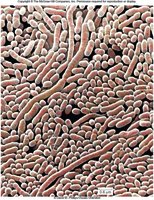
Classification and Domains of Life
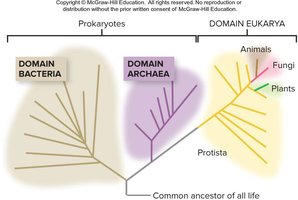
Life is divided into three domains: Bacteria, Archaea, and Eukarya. The first two domains each consist of a single kingdom, while Eukarya contains multiple kingdoms (Animals, Fungi, Plants, Protista).
Bacteria: Includes a wide variety of species, many of which are ecologically and medically important.
Archaea: Often found in extreme environments and possess unique biochemical characteristics.
Eukarya: Includes all higher organisms with complex cells.
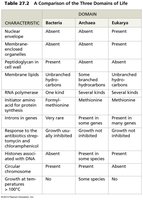
Comparison of the Three Domains
The three domains differ in cell structure, genetic material, and metabolic pathways.
Characteristic | Bacteria | Archaea | Eukarya |
|---|---|---|---|
Nuclear envelope | Absent | Absent | Present |
Membrane-enclosed organelles | Absent | Absent | Present |
Peptidoglycan in cell wall | Present | Absent | Absent |
Membrane lipids | Unbranched hydrocarbons | Branched hydrocarbons | Unbranched hydrocarbons |
RNA polymerase | One kind | Several kinds | Several kinds |
Initiator amino acid for protein synthesis | Formyl-methionine | Methionine | Methionine |
Introns in genes | Very rare | Present in some genes | Present |
Response to antibiotics | Growth usually inhibited | Growth not inhibited | Growth not inhibited |
Ability to grow at temperatures >100°C | Absent | Some species | Absent |
Bacteria and Archaea
Prokaryotic Diversity and Evolution
Prokaryotes exhibit remarkable diversity in their metabolic pathways, allowing them to thrive in a wide range of environments.
Photoautotrophs: Use solar energy to manufacture their own food.
Photoheterotrophs: Use sunlight for energy but require organic materials for food.
Chemoautotrophs: Use inorganic substances (e.g., hydrogen gas) for energy to manufacture food.
Chemoheterotrophs: Obtain energy and carbon from organic material breakdown.
Prokaryotic Cell Structure
Primitive cells: Nearly all prokaryotes are unicellular.
Lack of nucleus: Chromosomes are not enclosed by a nuclear membrane.
Lack of membrane-bound organelles: No mitochondria, chloroplasts, etc.
Single circular chromosome: Genetic material is organized in a single loop.
Habitats and Extremophiles
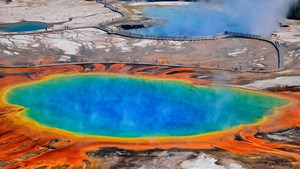
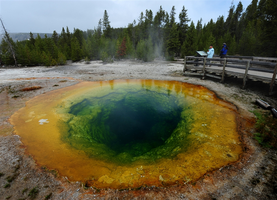
Prokaryotes live everywhere eukaryotes do, and also in extreme environments such as deep-sea caves, glacial ice, volcanic rims, hypersaline and hyperthermal pools, and inside living organisms.
Archaea: Many are extremophiles, thriving in places that lack oxygen or are extremely hot, salty, or acidic.
Methanogens: Anaerobic archaea that produce methane by converting carbon dioxide and hydrogen gases. They play a role in digestion in animals like cows.
Thermophilic: Heat-loving archaea found in hot springs and volcanic vents.
Halophilic: Salt-loving archaea found in environments like the Dead Sea.

Bacterial Diversity
Shapes and Types of Bacteria
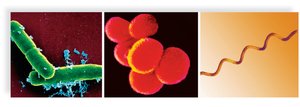
Bacteria are extremely diverse and are classified by their shapes:
Bacillus: Rod-shaped
Coccus: Spherical
Spirillum: Helical-shaped
Bacterial Abundance and Ecology
Bacteria are the most abundant organisms on Earth.
Proteobacteria are the most diverse group.
Cyanobacteria are important photosynthesizers.
Some bacteria cause diseases, while many are beneficial for ecology and human health.
Bacterial Biofilms
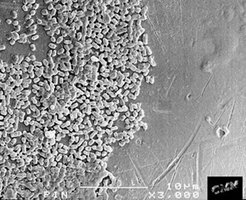
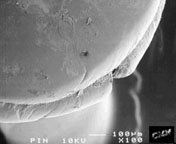
Bacteria can associate to form a biofilm, which is a structured community of cells enclosed in a self-produced polymeric matrix and attached to a surface. Biofilms are important in both natural and artificial environments. 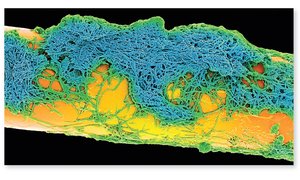
Bacteria in the Human Body
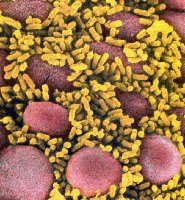
Bacteria are found throughout the human body, including the intestine, where they play a role in digestion and health.
Importance of Bacteria
Cyanobacteria and Oxygen Production
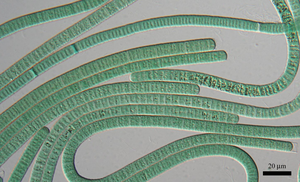
Cyanobacteria: Photosynthetic bacteria that created Earth's first oxygen atmosphere.
Dominated ecosystems for 1,900 million years.
Ecological Roles
Decomposition: Bacteria and fungi are critical in recycling organic matter.
Nitrogen fixation: Bacteria convert atmospheric nitrogen (N2) into ammonium (NH3), which plants can use.
Food Production
Bacteria are used to make yogurt, pickles, cheeses, and other foods.
Medical Importance
Bacteria cause many diseases (e.g., tuberculosis, cholera, diphtheria, botulism, strep throat, tetanus, scarlet fever, toxic-shock syndrome, dysentery, tooth decay, ulcers, and the black death).
Sexually transmitted diseases include syphilis, gonorrhea, and chlamydia.
Bacteria are used in biotechnology to produce chemicals, medicines, and antibiotics (e.g., streptomycin).
Bioremediation
Bacteria are used to remove pollutants from water, air, and soil.
Biostimulation: Adds nutrients to encourage growth of naturally occurring microbes.
Summary Table: Metabolic Types of Prokaryotes
Metabolic Type | Energy Source | Carbon Source | Example |
|---|---|---|---|
Photoautotroph | Light | CO2 | Cyanobacteria |
Photoheterotroph | Light | Organic compounds | Some purple bacteria |
Chemoautotroph | Inorganic chemicals | CO2 | Nitrifying bacteria |
Chemoheterotroph | Organic compounds | Organic compounds | Most bacteria |
Additional info: The notes have been expanded to provide academic context and self-contained explanations suitable for General Biology students.
