 Indietro
Prokaryotes: Diversity, Structure, and Importance (Bacteria & Archaea)
Guida di studio - Note intelligenti
 Appunti personalizzati basati sui tuoi materiali, ampliati con definizioni chiave, esempi e contesto.
Prokaryotes: Bacteria and Archaea
Introduction to Prokaryotes
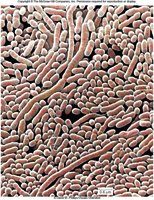
Prokaryotes are single-celled organisms that lack a nucleus and membrane-bound organelles. They are among the oldest, most abundant, and structurally simplest forms of life on Earth, thriving in a wide range of environments, including extreme habitats. Prokaryotes are divided into two domains: Bacteria and Archaea.
Prokaryote: An organism whose cells lack a nucleus and membrane-bound organelles.
Prokaryotic cells are typically 1–10 μm in size, much smaller than most eukaryotic cells.
They have been present on Earth for billions of years, predating eukaryotes by over a billion years.
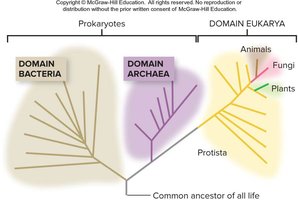
Three Domains of Life
Life is classified into three domains: Bacteria, Archaea, and Eukarya. Bacteria and Archaea are prokaryotic, while Eukarya includes all eukaryotic organisms (plants, animals, fungi, and protists).
Bacteria and Archaea each form a single kingdom.
Eukarya contains multiple kingdoms, including plants, animals, fungi, and protists.
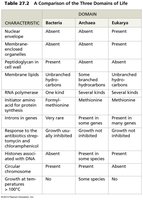
Comparison of the Three Domains
The three domains of life differ in several key cellular and molecular characteristics. The following table summarizes these differences:
Characteristic | Bacteria | Archaea | Eukarya |
|---|---|---|---|
Nuclear envelope | Absent | Absent | Present |
Membrane-enclosed organelles | Absent | Absent | Present |
Peptidoglycan in cell wall | Present | Absent | Absent |
Membrane lipids | Unbranched hydrocarbons | Some branched hydrocarbons | Unbranched hydrocarbons |
RNA polymerase | One kind | Several kinds | Several kinds |
Initiator amino acid for protein synthesis | Formyl-methionine | Methionine | Methionine |
Introns in genes | Very rare | Present in some genes | Present |
Growth at temperatures >100°C | No | Some species | No |
Prokaryotic Diversity and Evolution
Metabolic Diversity
Prokaryotes exhibit remarkable metabolic diversity, allowing them to inhabit a wide range of environments. They can be classified based on how they obtain energy and carbon:
Photoautotrophs: Use sunlight to synthesize organic compounds from CO2.
Photoheterotrophs: Use sunlight for energy but require organic compounds for carbon.
Chemoautotrophs: Obtain energy from inorganic chemicals and use CO2 as a carbon source.
Chemoheterotrophs: Obtain both energy and carbon from organic compounds.
Prokaryotic Cell Structure
Prokaryotic cells are generally simpler than eukaryotic cells:
Most are unicellular and lack a nucleus (their DNA is not enclosed by a membrane).
They lack membrane-bound organelles (e.g., mitochondria, chloroplasts).
Most have a single, circular chromosome.
Reproduce asexually by binary fission (not mitosis).
Domain Archaea
Extremophiles
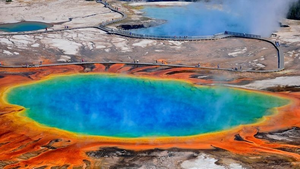
Many Archaea are extremophiles, thriving in environments that are inhospitable to most life forms, such as high temperature, high salinity, or low oxygen.
Methanogens: Anaerobic Archaea that produce methane (CH4) by reducing CO2 with H2. They are important in environments like swamps and the digestive tracts of ruminants (e.g., cows).
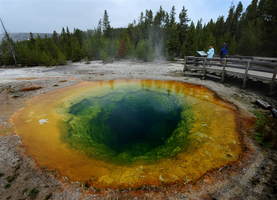
Thermophiles: Heat-loving Archaea found in hot springs and hydrothermal vents.
Halophiles: Salt-loving Archaea found in highly saline environments like the Great Salt Lake or the Dead Sea.

Domain Bacteria
Bacterial Diversity and Structure
Bacteria are the most abundant organisms on Earth and display a wide range of shapes and metabolic capabilities. All bacteria are haploid and typically possess a single circular chromosome.
Bacteria are extremely small (about 1 μm in diameter).
They can be found in soil, water, and as symbionts or pathogens in other organisms.
Bacterial Shapes
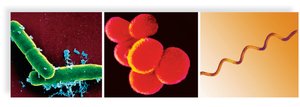
Bacteria are classified into three basic shapes:
Bacillus: Rod-shaped
Coccus: Spherical
Spirillum: Helical-shaped
Bacterial Communities: Biofilms
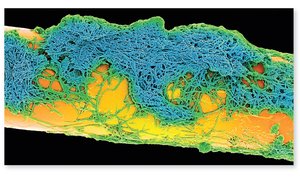
Bacteria can form complex communities called biofilms, where cells adhere to surfaces and to each other, often embedded in a self-produced matrix. Biofilms are important in natural environments, industry, and medicine.
Ecological and Practical Importance of Bacteria
Photosynthetic Bacteria: Cyanobacteria
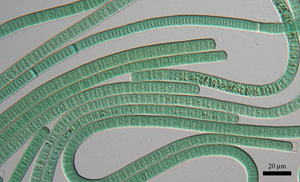
Cyanobacteria are photosynthetic bacteria that played a crucial role in creating Earth's first oxygen-rich atmosphere. They dominated ecosystems for nearly two billion years and are still important in aquatic environments today.
Decomposition and Nutrient Cycling
Bacteria (along with fungi) are essential decomposers, recycling organic matter and supporting many food chains. They also play a key role in nitrogen fixation, converting atmospheric nitrogen (N2) into ammonia (NH3), a form usable by plants.
Food Production and Biotechnology
Bacteria are used in the production of many foods (e.g., yogurt, cheese, pickles) and are important in biotechnology for producing chemicals, medicines, and antibiotics (e.g., streptomycin).
Medical Importance
Some bacteria cause diseases (e.g., tuberculosis, cholera, syphilis), while others are beneficial for human health. Bacteria are also used in bioremediation to remove pollutants from the environment by breaking down harmful substances.
Summary Table: Key Differences Between Bacteria, Archaea, and Eukarya
Characteristic | Bacteria | Archaea | Eukarya |
|---|---|---|---|
Nucleus | No | No | Yes |
Cell wall composition | Peptidoglycan | No peptidoglycan | Cellulose (plants), chitin (fungi), or none |
Membrane lipids | Unbranched | Branched | Unbranched |
RNA polymerase | One type | Several types | Several types |
Introns | Rare | Present in some genes | Common |
Additional info: Table entries inferred and summarized from standard biology textbooks for clarity.
