 Indietro
Prokaryotes: Diversity, Structure, Metabolism, and Importance
Guida di studio - Note intelligenti
 Appunti personalizzati basati sui tuoi materiali, ampliati con definizioni chiave, esempi e contesto.
Prokaryotes: Phylogenetic Context
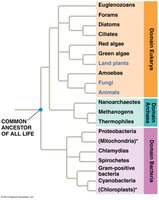
The Three Domains of Life
All living organisms share a common ancestor, and molecular phylogenies (especially those based on ribosomal RNA sequences) organize life into three domains: Bacteria, Archaea, and Eukarya. These domains differ in fundamental cellular characteristics, but share basic features such as the presence of plasma membranes, ribosomes, and DNA as genetic material.
Bacteria: Prokaryotic, lack membrane-bound organelles, usually have circular chromosomes.
Archaea: Prokaryotic, distinct cell wall and membrane composition, often extremophiles.
Eukarya: Eukaryotic, possess membrane-bound organelles, linear chromosomes.
Prokaryote Morphology
Size and Shape
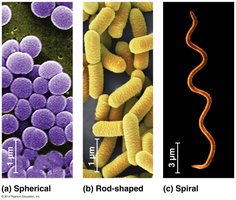
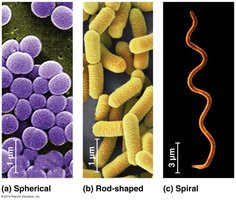
Prokaryotes are typically small (0.5–5 µm) and unicellular. They exhibit three basic shapes:
Cocci: Spherical
Bacilli: Rod-shaped
Spiral: Spiral-shaped
Cell Wall Structure
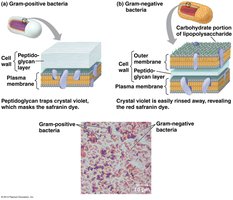
Prokaryotes possess tough cell walls made of secreted material outside the plasma membrane. In bacteria, peptidoglycan is a key component, targeted by antibiotics like penicillin. Archaea have diverse proteins and polysaccharides instead.
Gram Staining
Bacterial cell walls are classified as Gram-positive or Gram-negative based on their structure and response to Gram staining:
Gram-positive: Thick peptidoglycan layer retains blue dye.
Gram-negative: Thin peptidoglycan layer, outer membrane, red dye retained.
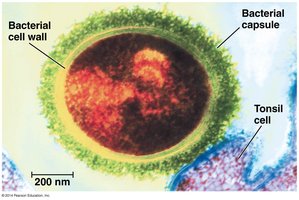
Capsule/Slime Layer
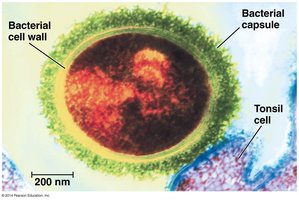
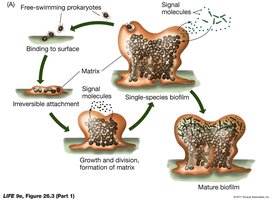
Many prokaryotes have a sticky extracellular layer (capsule or slime layer) that aids in adherence and biofilm formation.
Fimbriae and Pili
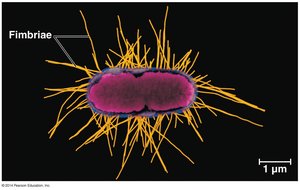
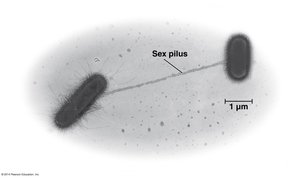
Fimbriae are short, hair-like structures for attachment; pili are longer and facilitate DNA transfer (conjugation).
Flagellae
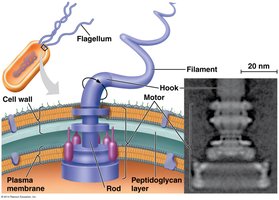
Many prokaryotes possess flagella for movement, which are structurally distinct from eukaryotic flagella and composed of numerous proteins.
Internal Structure
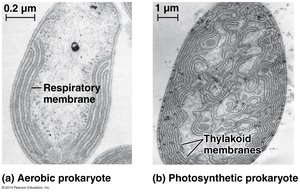
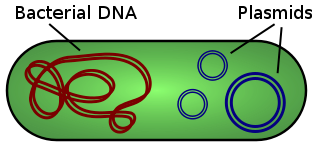
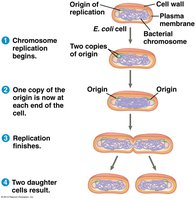
Prokaryotes lack a nucleus and membrane-bound organelles. Their genome typically consists of a circular chromosome and plasmids. Ribosomes differ from those in eukaryotes, allowing selective antibiotic targeting.
Cooperation and Biofilms
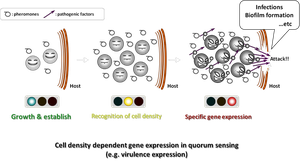
Prokaryotes often form cooperative associations, such as biofilms, which are surface-attached microbial communities embedded in a matrix. Biofilm formation involves chemical communication (quorum sensing) to coordinate group behavior.
Prokaryote Metabolic Diversity
Nutritional Modes
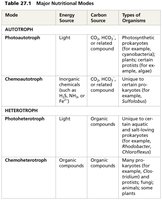
Prokaryotes display remarkable metabolic diversity, classified by energy and carbon sources:
Photoautotrophs: Light for energy, CO2 for carbon (e.g., cyanobacteria).
Photoheterotrophs: Light for energy, organic molecules for carbon.
Chemoautotrophs: Inorganic chemicals for energy, CO2 for carbon.
Chemoheterotrophs: Organic compounds for both energy and carbon.
Relationship to Oxygen
Obligate aerobes: Require oxygen for respiration.
Obligate anaerobes: Oxygen is toxic; use fermentation or anaerobic respiration.
Facultative anaerobes: Can switch between aerobic and anaerobic metabolism.
Nitrogen Metabolism
Prokaryotes play essential roles in nitrogen cycling:
Nitrogen fixers: Convert atmospheric N2 to ammonia (NH3).
Nitrifiers: Oxidize ammonia to nitrite/nitrate.
Denitrifiers: Use nitrite/nitrate as electron acceptors, producing N2 gas.
Sources of Genetic Variation
Mutation and Rapid Reproduction
Prokaryotes reproduce rapidly by binary fission, leading to frequent mutations and high genetic variation.
Genetic Recombination
Prokaryotes exchange DNA through:
Transformation: Uptake of environmental DNA.
Transduction: DNA transfer via viruses.
Conjugation: DNA transfer between cells via pili.
Horizontal Gene Transfer
Movement of DNA between different species (horizontal gene transfer) is common in prokaryotes and complicates phylogenetic analysis.
Classification and Phylogeny
Challenges and Advances
Classifying prokaryotes is difficult due to limited morphological diversity and challenges in culturing most species. DNA sequencing, especially of rRNA genes, has revolutionized prokaryote phylogeny.
Major Groups of Bacteria
Proteobacteria: Largest group, all Gram-negative, metabolically diverse.
Spirochetes: Gram-negative, spiral-shaped, many are pathogens.
Chlamydias: Gram-negative, obligate intracellular parasites.
Cyanobacteria: Photoautotrophs, oxygenic photosynthesis, nitrogen fixation.
Gram-positive bacteria: Includes actinobacteria (high-GC) and low-GC types, some form endospores.
Major Groups of Archaea
Extremophiles: Thermophiles, acidophiles, halophiles.
Methanogens: Produce methane, obligate anaerobes.
Importance of Prokaryotes
Element Cycling
Prokaryotes are essential in cycling elements such as carbon and nitrogen, decomposing organic matter, and making nutrients available to plants.
Symbiotic Relationships
Prokaryotes engage in symbiosis with other organisms, including humans. Types include:
Commensalism: One benefits, the other is unaffected.
Mutualism: Both benefit (e.g., gut bacteria in humans).
Parasitism: One benefits, one is harmed (pathogens).
Essential Vocabulary
Key terms include: ribosomal RNA (rRNA), cocci, bacilli, cell wall, peptidoglycan, Gram staining, capsule/slime layer, biofilm, fimbriae, pilus, flagellae, chemotaxis, plasmid, quorum-sensing, nutritional modes, nitrogen fixation, transformation, transduction, conjugation, horizontal gene transfer, metagenomics, proteobacteria, spirochetes, chlamydias, cyanobacteria, chlorophyll a, heterocysts, actinobacteria, endospores, extremophiles, thermophile, acidophile, methanogen, halophile, bacteriorhodopsin, carotenoid, element cycling, symbiosis, mutualism, commensalism, parasitism, pathogen.
Study Questions
Describe the relationships of the three domains of life, and similarities and differences among those three domains.
How does penicillin work? How does tetracycline work?
What is gram-staining, and why is it useful?
How are prokaryotic flagellae different from eukaryotic flagellae?
Describe the genome of a prokaryote, and how it differs from that of a eukaryote.
How do biofilms form? What is quorum-sensing?
Describe the diversity of nutritional modes, relationships to oxygen, and nitrogen metabolism among prokaryotes.
Though prokaryotes basically reproduce asexually, they manage to acquire lots of genetic variation (which allows them to evolve rapidly). How does this variation arise?
How does horizontal gene transfer complicate inferring phylogenies?
Why is rRNA particularly useful for understanding prokaryote phylogeny?
Describe the characteristics of the major groups of Bacteria and Archaea!
Why are prokaryotes important to the world in general, and to humans in particular?
