 Indietro
Prokaryotes, Eukaryotes, and the Diversity of Life: Study Notes
Guida di studio - Note intelligenti
 Appunti personalizzati basati sui tuoi materiali, ampliati con definizioni chiave, esempi e contesto.
Prokaryotes: Bacteria and Archaea
Characteristics of Prokaryotes
Prokaryotes, which include the domains Bacteria and Archaea, are single-celled organisms lacking a membrane-bound nucleus. Their genetic material is typically organized as a single, circular chromosome located in the nucleoid region. - Cell Structure: Prokaryotes possess a cell wall, capsule, fimbriae, and flagella for motility. - Genetic Material: DNA is circular and not enclosed in a nucleus. - Biofilm Formation: Features such as fimbriae and capsules contribute to biofilm formation, which can be problematic in medical and industrial contexts. 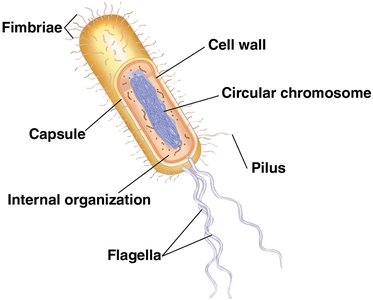
Adaptations of Archaea
Some Archaea are extreme thermophiles, thriving in environments with temperatures exceeding 100°C, such as hydrothermal vents. - Adaptations: Specialized enzymes and membrane lipids allow survival in extreme heat. 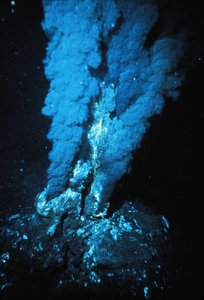
Major Roles of Prokaryotes in Ecosystems
Prokaryotes play essential roles in nutrient cycling, decomposition, and symbiotic relationships. - Nitrogen Fixation: Some bacteria convert atmospheric nitrogen into forms usable by plants. - Decomposition: Prokaryotes break down organic matter, recycling nutrients.
Cell Features and Motility
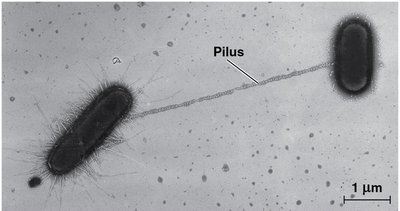
- Flagella: Principal structure involved in prokaryotic cell motility. - Pili: Used for attachment and genetic exchange.
Genetic Diversity in Prokaryotes
Three main factors promote genetic diversity: 1. Transformation: Uptake of foreign DNA from the environment. 2. Transduction: Gene transfer via bacteriophages. 3. Conjugation: Direct transfer of DNA between cells via a pilus. 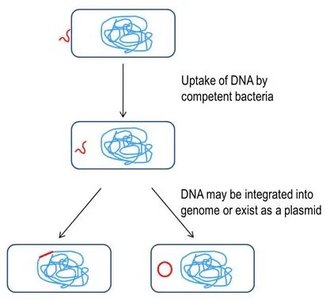
Nutritional and Metabolic Adaptations
Prokaryotes are classified by how they obtain energy and carbon: - Phototrophs: Use light as an energy source. - Chemotrophs: Use chemicals as an energy source. - Autotrophs: Use CO2 as a carbon source. - Heterotrophs: Require organic nutrients for carbon.
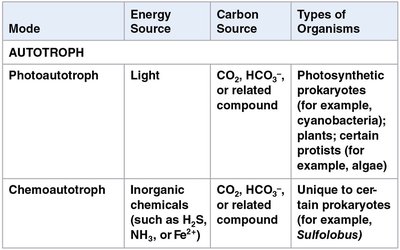
Major Modes of Nutrition
Mode | Energy Source | Carbon Source | Types of Organisms |
|---|---|---|---|
Photoautotroph | Light | CO2, HCO3-, or related compound | Photosynthetic prokaryotes (e.g., cyanobacteria); plants; certain protists (e.g., algae) |
Chemoautotroph | Inorganic chemicals (e.g., H2S, NH3, Fe2+) | CO2, HCO3-, or related compound | Unique to certain prokaryotes (e.g., Sulfolobus) |
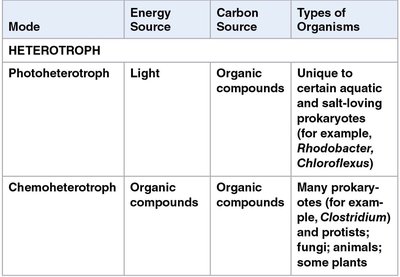
Mode | Energy Source | Carbon Source | Types of Organisms |
|---|---|---|---|
Photoheterotroph | Light | Organic compounds | Unique to certain aquatic and salt-loving prokaryotes (e.g., Rhodobacter, Chloroflexus) |
Chemoheterotroph | Organic compounds | Organic compounds | Many prokaryotes (e.g., Clostridium) and protists; fungi; animals; some plants |
Metabolic Roles of Oxygen and Nitrogen
- Obligate aerobes: Require O2 for cellular respiration. - Obligate anaerobes: Poisoned by O2; use fermentation or anaerobic respiration. - Facultative anaerobes: Can survive with or without O2. - Nitrogen Fixation: Some prokaryotes convert atmospheric nitrogen to ammonia.
Eukaryotes and Protists
Domain Eukarya and Protist Diversity
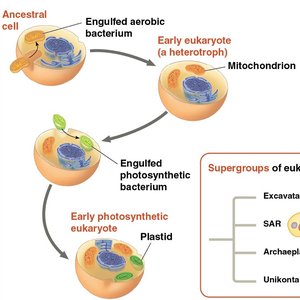
Eukaryotes are characterized by complex cellular organization, including a membrane-bound nucleus and organelles. Protists are eukaryotes that are not plants, animals, or fungi, and are mostly unicellular. - Polyphyletic Group: Protists do not form a single evolutionary lineage. - Endosymbiont Theory: Eukaryotic organelles such as mitochondria and chloroplasts originated from symbiotic bacteria. 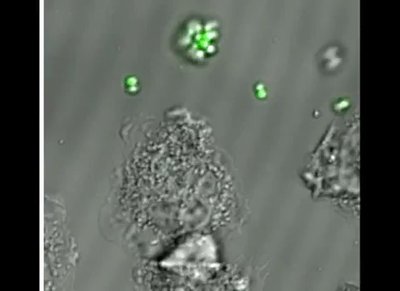
Eukaryotic Supergroups
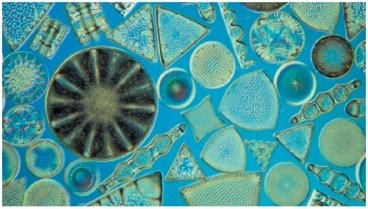
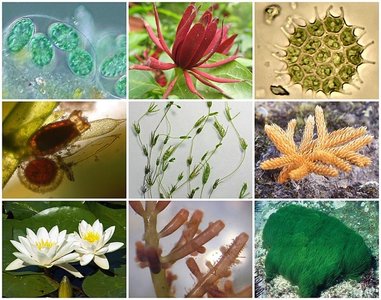
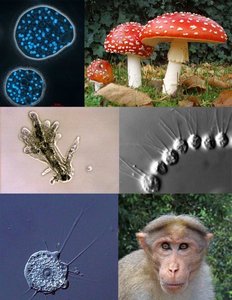
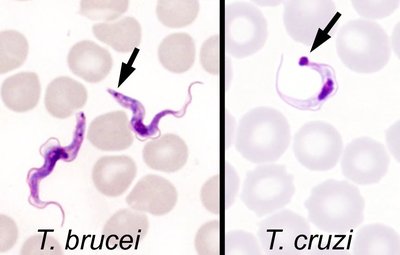
Current hypotheses divide eukaryotes into four supergroups: 1. SAR: Includes Stramenopiles (e.g., diatoms), Alveolates (e.g., Plasmodium), and Rhizarians. 2. Archaeplastida: Includes red and green algae, and land plants. 3. Amorphea: Includes animals, fungi, and some protists (e.g., amoebas, slime molds). 4. Excavata: Includes human parasites such as trypanosomes. 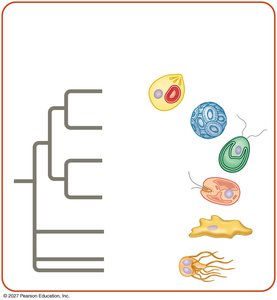
Connecting Prokaryotes and Eukaryotes
Endosymbiont Theory
The endosymbiont theory explains the origin of mitochondria and chloroplasts in eukaryotic cells. According to this theory, these organelles were once free-living bacteria that were engulfed by ancestral eukaryotic cells. - Mitochondria: Originated from proteobacteria. - Chloroplasts: Originated from cyanobacteria.
Plant Diversity Preview
Archaeplastida and Land Plants
Land plants are proposed to have evolved from green algae ancestors within the Archaeplastida supergroup. - Red and Green Algae: Important photosynthetic organisms. - Land Plants: Exhibit alternation of generations in their life cycles.
Next Steps
The next lecture will focus on plant diversity, including the evolutionary history and classification of land plants. 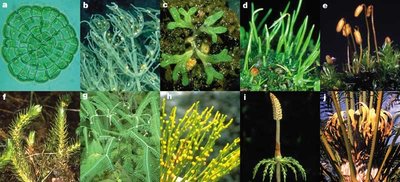
Summary Table: Modes of Nutrition in Prokaryotes
Mode | Energy Source | Carbon Source | Types of Organisms |
|---|---|---|---|
Photoautotroph | Light | CO2, HCO3-, or related compound | Photosynthetic prokaryotes, plants, algae |
Chemoautotroph | Inorganic chemicals | CO2, HCO3-, or related compound | Certain prokaryotes (e.g., Sulfolobus) |
Photoheterotroph | Light | Organic compounds | Certain aquatic and salt-loving prokaryotes |
Chemoheterotroph | Organic compounds | Organic compounds | Many prokaryotes, fungi, animals, some plants |
Key Terms
- Prokaryote: Single-celled organism without a nucleus. - Archaea: Domain of prokaryotes with unique adaptations. - Bacteria: Domain of prokaryotes with peptidoglycan cell walls. - Transformation: Uptake of foreign DNA by a cell. - Transduction: Gene transfer via viruses. - Conjugation: Direct DNA transfer between cells. - Endosymbiont Theory: Origin of mitochondria and chloroplasts. - Supergroup: Major evolutionary lineage of eukaryotes. Additional info: Academic context was added to clarify the classification of prokaryotes, eukaryotes, and the nutritional modes, as well as to explain the endosymbiont theory and the evolutionary relationships among major groups.
