 Indietro
Chapter 3: Properties of Water: The Molecule That Supports All Life
Guida di studio - Note intelligenti
 Appunti personalizzati basati sui tuoi materiali, ampliati con definizioni chiave, esempi e contesto.
Water: The Molecule That Supports All Life
Introduction
Water is essential for life on Earth, serving as the biological medium for all living organisms. Its unique chemical and physical properties make Earth habitable and are central to biological processes. Cells are composed of 70–95% water, and most are surrounded by water, highlighting its importance.
Concept 3.1: Polar Covalent Bonds and Hydrogen Bonding in Water
Structure and Polarity of Water
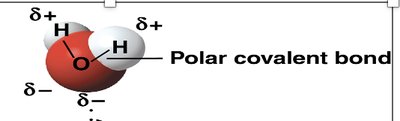
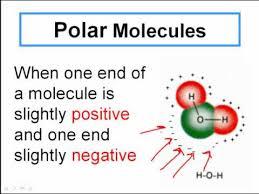
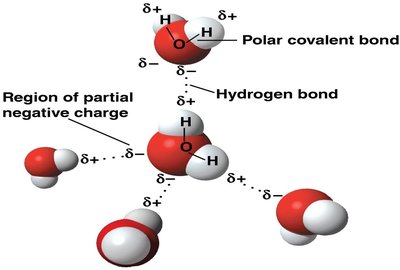
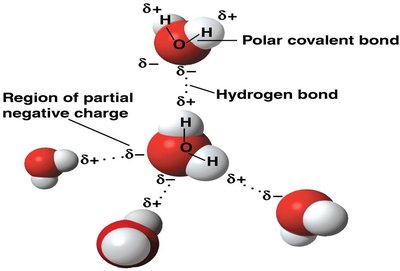
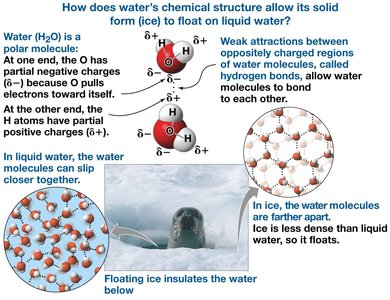
The water molecule (H2O) is polar, meaning it has regions of partial positive and negative charge. This polarity allows water molecules to form hydrogen bonds with each other, which are critical for its emergent properties.
Polar Covalent Bond: The oxygen atom is more electronegative than hydrogen, pulling electrons closer and creating a partial negative charge on oxygen and partial positive charges on hydrogen.
Hydrogen Bond: Weak attractions between the slightly positive hydrogen of one water molecule and the slightly negative oxygen of another.
Concept 3.2: Four Emergent Properties of Water
Overview
Four key properties of water facilitate life on Earth:
Cohesive behavior
Ability to moderate temperature
Expansion upon freezing
Versatility as a solvent
Cohesion and Adhesion
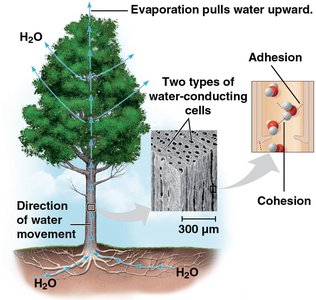
Cohesion is the ability of water molecules to stick to each other due to hydrogen bonding. Adhesion is the attraction between water molecules and other substances, such as plant cell walls. These properties enable water to be an excellent transport system in organisms and contribute to water movement against gravity in plants.
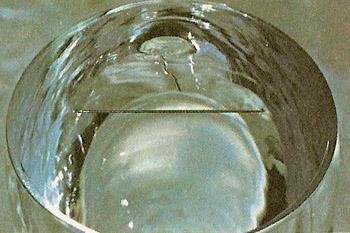
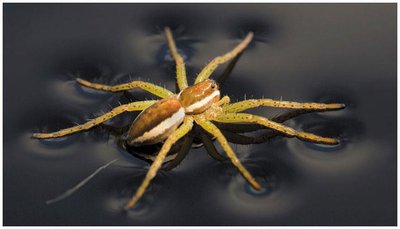
Surface Tension: Water's surface tension is high due to hydrogen bonds, allowing small organisms like spiders to walk on water.
Ability to Moderate Temperature
Water can absorb or release large amounts of heat with only slight changes in its own temperature. This property moderates air temperature in coastal areas and stabilizes temperatures in organisms.
Heat and Temperature: Heat is the total kinetic energy due to molecular motion; temperature measures the intensity of heat.
Specific Heat: Water has a high specific heat (1 cal/g/°C), meaning it resists temperature changes. This is due to hydrogen bonding.
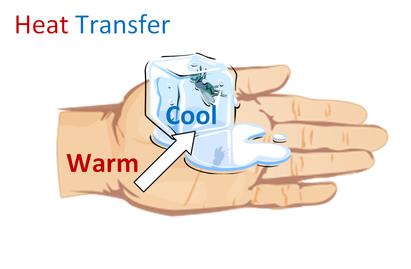
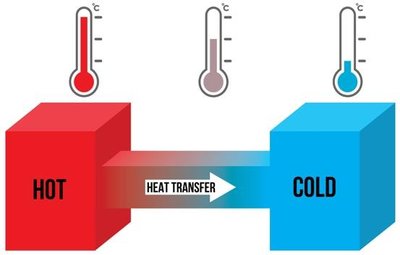
Heat Transfer: Heat passes from warmer to cooler objects, as seen when ice cools a drink by absorbing heat.
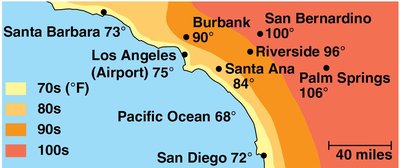
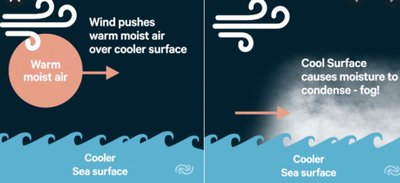
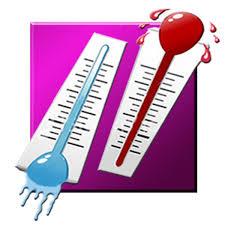
High Specific Heat of Water
Water's high specific heat minimizes temperature fluctuations, protecting organisms from rapid temperature changes. Hydrogen bonds absorb heat when breaking and release heat when forming.
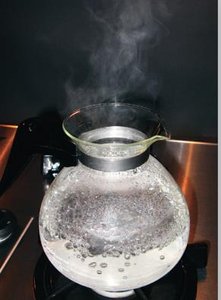
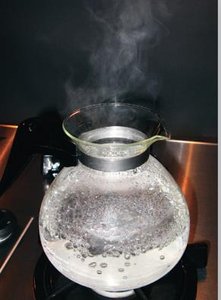
Example: Boiling water takes time due to the energy required to break hydrogen bonds.
Comparison: Metals have low specific heat and heat/cool quickly.
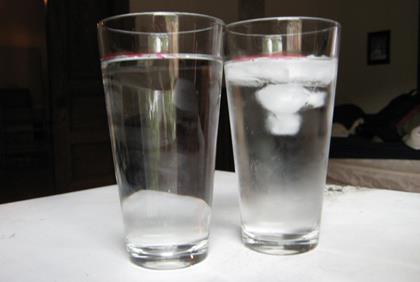
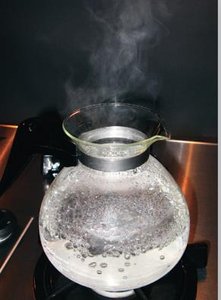


Evaporative Cooling
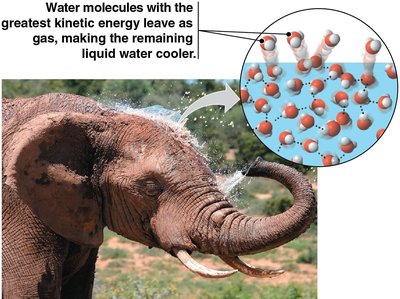
Evaporation is the transformation of a liquid to a gas. As water evaporates, its surface cools, stabilizing temperatures in organisms and bodies of water. Water has a high heat of vaporization due to hydrogen bonding.
Example: Sweating cools the body as water evaporates from the skin.

Expansion Upon Freezing
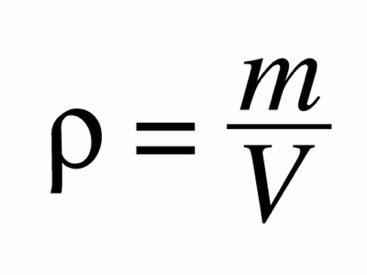
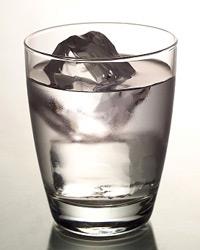
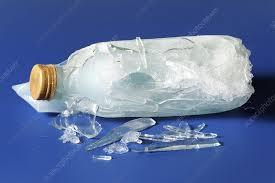
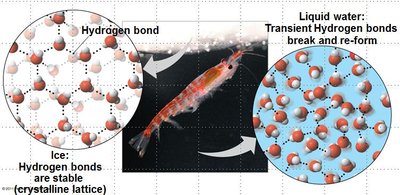
Water is less dense as a solid than as a liquid, which is why ice floats. As water freezes, hydrogen bonds become more ordered, forming a crystalline lattice that increases volume and decreases density.
Density Formula:
Example: Ice floating in water insulates aquatic life below.

Versatility as a Solvent
Water is known as the "solvent of life" due to its ability to dissolve a wide variety of substances. Its polarity allows it to form hydration shells around ions and polar molecules, facilitating their dissolution.
Solution: Homogeneous mixture of substances.
Solvent: Dissolving agent (water).
Solute: Substance dissolved (e.g., salt, sugar).
Aqueous Solution: Solution where water is the solvent.
Hydrophilic: Substances with affinity for water.
Hydrophobic: Substances without affinity for water (e.g., oils).
Example: Table salt (NaCl) dissolves in water, each ion surrounded by a hydration shell.
Additional info: Even large polar molecules like proteins can dissolve in water if they have ionic and polar regions.
Solute Concentrations in Aqueous Solutions
Molecular Mass and Moles
Molecular mass is the sum of the masses of all atoms in a molecule. Substances are measured in moles, where 1 mole = molecules (Avogadro’s Number).
Molarity (M): Number of moles of solute per liter of solution.
Density of water: 1 g/mL
Acids, Bases, and the pH Scale
Acids and Bases
Water can dissociate into hydronium (H3O+) and hydroxide (OH–) ions. Acids increase the concentration of H+ ions, while bases decrease it. Most biological fluids are near neutral pH (6–8).
Acid: Increases H+ concentration (pH < 7).
Base: Reduces H+ concentration (pH > 7).
Neutral: pH = 7 (equal concentrations of H+ and OH–).
pH Scale
The pH scale measures the acidity or basicity of a solution. Each unit represents a tenfold difference in H+ concentration.
pH Formula:
Product of H+ and OH–:
Example: pH of 1.0 × 10⁻³ M HCl is 3 (acidic).
Buffers
Buffers are substances that minimize changes in pH by accepting or donating H+ ions. They are essential for maintaining stable internal pH in organisms, such as blood.
Example: Bicarbonate acts as a buffer in blood.
Acid Precipitation and Ocean Acidification
Burning fossil fuels releases sulfur and nitrogen oxides, forming acids in precipitation. Ocean acidification occurs when CO2 dissolves in seawater, forming carbonic acid and reducing carbonate ions needed for marine life.
Impact: Acid precipitation damages ecosystems; ocean acidification threatens marine organisms.
Quick Review
Water is polar.
Emergent properties: Cohesion, temperature moderation, expansion upon freezing, versatility as a solvent.
Acids increase [H+], bases decrease [H+].
pH scale: Acidic < 7, Neutral = 7, Basic > 7.
Buffers minimize pH changes.
Practice Questions
A substance that minimizes changes in H+ and OH– concentration is a buffer.
Adding acid increases H+ concentration and lowers pH.
Lake with pH 4.0 has H+ concentration of 10–4 M.
