 Indietro
Protein Structure and Function & Nucleic Acids: Study Notes for General Biology
Guida di studio - Note intelligenti
 Appunti personalizzati basati sui tuoi materiali, ampliati con definizioni chiave, esempi e contesto.
Protein Structure and Function
Overview of Protein Functions
Proteins are essential macromolecules that perform a wide variety of functions in cells. Their diverse structures enable them to catalyze reactions, provide defense, facilitate movement, signal between cells, maintain structure, and transport molecules.
Catalysis: Enzymes speed up chemical reactions without being consumed.
Defense: Antibodies attack pathogens.
Movement: Proteins move cells or molecules within cells.
Signaling: Proteins convey signals between cells.
Structure: Proteins shape cells and comprise body structures.
Transport: Proteins allow molecules to enter and exit cells or carry them within the cell.
Proteins as Enzymes
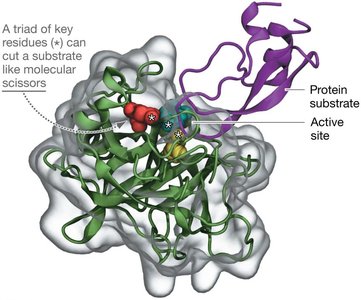
Enzymes are specialized proteins that act as catalysts, increasing the rate of biochemical reactions. The molecules that bind to an enzyme's active site are called substrates. The enzyme's three-dimensional structure and chemical properties of the active site ensure substrate specificity.
Active Site: The region where substrates bind and reactions occur.
Substrate Specificity: Only the correct substrate fits and reacts in the active site.
Protein Folding and Stability
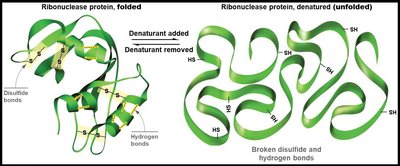
Protein folding is often spontaneous, driven by hydrogen bonds and van der Waals interactions. The folded conformation is energetically stable and necessary for function.
Denatured Proteins: Unfolded proteins lose their function.
Molecular Chaperones: Proteins that assist in proper folding.
Consequences of Denaturing Proteins
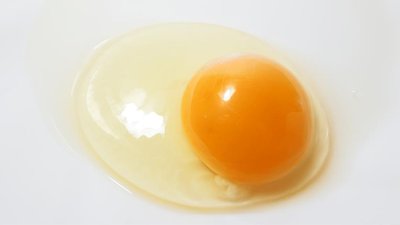
Denaturing proteins changes their properties, such as color, texture, and taste. For example, cooking an egg denatures ovalbumin, the main protein in egg whites, resulting in a change from clear to white and from liquid to solid.
Example: Ovalbumin in egg whites changes upon heating.

Protein Shape Flexibility and Regulation
Protein shape is flexible and can be regulated. Proteins fold into active conformations when needed, and some are regulated by controlling their folding.
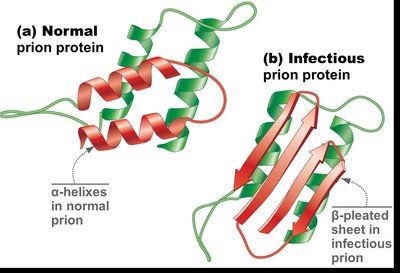
Prions: Misfolded proteins that can induce normal proteins to adopt the altered, infectious shape.
Nucleic Acids and the RNA World
The Central Dogma of Molecular Biology
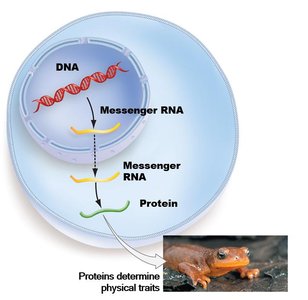
The central dogma describes the flow of genetic information in cells: DNA is transcribed to mRNA, which is then translated into proteins. Proteins determine many traits of an organism.
Transcription: DNA → mRNA (same language)
Translation: mRNA → Protein (different language)
Types of Nucleic Acids
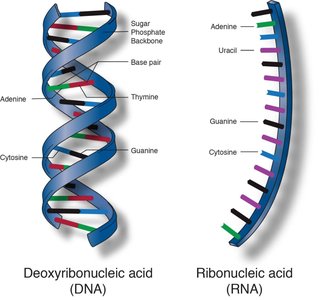
There are two main types of nucleic acids: DNA and RNA. Both are polymers of nucleotide monomers, which consist of a phosphate group, a 5-carbon sugar, and a nitrogenous base.
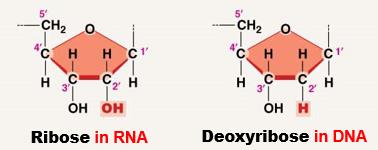
DNA: Contains deoxyribose sugar (H at 2' carbon), bases are A, T, G, C.
RNA: Contains ribose sugar (OH at 2' carbon), bases are A, U, G, C.
Nucleotide Polymerization and Phosphodiester Linkages
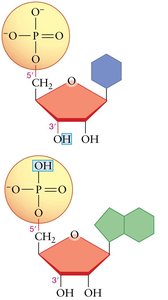
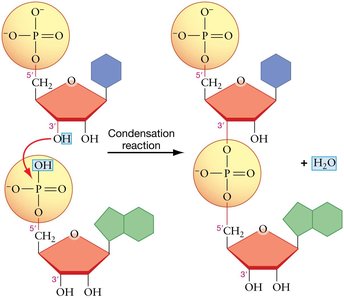
Nucleotides polymerize via condensation reactions, forming phosphodiester linkages between the 3' hydroxyl group of one nucleotide and the 5' phosphate group of another.
Equation:
Functional Groups in Organic Molecules
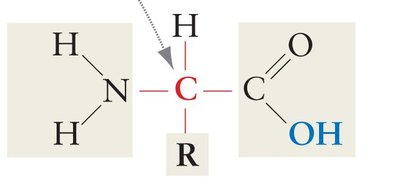
Functional groups are common groups of atoms that affect an organic molecule's properties.
Amino Group: Acts as a base.
Carboxyl Group: Acts as an acid.
Phosphate Group: Carries negative charges.
Nucleic Acid Structure: Sugar–Phosphate Backbone
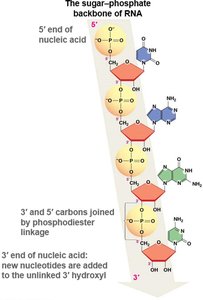
Nucleic acids have a sugar–phosphate backbone formed by phosphodiester linkages. The backbone is directional, running from 5' to 3'. The order of nucleotides forms the primary structure.
5' End: Unlinked phosphate group.
3' End: Unlinked hydroxyl group.
Primary, Secondary, and Tertiary Structure of DNA
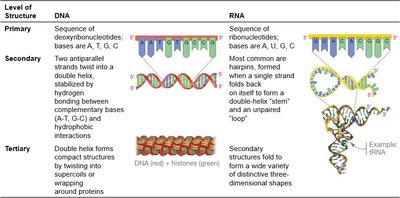
Primary Structure: Linear sequence of nucleotides (e.g., GTTCAG).
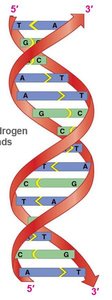
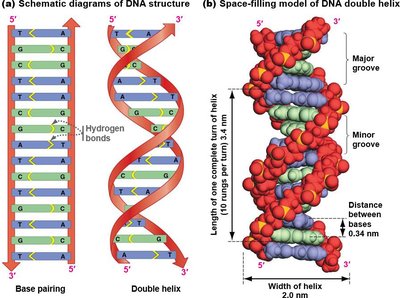
Secondary Structure: Two antiparallel strands twisted into a double helix, stabilized by hydrogen bonding and hydrophobic interactions.
Tertiary Structure: DNA forms supercoils and wraps around histone proteins, creating chromatin for efficient storage and regulation.
Base Pairing and Antiparallel Strands
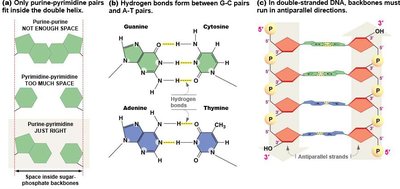
Complementary base pairing is based on hydrogen bonding: Adenine (A) pairs with Thymine (T), and Guanine (G) pairs with Cytosine (C). In DNA, the number of A equals T, and the number of G equals C.
Antiparallel Strands: DNA strands run in opposite directions (5' to 3' and 3' to 5').
RNA Structure and Versatility
RNA's primary structure is similar to DNA, but uses ribose and uracil instead of thymine. RNA can form secondary structures such as hairpins, where bases pair within the same strand. RNA molecules can also have tertiary structure, making them highly versatile.
Self-Replication: RNA can serve as a template and catalyze reactions (ribozymes).
RNA World Hypothesis: Proposes that RNA was the first self-replicating molecule, preceding proteins and DNA.
Comparison of DNA and RNA
Feature | DNA | RNA |
|---|---|---|
Sugar | Deoxyribose | Ribose |
Stability | More stable | Less stable |
Bases | A, T, G, C | A, U, G, C |
Function | Long-term information storage | Short-term information storage & transport |
Origin of Life: RNA World Hypothesis
The RNA World Hypothesis suggests that RNA was the first self-replicating molecule, capable of both storing information and catalyzing reactions. This hypothesis accounts for information processing, replication, and evolution by random changes in nucleic acids.
Lab Evidence: Activated nucleotides can polymerize under simulated early Earth conditions.
Study Starter: Compare and Contrast DNA and RNA
DNA: Stable, double-stranded, stores genetic information.
RNA: Versatile, single-stranded, involved in information transfer and catalysis.
