 Indietro
Proteins, Energy, and Enzymes: Principles of Biological Metabolism
Guida di studio - Note intelligenti
 Appunti personalizzati basati sui tuoi materiali, ampliati con definizioni chiave, esempi e contesto.
Energy and Thermodynamics in Biology
Forms of Energy
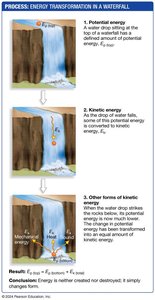
Biological systems utilize various forms of energy to drive cellular processes. Energy exists as potential energy (stored in chemical bonds or gradients) and kinetic energy (energy of motion).
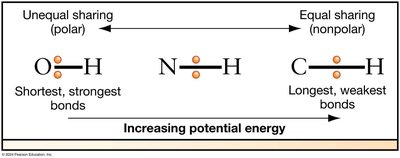
Potential Energy: Stored in chemical bonds, gradients, or positional configurations.
Kinetic Energy: Energy associated with movement, such as thermal energy or sound.
Chemical Gradients: Differences in concentration across membranes store potential energy.
Chemical Bonds: The arrangement and sharing of electrons in bonds determine the energy stored.
First Law of Thermodynamics
The First Law of Thermodynamics states that energy cannot be created or destroyed, only transferred or transformed. In biological systems, this principle governs how cells convert energy from one form to another.
Example: The energy in food molecules is transformed into ATP and heat.
Second Law of Thermodynamics and Entropy
The Second Law of Thermodynamics states that the total entropy (S) of a system and its surroundings always increases. Entropy is a measure of disorder or randomness in a system.
Biological Implication: Living organisms maintain local order by increasing disorder (entropy) in their surroundings.
Heat: Energy released as heat increases entropy.
Enthalpy, Entropy, and Gibbs Free Energy
Enthalpy (H)
Enthalpy is the total energy in a molecule, including bond energy and kinetic energy. Changes in enthalpy (ΔH) reflect the difference in potential energy between reactants and products.
Exothermic Reaction: Releases energy as heat; products have less potential energy than reactants (ΔH is negative).
Endothermic Reaction: Absorbs heat energy; products have more potential energy than reactants (ΔH is positive).
Gibbs Free Energy (G)
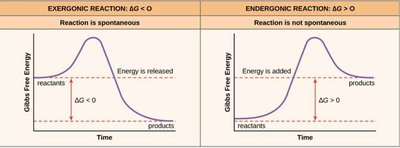
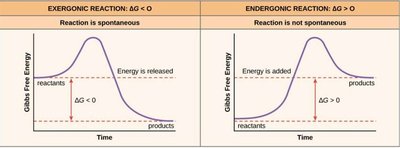
Gibbs Free Energy (G) is the energy available to do work in a system. The change in Gibbs free energy (ΔG) determines whether a reaction is spontaneous.
Formula:
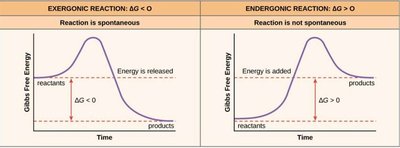
Spontaneous Reaction: ΔG < 0 (exergonic); energy is released and available to do work.
Non-Spontaneous Reaction: ΔG > 0 (endergonic); energy must be supplied for the reaction to proceed.
Examples of Energy Transformation
Exergonic Reaction: ATP hydrolysis, cellular respiration.
Endergonic Reaction: Synthesis of macromolecules, photosynthesis.
Activation Energy and Reaction Orientation
Activation Energy (Ea)
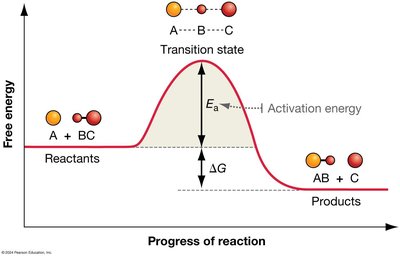
All chemical reactions require a minimum amount of energy, called activation energy, to strain bonds and allow reactants to form products.
Reactant Orientation: Reactants must collide in a specific orientation to react.
Kinetic Energy: Reactants must have sufficient kinetic energy to overcome activation energy.
Enzymes: Biological Catalysts
Enzyme Structure and Function
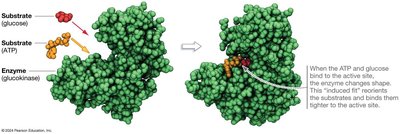
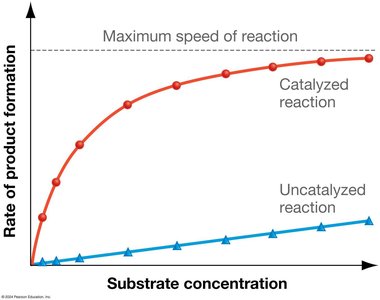
Enzymes are proteins that catalyze biological reactions by lowering the activation energy required. They facilitate the correct orientation and proximity of reactants.
Enzyme Action Model: Substrates bind to the active site, forming an enzyme-substrate complex. The enzyme changes shape (induced fit), facilitating the reaction.
Enzyme Regulation: Enzymes can be regulated by cofactors, coenzymes, and prosthetic groups.
Cofactors, Coenzymes, and Prosthetic Groups
Cofactors: Inorganic ions (e.g., Zn2+, Mg2+, Fe2+) that reversibly interact with enzymes.
Coenzymes: Organic molecules (e.g., NADH, FADH2, Ascorbic Acid) that reversibly interact with enzymes.
Prosthetic Groups: Atoms or non-amino acid molecules permanently attached to enzymes.
Enzyme Optimization
Enzyme activity is influenced by temperature, pH, and substrate concentration.
Temperature: Higher temperatures increase kinetic energy and reaction rates, up to a point.
pH: Each enzyme has an optimal pH for activity.
Substrate Concentration: Higher substrate concentrations increase reaction rates until the enzyme is saturated.
Enzyme Regulation
Competitive and Allosteric Regulation
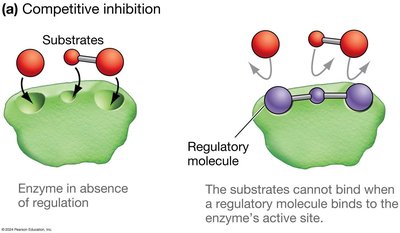
Competitive Inhibition: Regulatory molecules compete with substrates for the active site, blocking enzyme activity.
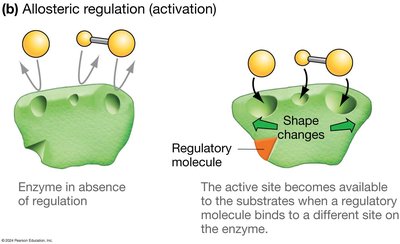
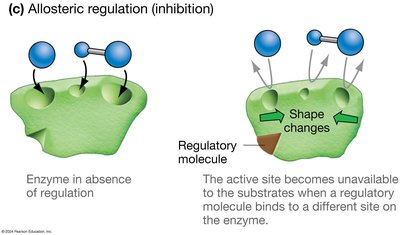
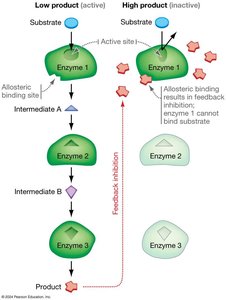
Allosteric Regulation: Regulatory molecules bind to sites other than the active site, causing conformational changes that activate or inhibit the enzyme.
Covalent Modification
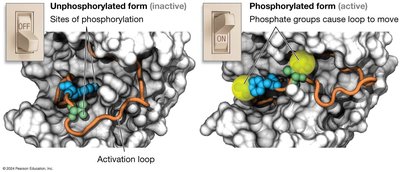
Enzymes can be regulated by covalent modifications, such as phosphorylation, which alter their structure and activity.
Protease Activation: Enzyme-specific proteases remove residues to activate proteins.
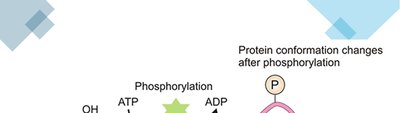
Phosphorylation: Addition of phosphate groups changes enzyme conformation, activating or deactivating the enzyme.
Metabolic Pathways
Metabolic Pathways Overview
Metabolic pathways are sequences of enzyme-catalyzed reactions that transform substrates into products. Regulation of these pathways is essential for cellular homeostasis.
Feedback Inhibition: End products of a pathway inhibit an earlier enzyme, preventing overproduction.
Example: Glycolysis, citric acid cycle.
 ----------------------------------------
