 Indietro
Protist Diversity and Biology: Structure, Function, and Ecological Importance
Guida di studio - Note intelligenti
 Appunti personalizzati basati sui tuoi materiali, ampliati con definizioni chiave, esempi e contesto.
Protists: An Overview
Definition and Characteristics
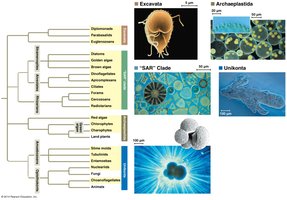
Protists are a diverse group of eukaryotic organisms that are primarily aquatic and exhibit a wide range of structural and functional diversity. They are not a monophyletic group, meaning they do not all share a single common ancestor, but are classified as a 'taxonomic grab bag' of primitive eukaryotes.
Eukaryotic cells differ from prokaryotes by having a cytoskeleton and compartmentalized organelles, including a nucleus.
Protists can be unicellular, multicellular, or colonial, with division of labor and cell specialization.
They first appeared in microfossils about 1.5 billion years ago.
Approximately 200,000 species are recognized, spanning all four eukaryotic supergroups.
Ecological and Human Importance
Protists play crucial roles in ecosystems and human society.
They are major components of aquatic food webs, especially as phytoplankton.
Some protists are important in biotechnology and industry (e.g., agar and carrageenan from red algae).
Pathogenic protists, such as Plasmodium, cause diseases like malaria.
Modes of Nutrition in Protists
Autotrophs, Heterotrophs, and Mixotrophs
Protists exhibit diverse nutritional strategies.
Autotrophs: Produce their own energy via photosynthesis (e.g., algae).
Heterotrophs: Obtain energy by consuming other organisms (e.g., protozoa).
Mixotrophs: Combine autotrophic and heterotrophic modes (e.g., some euglenids).
Major Protist Groups and Their Features
Excavata
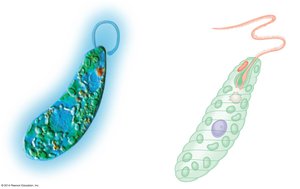
The Excavata supergroup includes euglenozoans, which are diverse in their nutritional modes and possess unique flagella.
Members include predatory heterotrophs, photosynthetic autotrophs, mixotrophs, and parasites.
Characteristic features: One or two flagella emerging from a pocket at one end of the cell.
Some species can switch between autotrophy and heterotrophy.
“SAR” Clade
The "SAR" clade is a monophyletic supergroup defined by DNA similarities and includes stramenopiles, alveolates, and rhizarians.
Stramenopiles: Includes diatoms, golden algae, and brown algae.
Alveolates: Includes dinoflagellates, apicomplexans, and ciliates.
Rhizarians: Includes forams, cercozoans, and radiolarians.

Stramenopiles: Diatoms and Brown Algae
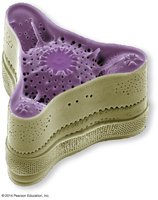
Diatoms: Unicellular algae with glass-like walls of silicon dioxide; major component of phytoplankton.
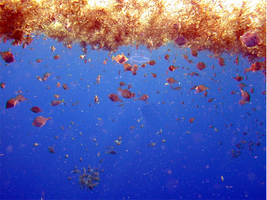
Brown algae: Largest and most complex algae; all are multicellular and mostly marine (e.g., kelps, Sargassum).
Alveolates: Dinoflagellates, Apicomplexans, and Ciliates
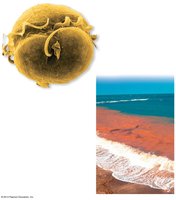
Dinoflagellates: Have two flagella; important in marine and freshwater phytoplankton; can be phototrophs, mixotrophs, or heterotrophs.
Symbiotic dinoflagellates nourish coral polyps; toxic blooms cause "red tides" harmful to marine life and humans.
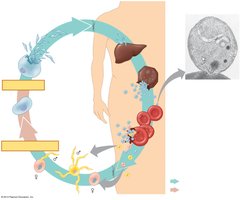
Apicomplexans: Parasites of animals; Plasmodium causes malaria, requiring both mosquitoes and humans for its life cycle.
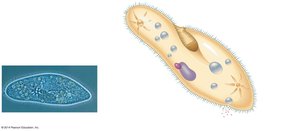
Ciliates: Use cilia for movement and feeding; possess macronuclei and micronuclei.
Archaeplastida
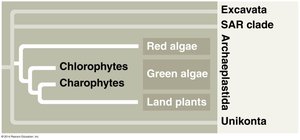
Archaeplastida includes red algae, green algae, and land plants.
Red algae: Reddish due to phycoerythrin pigment; mostly multicellular; important in tropical coastal waters and industry (agar, carrageenan).
Green algae: Named for their grass-green chloroplasts; includes charophytes (closest relatives to land plants) and chlorophytes.
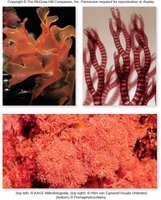
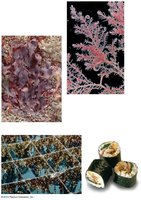
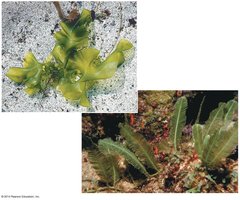
Unikonta
Unikonta includes animals, fungi, and some protists, such as amoebozoans and opisthokonts.
Amoebozoans: Amoebas with lobe- or tube-shaped pseudopodia; includes slime molds, tubulinids, and entamoebas.
Opisthokonts: Includes animals, fungi, and related protists.
Summary Table: Major Protist Groups
Supergroup | Main Groups | Key Features | Examples |
|---|---|---|---|
Excavata | Diplomonads, Parabasalids, Euglenozoans | Modified mitochondria, spiral/crystalline rod in flagella | Giardia, Euglena |
SAR Clade | Stramenopiles, Alveolates, Rhizarians | Hairy/smooth flagella, membrane sacs, threadlike pseudopodia | Diatoms, Paramecium, Plasmodium, Forams |
Archaeplastida | Red algae, Green algae, Land plants | Phycoerythrin pigment, plant-type chloroplasts | Porphyra, Ulva, Mosses |
Unikonta | Amoebozoans, Opisthokonts | Lobe/tube-shaped pseudopodia, highly variable | Amoeba, Animals, Fungi |
Key Terms and Concepts
Eukaryote: Organism whose cells contain a nucleus and organelles.
Autotroph: Organism that produces its own food via photosynthesis or chemosynthesis.
Heterotroph: Organism that obtains food by consuming other organisms.
Mixotroph: Organism capable of both autotrophic and heterotrophic nutrition.
Phytoplankton: Microscopic photosynthetic organisms in aquatic environments.
Red tide: Harmful algal bloom caused by dinoflagellates, often toxic to marine life.
Pseudopodia: Temporary projections of eukaryotic cell membranes used for movement and feeding.
Conclusion
Protists are a fundamental group in the tree of life, exhibiting remarkable diversity in structure, function, and ecological roles. Their study provides insight into the evolution of eukaryotes and the complexity of life in aquatic and terrestrial environments. Understanding protist biology is essential for appreciating their impact on ecosystems, human health, and biotechnology.
