 Indietro
Protist Diversity and Experimental Design in Microbial Biology
Guida di studio - Note intelligenti
 Appunti personalizzati basati sui tuoi materiali, ampliati con definizioni chiave, esempi e contesto.
Evolutionary Origins and Diversity of Eukaryotes
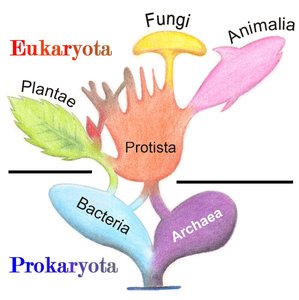
Mosaic Evolution and Eukaryotic Features
Eukaryotes are distinguished from prokaryotes by their complex cellular structures and evolutionary origins. Mosaic evolution describes how eukaryotic features were inherited from both Archaea and Bacteria, resulting in a combination of traits.
Mosaic Evolution: Evolutionary change occurs in some body parts or systems without simultaneous changes in others.
Eukaryotic Features: Membrane-bound organelles, cytoskeleton, larger cell size, and complex organization.
Inheritance: Eukaryotes have features derived from both Archaea (e.g., DNA replication enzymes) and Bacteria (e.g., mitochondria).
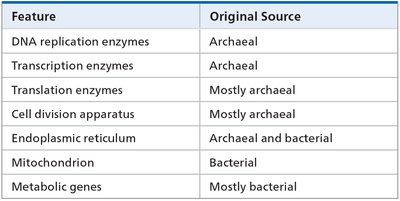
Example: The table below summarizes the origin of key eukaryotic features.
Feature | Original Source |
|---|---|
DNA replication enzymes | Archaeal |
Transcription enzymes | Archaeal |
Translation enzymes | Mostly archaeal |
Cell division apparatus | Mostly archaeal |
Endoplasmic reticulum | Archaeal and bacterial |
Mitochondrion | Bacterial |
Metabolic genes | Mostly bacterial |
True multicellularity is found in red, green, and brown algae, plants, fungi, and animals. Complex multicellularity evolved multiple times independently.
Phylogeny and Classification of Protists
Major Supergroups of Eukaryotes
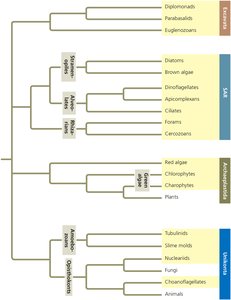
Protists are a diverse group of eukaryotes that do not form a valid taxonomic group. Modern classification divides eukaryotes into several supergroups based on genetic systematics.
Supergroups: Excavata, SAR (Stramenopiles, Alveolates, Rhizarians), Archaeplastida, Unikonta.
Phylogenetic Relationships: Supergroups do not share a single common ancestor, and morphological diversity makes evolutionary stories complex.
Example: The phylogenetic tree below shows relationships among major eukaryotic groups.
Supergroup Excavata
General Features and Clades
Excavata is characterized by an "excavated" groove on one side of the cell body. It includes several clades with unique adaptations.
Parabasilids and Diplomonads: Have highly reduced mitochondria, adapted for anaerobic conditions.
Euglenozoans: Possess unique flagella with an internal supporting rod.

Diplomonads and Parabasilids
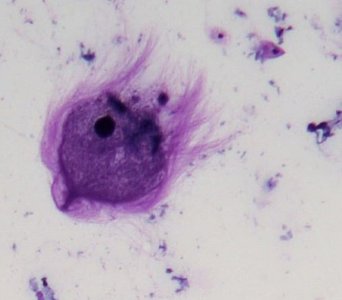
These groups have reduced mitochondria lacking electron transport chains and are often anaerobic parasites or mutualists.
Diplomonads: Many are parasites, such as Giardia, which causes giardiasis.
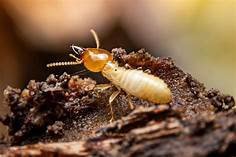
Parabasilids: Flagellated, with a parabasal body (densely packed Golgi bodies). Example: Trichonympha, an obligate mutualist in termite guts.
Euglenozoans
Euglenozoans are diverse, including heterotrophs, autotrophs, and parasites. Their flagella contain a crystalline rod.
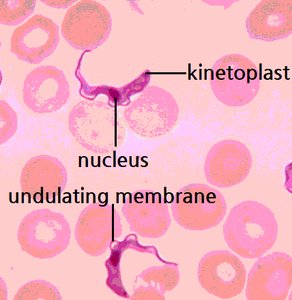
Kinetoplastids: Have a kinetoplast (giant mitochondria). Example: Trypanosoma, causes African Sleeping Sickness.
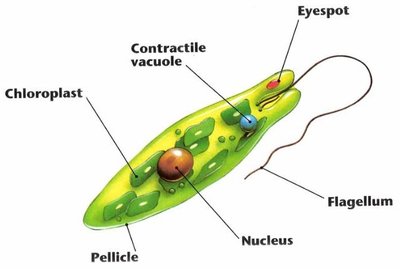
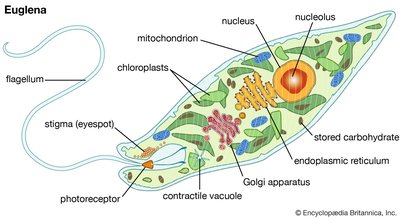
Euglenids: Have a pocket at one end where flagella emerge. Euglena can switch between photosynthesis and heterotrophy.
Supergroup SAR
Overview and Clades
The SAR supergroup includes Stramenopiles, Alveolates, and Rhizarians. These groups are highly diverse and include important photosynthesizers and parasites.
Stramenopiles: Characterized by straw-like hair projections on flagella.
Alveolates: Have membrane-enclosed sacs (alveoli) under the plasma membrane.
Rhizarians: Possess thin pseudopodia for movement and feeding.
Stramenopiles: Diatoms and Brown Algae
Stramenopiles include diatoms and brown algae, both important in aquatic ecosystems.
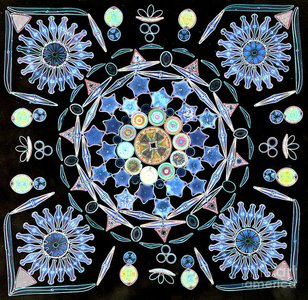
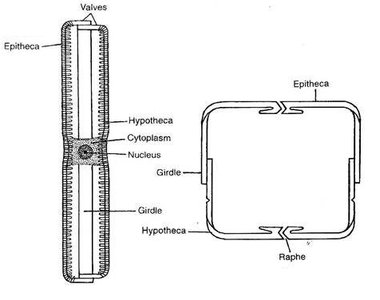
Diatoms: Unicellular phytoplankton with perforated silicon cell walls. Major photosynthesizers on Earth.
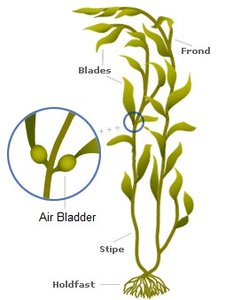
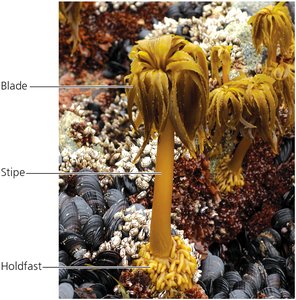
Brown Algae: Largest and most complex algae, all marine. Carry out photosynthesis using chlorophyll a and c, and store glucose as laminaran.
Alveolates: Ciliates, Dinoflagellates, Apicomplexans
Alveolates are defined by the presence of alveoli under the plasma membrane and include three major clades.
Ciliates: Use cilia for movement and feeding. Have two types of nuclei and reproduce via binary fission and conjugation.
Dinoflagellates: Unicellular, with cellulose armor and two flagella. Some release toxins and cause red tides.
Apicomplexans: Animal parasites with a complex of organelles at the cell apex. Example: Plasmodium, causes malaria.
Rhizarians: Foraminiferans
Rhizarians are characterized by thin pseudopodia and include Foraminiferans, which have porous calcium carbonate shells.
Foraminiferans: Mostly marine, with symbioses with photosynthetic algae. Their shells (tests) are important in fossil records.
Example: Living forams extend pseudopodia through holes in their tests for feeding.
Levels of Organization and Energy Acquisition in Protists
Cellular Organization and Metabolic Diversity
Protists exhibit a wide range of cellular organization and metabolic strategies.
Levels of Organization: Some protists are multicellular, some single-celled, and some colonial.
Energy Acquisition: Protists may be photosynthetic, heterotrophic, or mixotrophic (capable of both).
Example: Euglena can switch between photosynthesis and heterotrophy depending on environmental conditions.
Additional info: Mixotrophy is an adaptive strategy that allows protists to survive in variable environments.
