 Indietro
Protist Diversity and Experimental Design in Microbial Biology
Guida di studio - Note intelligenti
 Appunti personalizzati basati sui tuoi materiali, ampliati con definizioni chiave, esempi e contesto.
Lab 2
Statistical Analysis: The Mann-Whitney U-test is used to analyze the results, which is appropriate for comparing differences between two independent groups when the data are not normally distributed.
Evolution and Diversity of Eukaryotes
Major Domains of Life
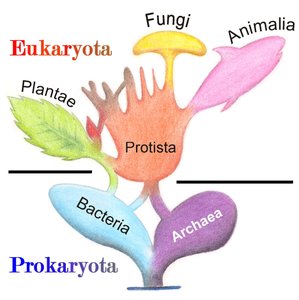
The tree of life illustrates the evolutionary relationships among the three domains: Bacteria, Archaea, and Eukaryota. Eukaryotes include plants, fungi, animals, and protists, and are distinguished from prokaryotes by their complex cellular structures.
Eukaryotes: Possess membrane-bound organelles, including a nucleus, mitochondria, and endoplasmic reticulum.
Prokaryotes: Include Bacteria and Archaea, which lack membrane-bound organelles.
Protists: A diverse group of mostly unicellular eukaryotes, not a valid taxonomic group.
Mosaic Evolution in Eukaryotes
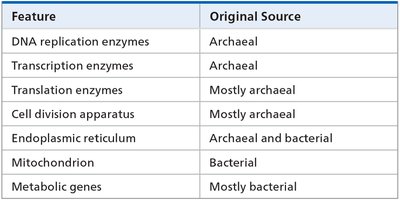
Mosaic evolution refers to the phenomenon where evolutionary changes occur in some body parts or systems without simultaneous changes in others. Eukaryotes have features inherited from both Archaea and Bacteria, reflecting their complex evolutionary history.
Key Features: DNA replication, transcription, and translation enzymes are mostly archaeal in origin, while mitochondria and metabolic genes are mostly bacterial.
True multicellularity: Characterized by differentiated cells, found in plants, fungi, animals, and some algae.
Feature | Original Source |
|---|---|
DNA replication enzymes | Archaeal |
Transcription enzymes | Archaeal |
Translation enzymes | Mostly archaeal |
Cell division apparatus | Mostly archaeal |
Endoplasmic reticulum | Archaeal and bacterial |
Mitochondrion | Bacterial |
Metabolic genes | Mostly bacterial |
Phylogeny and Classification of Protists
Major Supergroups of Eukaryotes
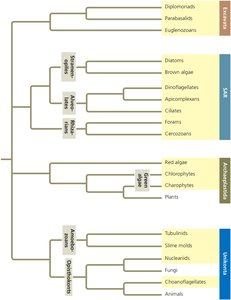
Protists are classified into several supergroups based on genetic and morphological evidence. The main supergroups include Excavata, SAR (Stramenopiles, Alveolates, Rhizarians), Archaeplastida, and Unikonta.
Excavata: Includes Diplomonads, Parabasalids, and Euglenozoans.
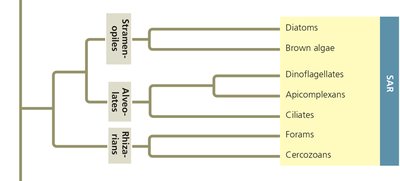
SAR: Includes Stramenopiles (Diatoms, Brown algae), Alveolates (Dinoflagellates, Ciliates, Apicomplexans), and Rhizarians (Forams, Cercozoans).
Archaeplastida: Includes red algae, green algae, and plants.
Unikonta: Includes fungi and animals.
Supergroup Excavata
General Features
Members of Excavata are characterized by an "excavated" groove on one side of the cell body. This supergroup includes organisms with highly reduced mitochondria and unique flagella.
Diplomonads and Parabasalids: Have reduced mitochondria adapted for anaerobic conditions.
Euglenozoans: Possess flagella with an internal supporting rod.

Diplomonads and Parabasalids
These groups are mostly anaerobic and many are parasitic. Their mitochondria lack electron transport chains and cannot use oxygen.
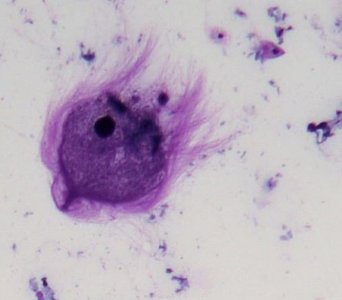
Diplomonads: Many are parasites, such as Giardia, which causes giardiasis.
Parabasalids: Include Trichonympha, an obligate mutualist in termite guts.
Euglenozoans
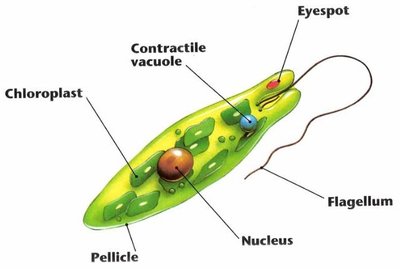
Euglenozoans are diverse, including heterotrophs, autotrophs, and parasites. Their flagella contain a crystalline rod, a unique morphological feature.
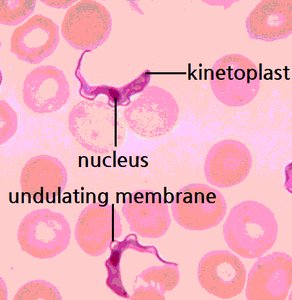
Kinetoplastids: Have a kinetoplast (giant mitochondria). Example: Trypanosoma, which causes African Sleeping Sickness.
Euglenids: Have a pocket at one end where flagella emerge. Euglena can switch between photosynthesis and heterotrophy.

Supergroup SAR
Stramenopiles
Stramenopiles are characterized by straw-like hair projections on their flagella. This group includes important photosynthesizers such as diatoms and brown algae.
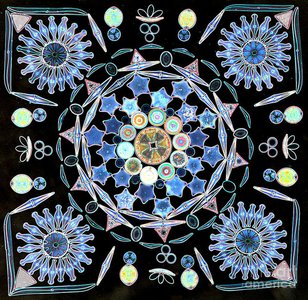
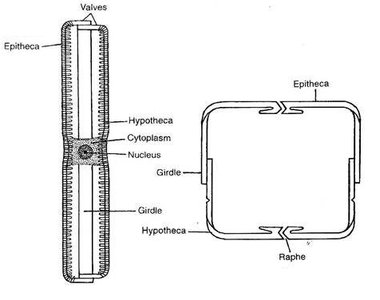
Diatoms: Unicellular phytoplankton with perforated silicon cell walls. They are abundant and diverse, playing a major role in global photosynthesis.
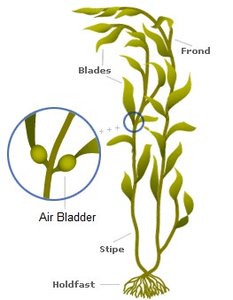
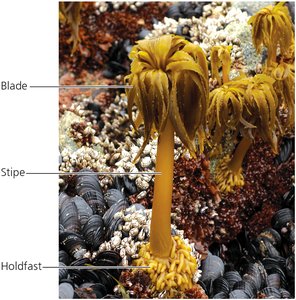
Brown Algae: Largest and most complex algae, all marine and multicellular. They store excess glucose as laminaran and carry out photosynthesis using chlorophyll a and c.
Alveolates
Alveolates possess membrane-enclosed sacs (alveoli) under their plasma membrane. This group includes dinoflagellates, ciliates, and apicomplexans.
Ciliates: Use cilia for movement and feeding. Example: Paramecium.
Dinoflagellates: Unicellular, with cellulose armor and two flagella. Some release toxins and cause red tides.
Apicomplexans: Animal parasites with a complex of organelles at one end. Example: Plasmodium, which causes malaria.
Rhizarians
Rhizarians are characterized by thin pseudopodia used for movement and feeding. Major clades include Foraminifera and Cercozoans.
Foraminifera: Have porous shells (tests) made of calcium carbonate and extend pseudopodia through holes.
Cercozoans: Diverse group, some amoeboid, others flagellated.
Levels of Organization and Energy Acquisition in Protists
Cellular Organization
Protists exhibit a wide range of cellular organization, including unicellular, multicellular, and colonial forms.
Unicellular: Most protists are single-celled.
Multicellular: Some algae and other protists have differentiated cells.
Colonial: Some protists form colonies of cells.
Energy Acquisition
Protists obtain energy through various modes:
Photosynthetic: Use light energy to produce food (e.g., diatoms, Euglena).
Heterotrophic: Consume other organisms or organic matter.
Mixotrophic: Can switch between photosynthesis and heterotrophy.
