 Indietro
Protists: Diversity, Classification, and Ecological Roles
Guida di studio - Note intelligenti
 Appunti personalizzati basati sui tuoi materiali, ampliati con definizioni chiave, esempi e contesto.
Protists: An Overview
Unifying Characteristics of Protists
Protists are a diverse group of eukaryotic organisms that are not classified as plants, animals, or fungi. They are most abundant in moist habitats and are typically microscopic in size.
Eukaryotic: All protists possess membrane-bound organelles and a nucleus.
Microscopic: Most protists are small, though some (like seaweeds) are macroscopic.
Habitat: Found in aquatic environments, both freshwater and marine.
Classification of Protists
Protists can be classified by ecological role, habitat, and motility. These classifications are not phylogenetic and do not reflect evolutionary relationships.
Ecological Role:
Algae: Photoautotrophic protists (e.g., diatoms, green algae).
Protozoa: Heterotrophic protists (e.g., ciliates, amoebas).
Fungus-like: Protists with absorptive nutrition and body form similar to fungi.
Habitat:
Plankton: Floating or weakly swimming organisms.
Phytoplankton: Photosynthetic plankton.
Zooplankton: Heterotrophic plankton.
Seaweeds/Macroalgae: Multicellular photosynthesizers attached to substrates.
Motility:
Flagellates: Move using flagella.
Amoebas: Move using pseudopodia.
Ciliates: Move using cilia.
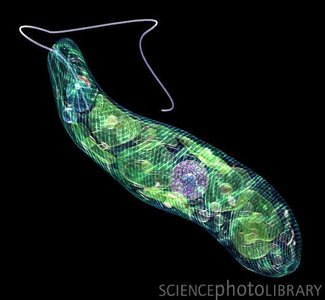
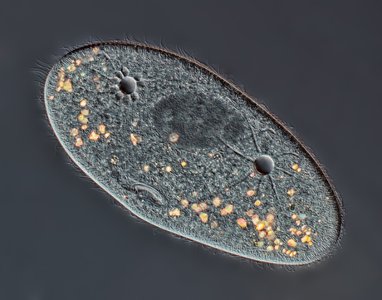
Protist Phylogeny and Supergroups
Evolutionary Relationships
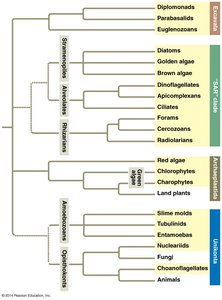
Protists are a paraphyletic group, meaning they do not include all descendants of their most recent common ancestor. Modern classification places protists within several eukaryotic supergroups, and new discoveries continue to refine their phylogeny.
Supergroups:
SAR Clade: Includes Stramenopiles, Alveolates, and Rhizarians.
Archaeplastida: Includes green and red algae, and land plants.
Excavata: Includes various flagellated protists.
Unikonta: Includes amoebas, fungi, and animals.
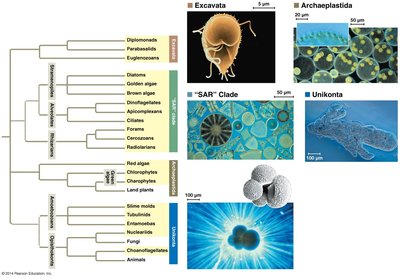
Stramenopiles: Diatoms and Brown Algae
Stramenopiles: Key Traits
Stramenopiles are characterized by the presence of flagellar hairs. This group includes a wide range of algae, protozoa, and fungus-like protists. Photosynthetic stramenopiles have plastids acquired through secondary endosymbiosis with red algae. 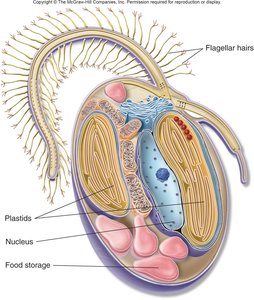
Diatoms
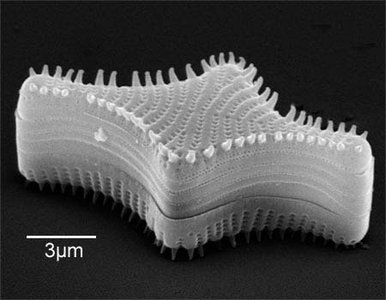
Diatoms are unicellular algae with silica cell walls, forming intricate and beautiful patterns. They are important components of phytoplankton and have commercial uses such as filtration and abrasives.
Cell Wall: Composed of silica (SiO2).
Life Cycle: Gametic life cycle; all cells except gametes are diploid.
Brown Algae
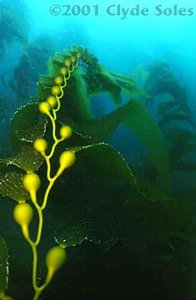
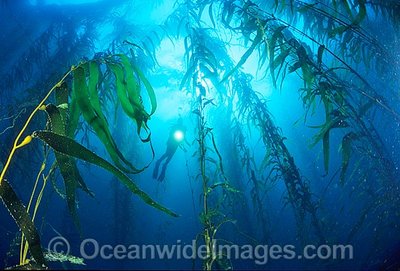
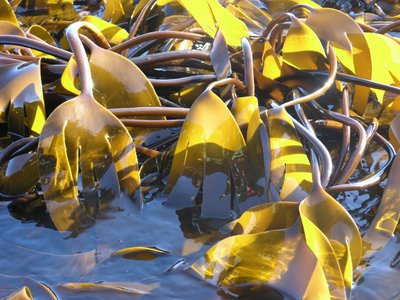
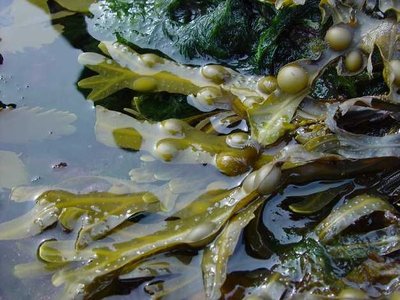
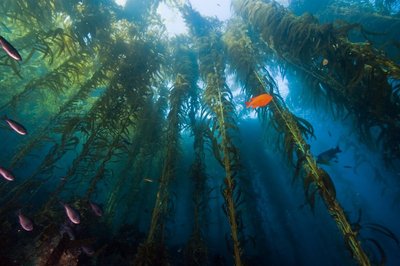
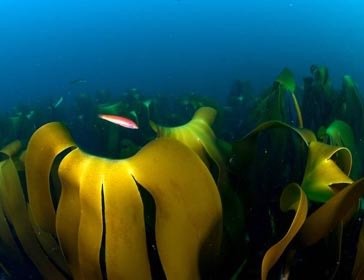
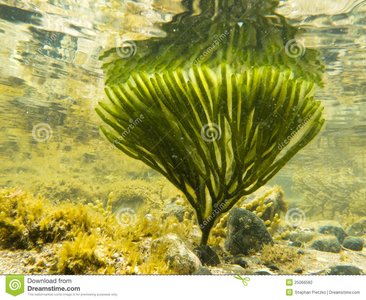
Brown algae are multicellular and include the largest protists, such as kelp. They are important as habitat providers, offering oxygen, food, and refuge for marine organisms.
Plastids: Golden-brown plastids from secondary endosymbiosis.
Life Cycle: Sporic life cycle (alternation of generations).
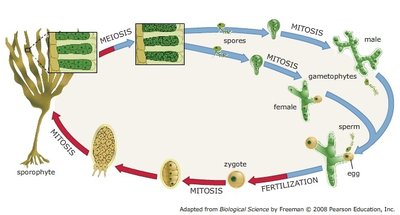
Life Cycle of Brown Algae
Brown algae exhibit a sporic life cycle, with alternation of generations between haploid and diploid phases.
Sporophyte: Diploid, produces haploid spores by meiosis.
Gametophyte: Haploid, produces gametes by mitosis.
Fertilization: Gametes fuse to form a diploid zygote.
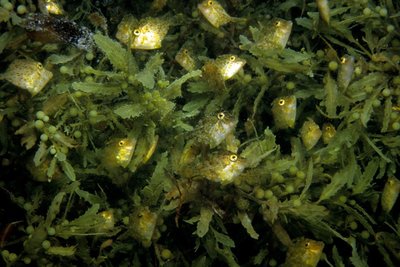
Alveolates: Dinoflagellates
Dinoflagellates: Key Traits
Dinoflagellates are a group of alveolates with two flagella and often have cellulose plates. They are important in marine ecosystems and can be photosynthetic or heterotrophic.
Red Tides: Dinoflagellates are the dominant group responsible for red tides, which can be harmful to marine life.
Mutualism: Some dinoflagellates (zooxanthellae) form mutualistic relationships with coral, providing energy through photosynthesis.
Rhizarians: Radiolarians and Foraminiferans
Key Traits
Rhizarians possess thread-like (filose) pseudopodia, which are thin, hair-like extensions of the cytoplasm. Radiolarians and foraminiferans are heterotrophs with hard tests (shells).
Radiolarians: Silica-based tests.
Foraminiferans: Calcium carbonate-based tests.
Archaeplastida: Green and Red Algae
Key Traits and Evolutionary Relationships
Archaeplastida includes land plants and several related algal phyla. Green and red algae plastids originated through primary endosymbiosis, where a heterotrophic host cell captured a cyanobacterium.
Green Algae (Chlorophyta): Share plastids and photosynthetic pigments with land plants. Can be unicellular, multicellular, or colonial.
Red Algae (Rhodophyta): Possess red pigment phycoerythrin, are mostly multicellular marine macroalgae, and lack flagella.
Protist Reproduction and Life Cycles
Asexual and Sexual Reproduction
All protists can reproduce asexually, allowing rapid population growth. Some protists also reproduce sexually, increasing genetic variability. Eukaryotic sexual reproduction arose among protists and is generally adaptive.
Gametic Life Cycle: All cells except gametes are diploid (e.g., diatoms).
Sporic Life Cycle: Alternation of generations; mitosis occurs in both haploid and diploid phases (e.g., many seaweeds).
Zygotic Life Cycle: Zygote is the only diploid cell; most unicellular protists with sexual reproduction.
Key Terms
Primary Endosymbiosis: The process by which a eukaryotic cell engulfed a cyanobacterium, leading to the origin of plastids.
Plastid: Organelle involved in photosynthesis and storage, derived from endosymbiotic cyanobacteria.
Pseudopodia: Temporary cytoplasmic projections used for movement and feeding.
Summary Table: Protist Classification by Ecological Role
Group | Nutrition | Example |
|---|---|---|
Algae | Photoautotrophic | Diatoms, Green Algae |
Protozoa | Heterotrophic | Ciliates, Amoebas |
Fungus-like | Absorptive | Slime Molds |
Summary Table: Protist Classification by Motility
Type | Structure | Example |
|---|---|---|
Flagellate | Flagella | Euglena |
Amoeba | Pseudopodia | Amoeba |
Ciliate | Cilia | Paramecium |
