 Indietro
Protists: Diversity, Classification, and Ecological Roles
Guida di studio - Note intelligenti
 Appunti personalizzati basati sui tuoi materiali, ampliati con definizioni chiave, esempi e contesto.
Protists: An Overview
Definition and Classification
Protists are a diverse group of mostly unicellular eukaryotes, historically classified under the kingdom Protista. Advances in systematics have shown that protists constitute a polyphyletic group, and the kingdom Protista is no longer recognized. Most eukaryotic lineages are protists, and they exhibit remarkable structural and functional diversity.
Eukaryotic cells have organelles and are more complex than prokaryotic cells.
Protists include photoautotrophs (with chloroplasts), heterotrophs (absorbing or ingesting organic material), and mixotrophs (combining both nutritional modes).
Reproduction can be asexual or sexual, including meiosis and fertilization.
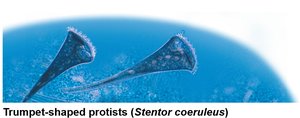
Structural and Functional Diversity
Protists display more structural and functional diversity than any other group of eukaryotes. While most are unicellular, some are colonial or multicellular. Single-celled protists carry out all biological functions within one cell.
Protists can be complex, with specialized organelles for movement, feeding, and reproduction.
Examples include Stentor coeruleus, a trumpet-shaped protist.
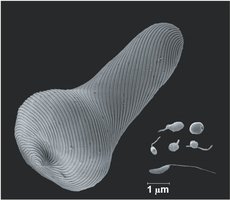
Classification of Protists: Four Supergroups
Phylogenetic Hypothesis and Supergroups
Current classification divides eukaryotes into four supergroups: Excavata, SAR, Archaeplastida, and Unikonta. This organization is based on molecular and morphological evidence.
Excavata: Includes diplomonads, parabasalids, and euglenozoans.
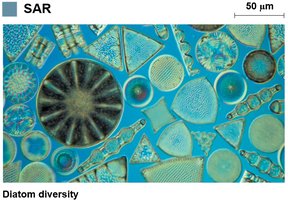
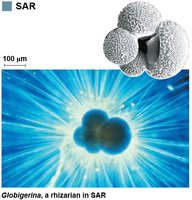
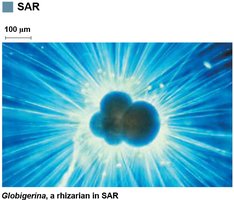
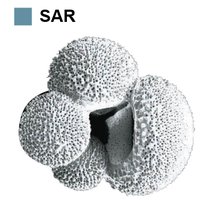
SAR: Composed of stramenopiles, alveolates, and rhizarians.
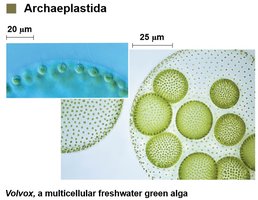
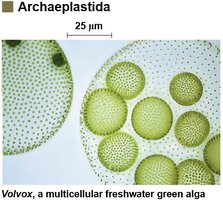
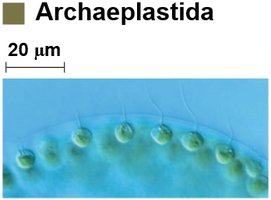
Archaeplastida: Includes red algae, green algae, and plants.
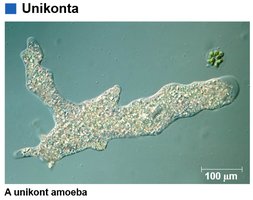
Unikonta: Includes amoebozoans, fungi, and animals.
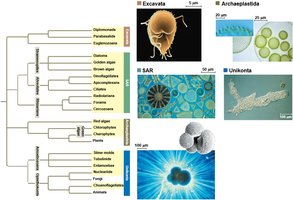
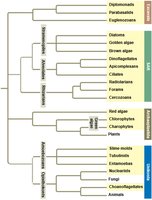
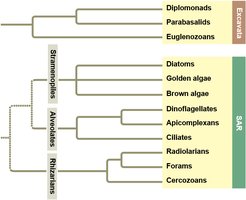
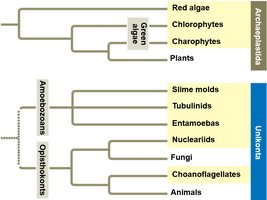
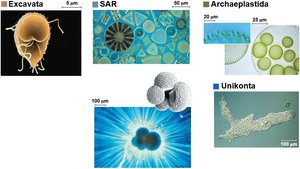
Supergroup Details
Excavata: Characterized by a cytoskeleton and, in some, an "excavated" feeding groove.
SAR: Defined by DNA similarities; includes important photosynthetic organisms and diverse protists.
Archaeplastida: Contains the closest relatives of plants.
Unikonta: Includes protists closely related to fungi and animals.
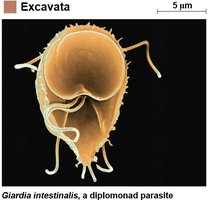
Endosymbiosis and the Origin of Protist Diversity
Endosymbiotic Theory
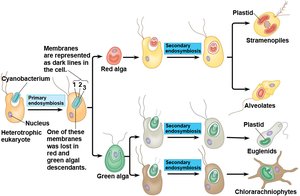
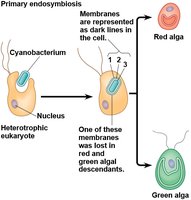
Much protist diversity originates from endosymbiosis, where one organism lives inside another. Mitochondria and plastids (chloroplasts) are derived from prokaryotes engulfed by ancestral eukaryotes.
Mitochondria evolved from an alpha proteobacterium.
Plastids evolved from a photosynthetic cyanobacterium.
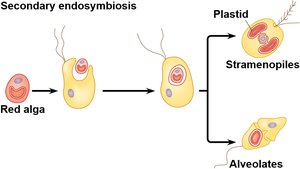
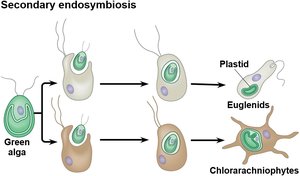
Red and green algae arose from primary endosymbiosis and later underwent secondary endosymbiosis.
Nucleomorphs and Secondary Endosymbiosis
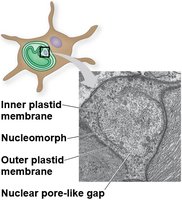
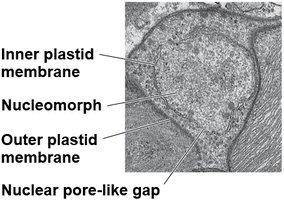
Secondary endosymbiosis involves the engulfment of red or green algae by other eukaryotes, resulting in complex plastids. Chlorarachniophytes contain a vestigial nucleus called a nucleomorph.
Nucleomorphs are remnants of the engulfed algal cell's nucleus.
Summary Table: Eukaryotic Supergroups and Major Protist Lineages
Supergroup | Major Lineages | Key Features |
|---|---|---|
Excavata | Diplomonads, Parabasalids, Euglenozoans | Modified mitochondria, unique flagella, feeding groove |
SAR | Stramenopiles, Alveolates, Rhizarians | Hairy/smooth flagella, membrane sacs, threadlike pseudopodia |
Archaeplastida | Red algae, Green algae, Plants | Photosynthetic, plastids from cyanobacteria |
Unikonta | Amoebozoans, Opisthokonts | Lobe/tube-shaped pseudopodia, includes fungi and animals |
Conclusion
Protists are a foundational group in the tree of life, exhibiting vast diversity in structure, function, and ecological roles. Their evolutionary history is shaped by endosymbiosis, and their classification continues to evolve with advances in molecular biology.
Protists are key players in aquatic ecosystems as producers and symbionts.
Understanding protist diversity is essential for studying eukaryotic evolution and ecological dynamics.
