 Indietro
Protists: Diversity, Classification, and Evolutionary Significance
Guida di studio - Note intelligenti
 Appunti personalizzati basati sui tuoi materiali, ampliati con definizioni chiave, esempi e contesto.
Protists: Introduction and Overview
What Are Protists?
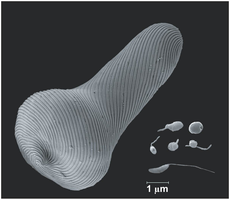
Protists are a diverse group of mostly unicellular eukaryotic organisms that do not fit into the plant, animal, or fungal kingdoms. They are found in a variety of aquatic and moist environments and exhibit a wide range of structural and functional diversity.
Unicellular Eukaryotes: Most protists are single-celled, but some are colonial or multicellular without specialized tissues.
Nutritional Diversity: Protists can be photoautotrophs (using photosynthesis), heterotrophs (ingesting food), or mixotrophs (combining both strategies).
Reproduction: Protists reproduce asexually (binary fission, budding) and sexually (meiosis and fertilization).
Classification of Protists
Four Supergroups of Eukaryotes
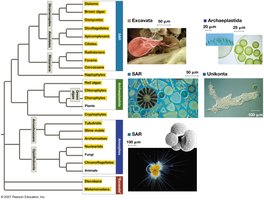
Modern classification divides eukaryotes into four major supergroups, each containing various protist lineages. These supergroups are based on molecular and morphological evidence.
Excavata
SAR (Stramenopiles, Alveolates, Rhizarians)
Archaeplastida
Amorphea (includes Opisthokonts and Amoebozoans)
Endosymbiosis in Eukaryotic Evolution
Origin of Mitochondria and Chloroplasts
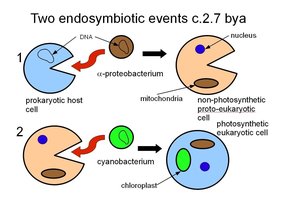
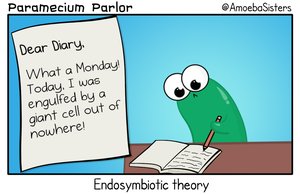
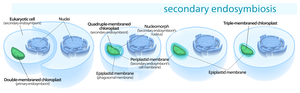
The endosymbiotic theory explains how eukaryotic cells acquired mitochondria and chloroplasts. These organelles originated from free-living bacteria that were engulfed by ancestral eukaryotic cells.
Primary Endosymbiosis: Ancestral eukaryote engulfed an alpha-proteobacterium, leading to mitochondria.
Secondary Endosymbiosis: Some eukaryotes later engulfed photosynthetic eukaryotes (like red or green algae), leading to additional complexity in plastid structure.
Supergroup: Excavata
Clade Metamonada: Diplomonads
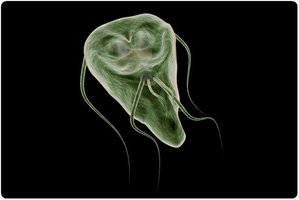
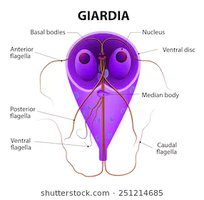
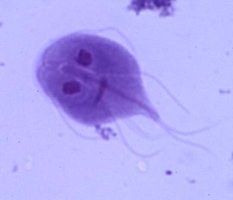
Diplomonads are anaerobic protists with modified mitochondria (mitosomes) and two equal-sized nuclei. Many are parasitic, such as Giardia intestinalis, which causes giardiasis in humans.
Key Features: Two nuclei, multiple flagella, lack of typical mitochondria.
Example: Giardia intestinalis infects the intestines of mammals.
Clade Metamonada: Parabasalids
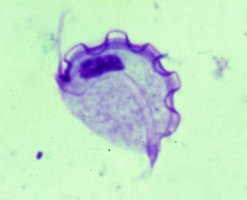
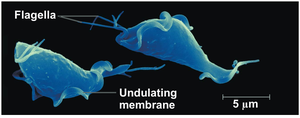
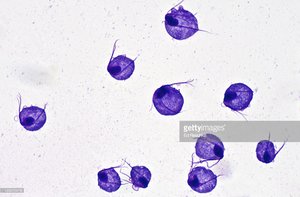
Parabasalids are anaerobic protists with reduced mitochondria called hydrogenosomes. Many live in symbiosis with animals, such as Trichomonas vaginalis, a human parasite.
Key Features: Reduced mitochondria, flagella, often symbiotic or parasitic.
Clade Discoba: Euglenozoans
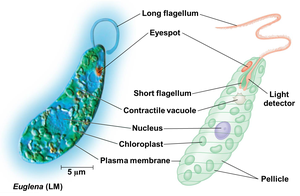
Euglenozoans are a diverse group characterized by a rod with a spiral or crystalline structure inside their flagella. This group includes euglenids and kinetoplastids.
Euglenids: Mixotrophic, with a flexible pellicle and an eyespot for detecting light.
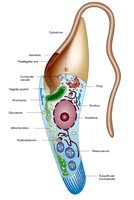
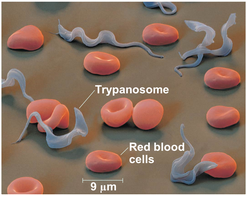
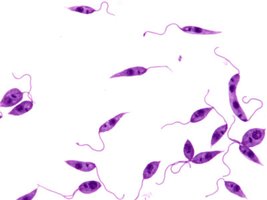
Kinetoplastids: Possess a single large mitochondrion with a kinetoplast; some are parasitic (e.g., Trypanosoma causes sleeping sickness).
Supergroup: SAR
Overview of SAR
The SAR supergroup includes three major clades: Stramenopiles, Alveolates, and Rhizarians. These groups are united by molecular evidence and some shared morphological traits.
Stramenopiles: Includes diatoms, brown algae, and water molds.
Alveolates: Includes dinoflagellates, apicomplexans, and ciliates.
Rhizarians: Includes foraminiferans, radiolarians, and cercozoans.
Stramenopiles
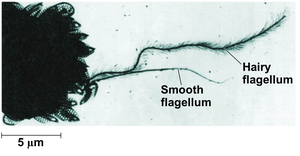
Stramenopiles are defined by the presence of two flagella, one of which is often hairy. This group includes important photosynthetic organisms and decomposers.
Diatoms: Unicellular algae with silica cell walls; major component of phytoplankton.
Oomycetes: Water molds, some of which are plant pathogens.
Brown Algae: Multicellular, commonly known as seaweeds.
Supergroup: Archaeplastida
Red and Green Algae
Archaeplastida includes red algae, green algae, and land plants. Red and green algae are the closest relatives of plants and are important for understanding the evolution of photosynthesis in eukaryotes.
Red Algae (Rhodophyta): Mostly multicellular, found in marine environments, contain phycoerythrin pigment.
Green Algae (Chlorophyta and Charophyta): Unicellular, colonial, or multicellular; closely related to land plants.
Supergroup: Amorphea
Amoebozoans and Opisthokonts
Amorphea includes protists closely related to fungi and animals. The two main clades are amoebozoans (with lobe-shaped pseudopodia) and opisthokonts (including animals, fungi, and related protists).
Amoebozoans: Includes slime molds, tubulinids, and entamoebas.
Opisthokonts: Includes nucleariids, choanoflagellates, fungi, and animals.
Summary Table: Major Protist Groups and Features
Supergroup | Representative Clades | Key Features | Examples |
|---|---|---|---|
Excavata | Diplomonads, Parabasalids, Euglenozoans | Modified mitochondria, flagella, often parasitic | Giardia, Trichomonas, Euglena, Trypanosoma |
SAR | Stramenopiles, Alveolates, Rhizarians | Hairy/smooth flagella, alveoli under membrane, threadlike pseudopodia | Diatoms, Brown algae, Paramecium, Plasmodium, Foraminifera |
Archaeplastida | Red algae, Green algae, Land plants | Photosynthetic, primary endosymbiosis | Chlamydomonas, Volvox, Ulva |
Amorphea | Amoebozoans, Opisthokonts | Lobe-shaped pseudopodia, close to animals/fungi | Amoeba, Slime molds, Fungi, Animals |
Additional info: This summary covers the main protist groups, their evolutionary relationships, and key features, providing a foundation for understanding eukaryotic diversity and the origins of plants, animals, and fungi.
