 Indietro
Protostome Animals: Diversity, Structure, and Evolution
Guida di studio - Note intelligenti
 Appunti personalizzati basati sui tuoi materiali, ampliati con definizioni chiave, esempi e contesto.
Protostome Animals
Overview of Protostome Diversity
Protostomes represent a major lineage of animals characterized by their embryonic development, where the mouth forms before the anus. This group includes the majority of animal phyla and exhibits a wide range of body plans, feeding strategies, and reproductive modes.
Major Protostome Groups: Lophotrochozoa and Ecdysozoa
Key evolutionary events: Transition from water to land, diversity in appendages and mouthparts, evolution of metamorphosis
Examples: Mollusca, Arthropoda, Annelida, Nematoda
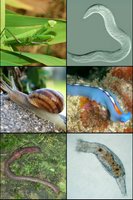
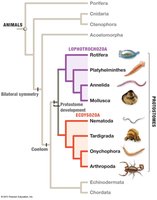
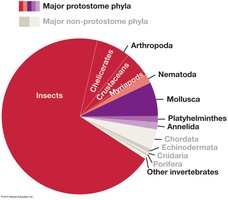
Porifera (Sponges)
Basic Characteristics and Cell Types
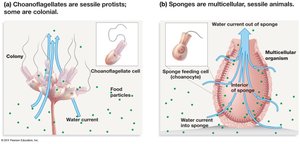
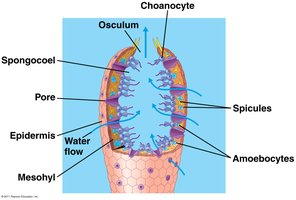
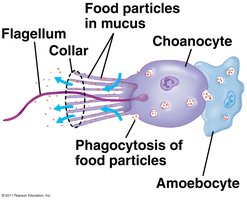
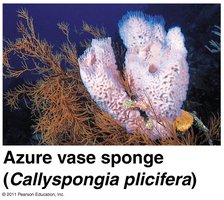
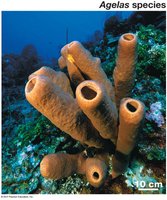
Porifera are the most basal animal taxon, sharing key features with choanoflagellates. Sponges are ancient, benthic, and sessile as adults, with motile larvae. Their bodies are filled with pores and tubes, and they possess totipotent cells.
Major cell types: Epithelial cells, amoebocytes, and choanocytes (collar cells)
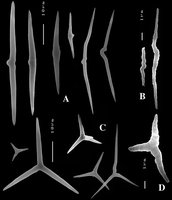
Skeleton: Composed of spicules (silica, calcium carbonate) and spongin
Reproduction: Both asexual and sexual; can identify "self"
Cnidaria
Body Structure and Life Cycle
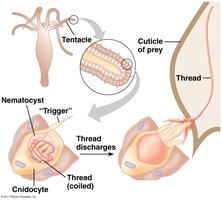
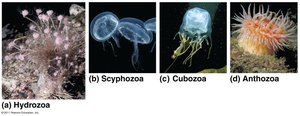
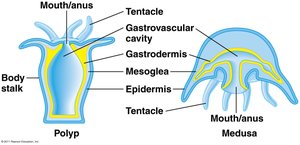
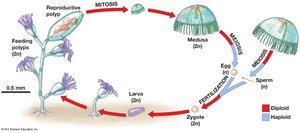
Cnidarians are radially symmetric, diploblastic animals with specialized stinging cells called cnidocytes. They are mostly marine and exhibit three distinct body types: polyp, medusa, and larval stage.
Polyp: Sessile, usually asexual
Medusa: Free-floating, sexual reproduction
Larval stage: Moves via cilia
Reproduction: Alternates between asexual (budding, fission, fragmentation) and sexual modes
Ctenophora (Comb Jellies)
Characteristics and Locomotion
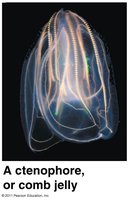
Ctenophores are all marine, radially symmetric, and diploblastic. They move via eight ciliated combs and use specialized adhesive tentacles for prey capture. Reproduction is sexual, often with self-fertilization.
Low diversity: ~100 species, but abundant
Locomotion: Ciliated combs
Feeding: Adhesive tentacles
Protostome Phylogeny and Diversity
Lophotrochozoa vs. Ecdysozoa
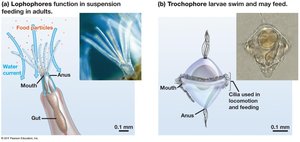
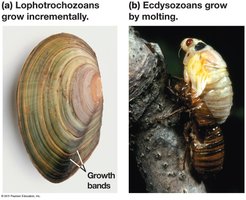
Protostomes are divided into two monophyletic groups: Lophotrochozoa and Ecdysozoa. The primary difference is their growth method.
Lophotrochozoa: Incremental growth, may have lophophore or trochophore larva
Ecdysozoa: Molt exoskeleton
Worm-like Protostomes
Body Plan and Coelom
Most protostome phyla have worm-like bodies with a tube-within-a-tube design. The coelom is usually well-developed and functions as a hydrostatic skeleton.
Outer tube: Ectoderm-derived skin
Inner tube: Endoderm-derived gut
Between tubes: Mesoderm-derived muscles and organs
Coelom: Provides circulatory space and hydrostatic support
Land-Water Transition
Adaptations and Challenges
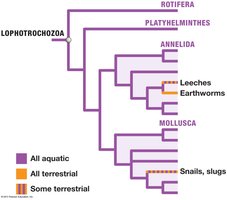
Protostomes evolved several preadaptations for terrestrial life, including hydrostatic skeletons, exoskeletons, and appendages. Multiple transitions to land occurred, opening new habitats and resources.
Challenges: Gas exchange, avoiding desiccation, adequate support
Protostome Feeding Adaptations
Feeding Strategies
Protostomes exhibit diverse feeding strategies, including suspension feeding, deposit feeding, liquid feeding, and mass feeding. They can be herbivores, carnivores, omnivores, or detritus feeders. 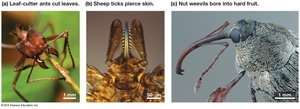
Protostome Locomotion
Modes of Movement
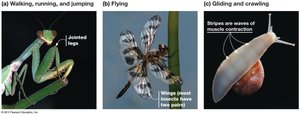
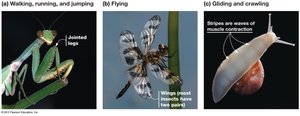
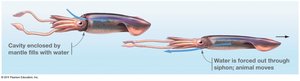
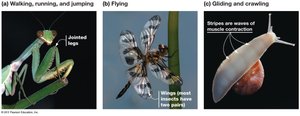
Protostomes display variable locomotory modes, including limbs (jointed or non-jointed), wings, and jet propulsion.
Examples: Walking, running, jumping, flying, gliding, crawling
Protostome Reproduction
Modes and Innovations
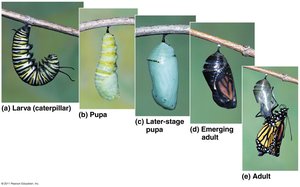
Protostomes reproduce sexually (predominant mode) and asexually (fragmentation, parthenogenesis). Two important innovations are metamorphosis and desiccation-resistant eggs.
Sexual reproduction: Internal or external fertilization
Asexual reproduction: Fragmentation, parthenogenesis
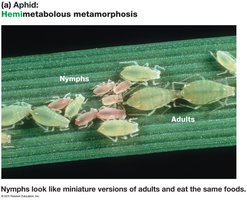
Metamorphosis: Holometabolous (complete) and hemimetabolous (incomplete)
Lophotrochozoans
Rotifera
Rotifers are characterized by a pseudocoelom, defined cell number, a corona of cilia for feeding and locomotion, and often reproduce parthenogenetically.
No trochophore or lophophore
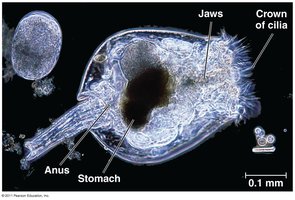
Platyhelminthes (Flatworms)
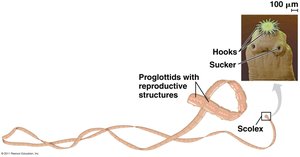
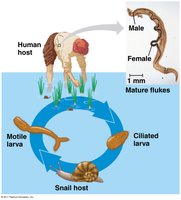
Flatworms have broad, flat bodies, a sac body plan, are usually hermaphrodites, and are often parasitic. They are acoelomates and lack trochophore/lophophore.
Subgroups: Turbellaria (free-living), Cestoda (parasitic), Trematoda (parasitic, complex life cycles)
Annelida (Segmented Worms)
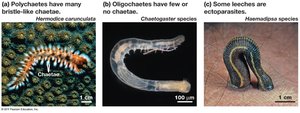
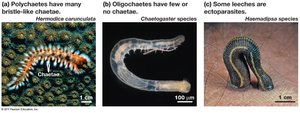
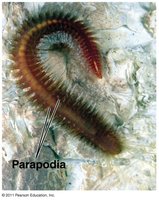
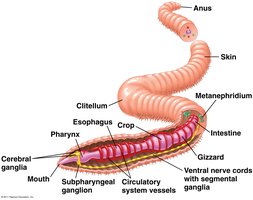
Annelids have segmented bodies, setae, are hermaphrodites, and possess closed circulation. Many have trochophore larvae.
Errantians: Parapodia, jaws, sense organs, all marine
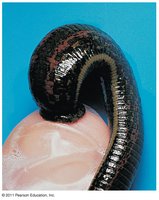
Leeches: Aquatic/terrestrial, predatory/parasitic, produce hirudin
Earthworms: Soil burrowers, enrich soil, few setae
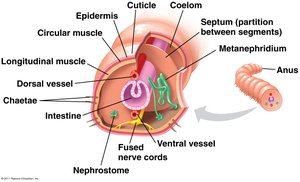
Mollusca
Molluscs are the most diverse lophotrochozoans, with soft bodies, reduced coelom, and a trochophore larva. They inhabit aquatic and terrestrial environments.
Body plan: Foot (muscular, locomotion), visceral mass (internal organs), mantle (shell secretion), radula (feeding organ)
Lineages: Bivalvia, Gastropoda, Polyplacophora, Cephalopoda
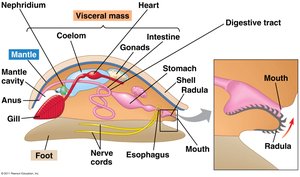
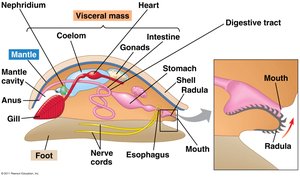
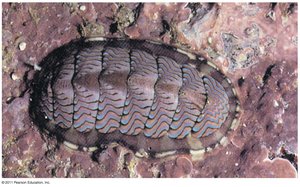
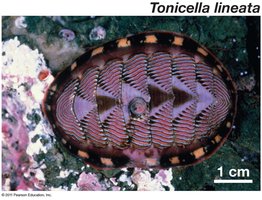
Polyplacophora (Chitons)
All marine, eight CaCO3 dorsal plates, glide on muscular foot, scrape algae with radula, intertidal, sexual with internal fertilization, usually have trochophore
Gastropoda (Snails, Slugs, Nudibranchs)
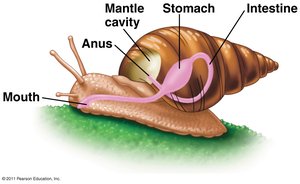
Single spiral shell (usually), large muscular foot, torsion, many habitats, varied diets, most dioecious, some hermaphrodites/parthenogens
Only mollusc group with terrestrial members
Bivalvia (Clams, Oysters, Mussels, Scallops)
All suspension feeders, hinged left & right shells, powerful adductor muscles, gills for feeding & respiration, lack radula, all aquatic, sexual with external fertilization, two larval stages (veliger, trochophore)
Cephalopoda (Squids, Octopuses, Cuttlefish, Nautilus)
Well-developed head, large brain, large eyes, highly intelligent, foot forms tentacles, reduced/no shells, closed circulation, all marine, jet propulsion, beak + radula, all predatory, sexual with internal fertilization
Ecdysozoan Protostomes
Nematoda
Nematodes are unsegmented, have a pseudocoelom, no appendages, and a tube-within-a-tube body plan. They possess only longitudinal muscles and a tough cuticle.
Gas exchange and excretion: Diffusion
Reproduction: Dioecious with internal fertilization, oviparous
Examples: Caenorhabditis elegans, Trichinella
Arthropoda
Arthropods are the most diverse animal phylum, with segmented bodies, paired jointed appendages, chitinous exoskeletons, and complex sensory structures.
Tagmata: Distinct head and trunk regions
Circulation: Open, reduced coelom (hemocoel)
Reproduction: Sexual with internal fertilization, oviparous, metamorphosis common
Habitat: Aquatic and terrestrial
Arthropod Groupings
Lineages: Chelicerata, Myriapoda, Pancrustacea (including Hexapoda and Crustacea)
Evolution: Decreasing segment number, increasing appendage specialization
Myriapoda (Millipedes and Centipedes)
Simple elongated segmented bodies, one or two pairs of legs per segment, paired antennae, terrestrial, jaw-like mandibles, dioecious with internal fertilization, oviparous
Diplopoda: Detritivores & herbivores
Chilopoda: Predators with venomous claws
Pancrustacea (Crustaceans and Insects)
Crustaceans: Two pairs of antennae, compound eyes, four pairs of mouthpart appendages, walking legs on thorax, abdominal appendages, dioecious with internal fertilization, oviparous with larval stages
Hexapoda (Insects): Most diverse group, terrestrial & freshwater, most can fly, three tagmata, compound & simple eyes, six legs, four mouthpart appendages, one antenna pair, wide range of diets, metamorphosis common
Chelicerata (Spiders, Scorpions, Ticks, Mites, Horseshoe Crabs)
Chelicerae (claw-like feeding appendages), no antennae, two tagmata (cephalothorax, abdomen), simple eyes, dioecious with internal fertilization, oviparous, most predatory, some parasitic, most terrestrial
Arachnids: Four pairs of walking legs, book lungs, pedipalps, mating, sensory perception, movement/prey capture
Spiders: Produce silk, all predatory, venomous fangs, external digestion
Scorpions: Venomous sting, pedipalps as pincers
Protostome Group | Key Characteristics | Examples |
|---|---|---|
Porifera | Sessile, filter feeders, totipotent cells | Sponges |
Cnidaria | Radial symmetry, cnidocytes, polyp/medusa | Jellyfish, corals |
Ctenophora | Ciliated combs, adhesive tentacles | Comb jellies |
Lophotrochozoa | Incremental growth, lophophore/trochophore | Mollusca, Annelida, Rotifera, Platyhelminthes |
Ecdysozoa | Molting exoskeleton | Arthropoda, Nematoda |
