 Indietro
Pyruvate Metabolism: Oxidation and Reduction in Cellular Respiration and Fermentation
Guida di studio - Note intelligenti
 Appunti personalizzati basati sui tuoi materiali, ampliati con definizioni chiave, esempi e contesto.
Cellular Respiration: Overview
Introduction to Cellular Respiration
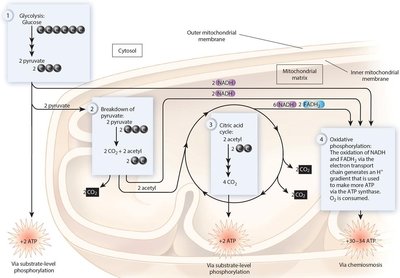
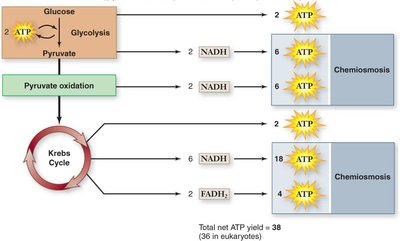
Cellular respiration is the process by which cells extract energy from organic molecules, primarily glucose, to produce ATP. This process involves a series of metabolic pathways that transfer electrons and carbon atoms, ultimately generating energy for cellular activities.
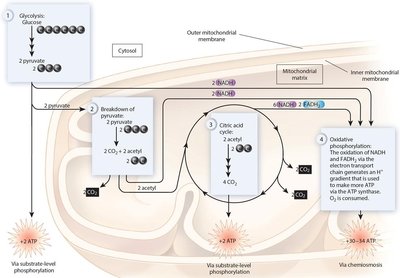
Key Pathways: Glycolysis, Pyruvate Oxidation, Krebs Cycle, Electron Transport Chain
Follow the Electrons: Track the movement of electrons through electron carriers (NADH, FADH2)
Follow the Carbons: Monitor carbon atoms from glucose to CO2
Location: Glycolysis occurs in the cytosol; subsequent steps occur in mitochondria
Overall Equation for Cellular Respiration
The complete oxidation of glucose in aerobic respiration is summarized by the following equation:
Glucose + Oxygen → Carbon Dioxide + Water + Energy

Pyruvate Metabolism: Oxidation and Reduction
Fate of Pyruvate
Pyruvate, the end product of glycolysis, can be either oxidized or reduced depending on cellular conditions.
Oxidation: Occurs when oxygen is present (aerobic conditions)
Reduction: Occurs when oxygen is absent (anaerobic conditions), leading to fermentation
Pyruvate Oxidation (Aerobic Conditions)
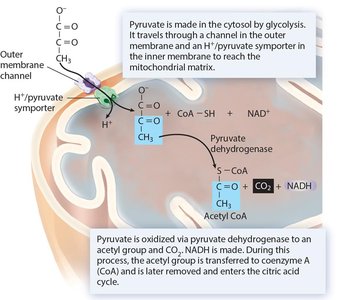
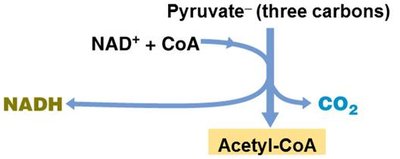
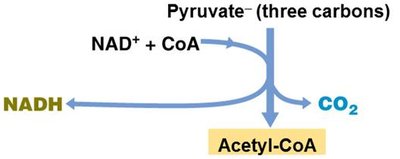
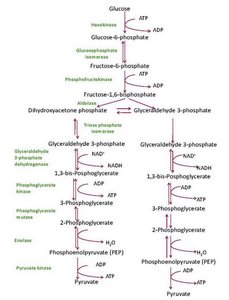
Pyruvate is transported into the mitochondrial matrix and oxidized to acetyl-CoA, producing NADH and CO2.
Transport: Pyruvate crosses the mitochondrial membranes via a H+/pyruvate symporter
Enzyme: Pyruvate dehydrogenase catalyzes the reaction
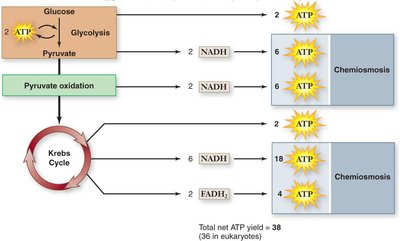
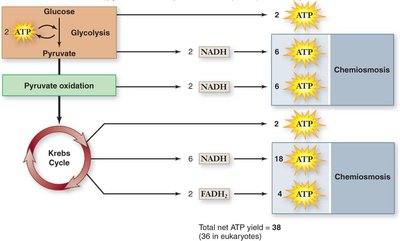
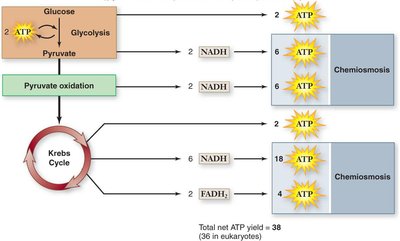
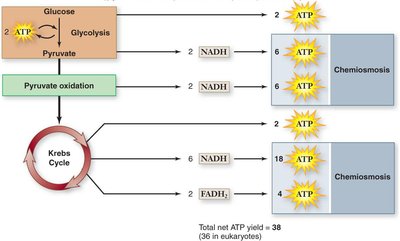
Products per glucose: 2 Acetyl-CoA, 2 NADH, 2 CO2
Structure and Function of Acetyl-CoA
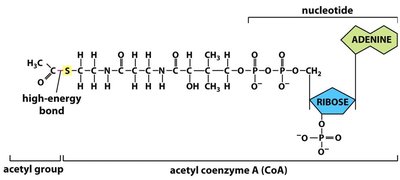
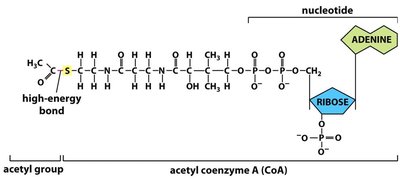
Acetyl-CoA is a central metabolic intermediate, consisting of a two-carbon acetyl group linked to coenzyme A.
High-Energy Bond: The thioester bond between acetyl and CoA is high in energy, facilitating transfer to other molecules
Entry to Krebs Cycle: Acetyl-CoA enters the citric acid cycle for further oxidation
Summary Table: Pyruvate Oxidation
Pathway | Location | Products per Glucose |
|---|---|---|
Glycolysis | Cytosol | 2 Pyruvate, 2 ATP, 2 NADH |
Pyruvate Oxidation | Mitochondrial Matrix | 2 Acetyl-CoA, 2 NADH, 2 CO2 |
Fermentation: Reduction of Pyruvate (Anaerobic Conditions)
Introduction to Fermentation
Fermentation is an alternative pathway to cellular respiration, used when oxygen is absent. It allows cells to regenerate NAD+ so glycolysis can continue, producing a small amount of ATP.
Purpose: Regenerate NAD+ for glycolysis
Electron Acceptor: Pyruvate or its derivatives
ATP Yield: Only from glycolysis (2 ATP per glucose)
Lactic Acid Fermentation
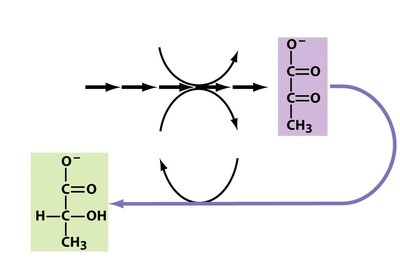
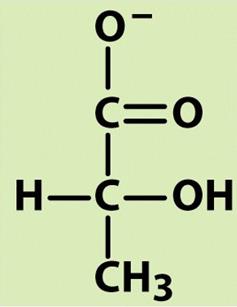
In lactic acid fermentation, pyruvate is directly reduced by NADH to form lactate, regenerating NAD+.
Occurs in: Human muscle cells under anaerobic conditions
Products: 2 Lactate, 2 NAD+, 2 ATP (from glycolysis)
Alcohol Fermentation
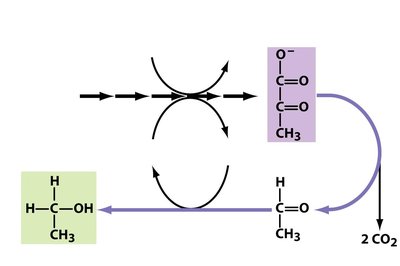
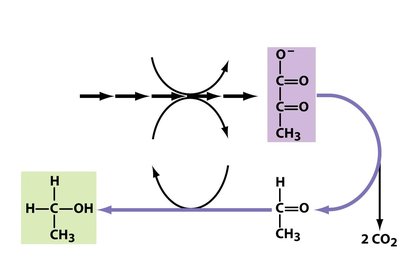
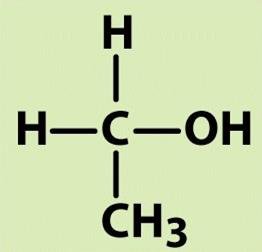
Alcohol fermentation occurs in yeast and some bacteria. Pyruvate is first converted to acetylaldehyde, which then accepts electrons from NADH to form ethanol and regenerate NAD+.
Occurs in: Yeast, some bacteria
Products: 2 Ethanol, 2 CO2, 2 NAD+, 2 ATP (from glycolysis)
Fermentation Byproducts and Their Importance
Fermentation end products (lactate, ethanol) retain much of the bond energy from glucose and are considered waste in terms of energy extraction. However, they are important for regenerating NAD+ and have practical uses in food and beverage production.
Does not require O2 or electron transport chain
Main purpose: Regenerate NAD+ for glycolysis
ATP generation: Substrate-level phosphorylation in glycolysis

Comparison Table: Pyruvate Oxidation vs. Fermentation
Condition | Pathway | Products | ATP Yield | Electron Acceptor |
|---|---|---|---|---|
O2 Present | Pyruvate Oxidation (Aerobic Respiration) | Acetyl-CoA, NADH, CO2 | High (up to 36-38 ATP) | O2 |
O2 Absent | Fermentation | Lactate or Ethanol, NAD+ | Low (2 ATP) | Pyruvate or Acetylaldehyde |
Key Questions for Review
What happens to pyruvate under aerobic and anaerobic conditions?
What are the products of pyruvate oxidation and fermentation?
How is NAD+ regenerated in fermentation?
What is the main purpose of fermentation?
How is ATP generated in these pathways?
Summary
Pyruvate is a central metabolite in cellular energy production. Its fate—oxidation or reduction—depends on the presence of oxygen. Pyruvate oxidation leads to efficient ATP production via aerobic respiration, while fermentation allows cells to survive anaerobic conditions by regenerating NAD+ and producing limited ATP. Additional info: Expanded explanations and tables were added for clarity and completeness.
