 Indietro
Lecture 22 (Unit 2)--Recombinant DNA Tools and Biotechnology: Study Notes
Guida di studio - Note intelligenti
 Appunti personalizzati basati sui tuoi materiali, ampliati con definizioni chiave, esempi e contesto.
Recombinant DNA Tools and Biotechnology
Introduction to Recombinant DNA Technology
Recombinant DNA technology encompasses a suite of molecular biology tools that allow scientists to manipulate, amplify, and analyze DNA. These techniques are foundational for modern genetics, biotechnology, and biomedical research, enabling applications in diagnostics, forensics, pharmaceuticals, and agriculture.
Amplification and Analysis of DNA
Polymerase Chain Reaction (PCR)
The polymerase chain reaction (PCR) is a method used to amplify specific DNA sequences exponentially. It involves repeated cycles of:
Denaturation: Heating the DNA to separate strands.
Annealing: Cooling to allow primers to bind to target sequences.
Extension: DNA polymerase synthesizes new DNA strands from the primers.
This process results in millions of copies of the target DNA segment.
Gel Electrophoresis
Gel electrophoresis is used to separate DNA fragments by size. DNA samples are loaded into wells in an agarose gel and subjected to an electric field; negatively charged DNA moves toward the positive electrode, with smaller fragments migrating faster.

DNA Cloning and Recombinant Plasmids
Plasmids as Cloning Vectors
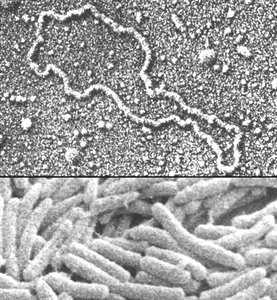
Plasmids are small, circular DNA molecules found in bacteria that replicate independently of the bacterial chromosome. They are commonly used as vectors to clone foreign DNA.
Construction of Recombinant DNA Molecules
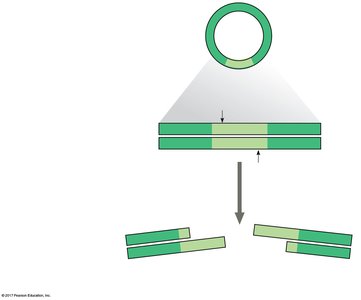
To create recombinant DNA, a gene of interest is inserted into a plasmid vector. This process typically involves:
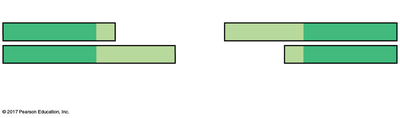
Cutting both the plasmid and the DNA fragment with the same restriction enzyme to generate compatible sticky ends.
Mixing and ligating the DNA fragments to form a recombinant plasmid.
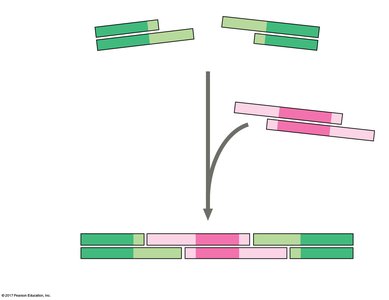
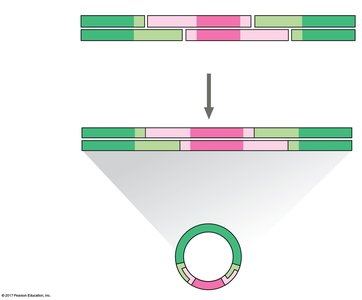
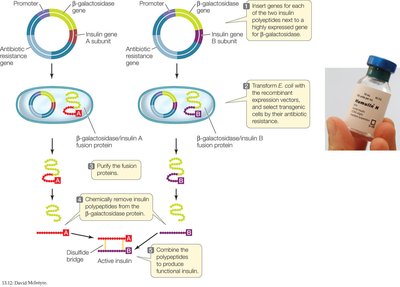
The recombinant plasmid is then introduced into E. coli cells by transformation. Only cells that take up the plasmid (which contains an antibiotic resistance gene as a selectable marker) will survive on antibiotic-containing media.
DNA Sequencing
Sanger Sequencing (Dideoxy Sequencing)
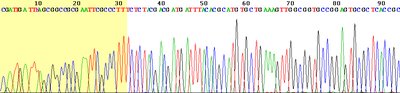
Sanger sequencing uses chain-terminating dideoxynucleotides (ddNTPs) labeled with fluorescent tags to determine the nucleotide sequence of DNA. The incorporation of a ddNTP terminates DNA synthesis at specific bases, and the resulting fragments are separated by capillary electrophoresis and detected by their fluorescence.
Analyzing Gene Expression
Reverse Transcription PCR (RT-PCR)
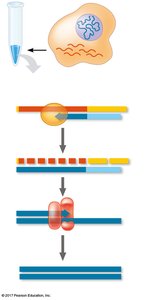
RT-PCR is used to measure the expression of specific mRNAs. It involves synthesizing complementary DNA (cDNA) from mRNA using reverse transcriptase, followed by PCR amplification of the cDNA.
RNA Sequencing (RNA-seq)
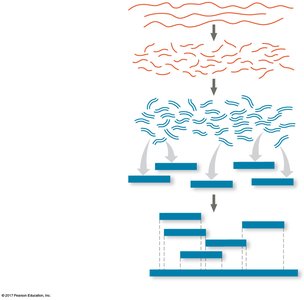
RNA-seq allows for genome-wide analysis of gene expression by sequencing cDNA derived from all mRNAs in a sample. The resulting sequences are mapped to the genome to quantify expression levels of each gene.
Determining Gene Function
Gene Knockout and Knockdown Techniques
Homologous recombination: Used to replace or disrupt a gene with a selectable marker, allowing for the study of loss-of-function phenotypes.
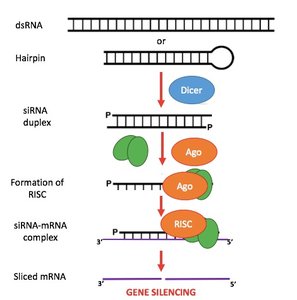
RNA interference (RNAi): Uses double-stranded RNA to silence gene expression by targeting mRNA for degradation.
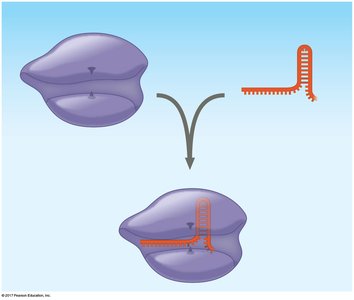
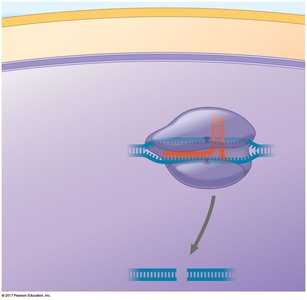
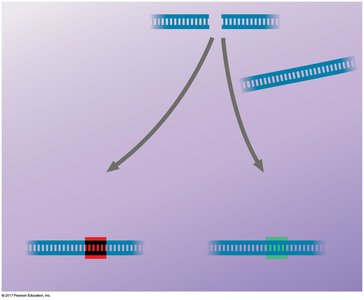
CRISPR-Cas9: An RNA-guided endonuclease system that can create targeted double-strand breaks in DNA, enabling gene knockout or precise editing via non-homologous end joining (NHEJ) or homology-directed repair (HDR).
Applications of DNA Technology
Diagnostics and Forensics
Single-nucleotide polymorphisms (SNPs): Variations at single nucleotide positions in the genome can be used for disease diagnosis and genetic association studies.
Short tandem repeats (STRs): Repeated sequences used in forensic DNA fingerprinting to distinguish individuals.

Pharmaceuticals and Agriculture
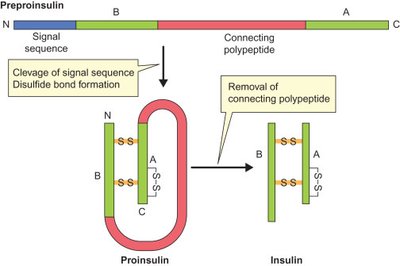
Production of recombinant proteins: Genes encoding therapeutic proteins (e.g., human insulin) can be expressed in bacteria or yeast for pharmaceutical use.
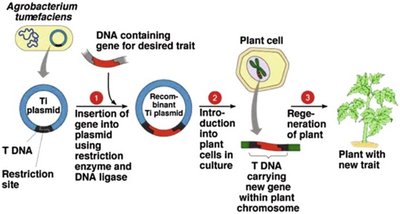
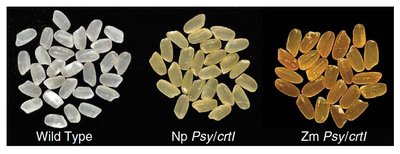
Genetically modified plants: Introduction of genes into plants (e.g., via Agrobacterium) can improve traits such as nutritional content (e.g., golden rice with increased pro-vitamin A).

Summary Table: Key Recombinant DNA Tools and Applications
Technique | Main Purpose | Example/Application |
|---|---|---|
PCR | Amplify specific DNA segments | Detecting genetic mutations |
Gel Electrophoresis | Separate DNA fragments by size | DNA fingerprinting |
DNA Cloning | Replicate and express genes | Production of recombinant proteins |
Sanger Sequencing | Determine DNA sequence | Gene identification |
RT-PCR | Measure gene expression | Quantifying mRNA levels |
RNA-seq | Genome-wide expression analysis | Transcriptome profiling |
CRISPR-Cas9 | Gene editing/knockout | Functional genomics, gene therapy |
Key Concepts Review
PCR enables rapid amplification of specific DNA sequences using thermostable DNA polymerase and primers.
Recombinant DNA technology allows insertion of genes into plasmids for cloning and expression in host cells.
Gel electrophoresis separates DNA fragments by size for analysis.
Sanger sequencing and next-generation sequencing determine DNA sequences for research and diagnostics.
Gene expression can be analyzed at the RNA level using RT-PCR and RNA-seq.
Gene function can be studied by knockout (homologous recombination, CRISPR-Cas9) or knockdown (RNAi) approaches.
DNA technology has practical applications in medicine, agriculture, and forensics.
