 Indietro
Redox Reactions and Cellular Respiration: A Comprehensive Study Guide
Guida di studio - Note intelligenti
 Appunti personalizzati basati sui tuoi materiali, ampliati con definizioni chiave, esempi e contesto.
Redox Reactions & Cellular Respiration
Coenzymes
Coenzymes are essential organic molecules that bind to enzymes and act as cofactors, facilitating various biochemical reactions. Most coenzymes serve as carrier molecules, transferring electrons, phosphate groups, or other chemical groups during metabolic processes.
NADH, NADPH, FADH2: Transfer electrons in metabolic pathways.
ATP: Transfers phosphate groups.
Coenzyme A: Transfers groups derived from organic acids.
Most vitamins function as coenzymes or their components.
Redox Reactions
Redox reactions are fundamental to energy conversion in cells, involving the transfer of electrons between molecules.
Oxidation: Loss of electrons by an atom, ion, or molecule; the oxidized substance gives up electrons.
Reduction: Gain of electrons by an atom, ion, or molecule; the reduced substance accepts electrons.
Example:
Metabolism
Metabolism encompasses all chemical reactions in an organism, divided into two complementary processes:
Catabolism: Breakdown of complex molecules, releasing energy.
Anabolism: Synthesis of complex molecules from simpler ones, requiring energy input (usually ATP).
Cellular Respiration
Overview
Cellular respiration is a catabolic process that converts the energy stored in nutrients into ATP, the cell's energy currency. It can be aerobic (requiring oxygen) or anaerobic (not requiring oxygen).
Aerobic respiration: Oxygen is the final electron acceptor; nutrients are fully oxidized to CO2 and H2O.
Anaerobic respiration: Other inorganic molecules serve as final electron acceptors.
Aerobic Respiration
Aerobic respiration is a redox process in which glucose is oxidized and oxygen is reduced. The overall equation is:
Electrons from glucose are transferred to oxygen in a controlled series of steps, coupling free energy release to ATP synthesis.
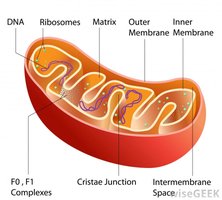
The Four Stages of Aerobic Respiration
Glycolysis
Pyruvate oxidation (formation of acetyl CoA)
Citric acid cycle (Krebs cycle)
Electron transport chain & chemiosmosis
Glycolysis
Glycolysis is the first stage of cellular respiration, occurring in the cytosol. It metabolizes glucose into two molecules of pyruvate, generating ATP and NADH.
Does not require oxygen; functions under both aerobic and anaerobic conditions.
Net yield: 2 ATP and 2 NADH per glucose.
Two phases: Energy investment (requires ATP) and Energy capture (produces ATP and NADH).
First Phase of Glycolysis
Phosphate groups are transferred from ATP to glucose in two phosphorylation reactions.
Fructose-1,6-bisphosphate is split into two G3P molecules.
Second Phase of Glycolysis
G3P is oxidized, transferring electrons to NAD+ to form NADH.
ATP is produced by substrate-level phosphorylation.
(net yield: 2 ATP)
Acetyl CoA Formation
Pyruvate is transported into the mitochondria and undergoes oxidative decarboxylation, forming acetyl CoA.
Carboxyl group is removed as CO2.
Remaining two-carbon fragment is oxidized and attached to coenzyme A.
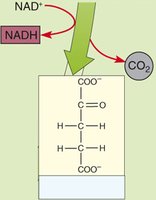
The Citric Acid Cycle (Krebs Cycle)
Overview
The citric acid cycle occurs in the mitochondrial matrix and completes the oxidation of glucose derivatives. Each acetyl CoA enters the cycle, combining with oxaloacetate to form citrate.
Eight enzyme-catalyzed steps.
Produces CO2, ATP, NADH, and FADH2.
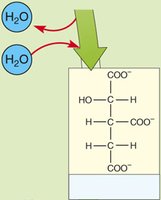
Key Steps and Enzymes
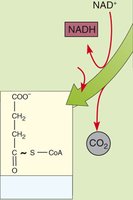
Citrate is transformed, losing two carboxyl groups as CO2.
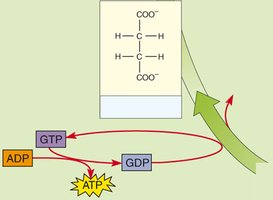
ATP is formed by substrate-level phosphorylation.
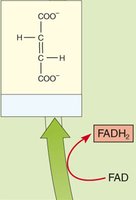
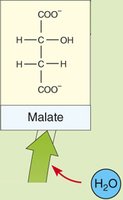
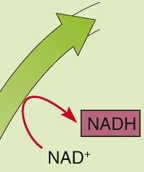
Most energy is transferred to NAD+ (forming NADH) and FAD (forming FADH2).
Summary of First Three Stages
Glycolysis: (net 2 ATP)
Pyruvate oxidation:
Citric acid cycle:
Electron Transport Chain & Chemiosmosis
Overview
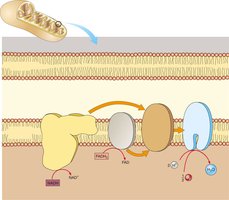
The electron transport chain (ETC) is a series of protein complexes embedded in the inner mitochondrial membrane. Electrons from NADH and FADH2 are transferred through the chain, ultimately reducing oxygen to water.
Four main complexes: I (NADH–ubiquinone oxidoreductase), II (succinate–ubiquinone reductase), III (ubiquinone–cytochrome c oxido-reductase), IV (cytochrome c oxidase).
Oxygen is the final electron acceptor.
Electron transfer is coupled to ATP synthesis via oxidative phosphorylation.
The Proton Gradient and ATP Synthesis
As electrons move through the ETC, protons (H+) are pumped into the intermembrane space, creating a gradient. ATP synthase uses this gradient to produce ATP from ADP and inorganic phosphate.
Proton gradient represents potential energy.
ATP synthase catalyzes ATP formation as protons flow back into the matrix (chemiosmosis).
ATP Production
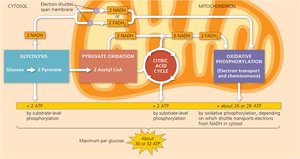
Glycolysis: 2 ATP
Citric acid cycle: 2 ATP
Electron transport and chemiosmosis: 26–34 ATP
Total yield: 30–38 ATP per glucose (depending on cell type and shuttle efficiency)
Anaerobic Catabolism and Fermentation
Anaerobic Respiration
Some prokaryotes use anaerobic respiration, where an inorganic molecule (e.g., nitrate or sulfate) is the final electron acceptor instead of oxygen.
Occurs in environments lacking oxygen.
Produces ATP, CO2, and reduced inorganic compounds.
Example equation:
Fermentation
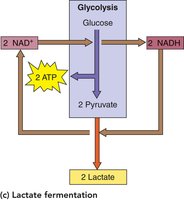
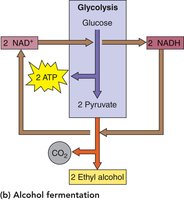
Fermentation is an anaerobic pathway that regenerates NAD+ for glycolysis by transferring electrons from NADH to organic molecules. It does not involve an ETC and is less efficient than respiration.
Alcohol fermentation: Yeasts convert pyruvate to acetaldehyde, then to ethyl alcohol.
Lactate fermentation: Certain bacteria, fungi, and muscle cells convert pyruvate to lactate.
Regulation and Alternative Nutrient Sources
Regulation of Aerobic Respiration
Cells regulate glycolysis via feedback inhibition of phosphofructokinase, which responds to ATP and AMP levels.
High ATP inhibits phosphofructokinase.
AMP activates phosphofructokinase when ATP is low.
Nutrients Other Than Glucose
Proteins, carbohydrates, and fats can be metabolized for energy. They are converted into intermediates that enter glycolysis or the citric acid cycle.
Amino acids: Deaminated and carbon skeleton enters respiration.
Lipids: Glycerol enters glycolysis; fatty acids undergo β-oxidation to acetyl CoA.
Lipids yield more ATP (~44 per molecule).
Summary Table: Energy Yield from Different Nutrients
Nutrient | Entry Point | ATP Yield |
|---|---|---|
Glucose | Glycolysis | 30–38 |
Amino acids | Citric acid cycle | Variable |
Lipids | β-oxidation/Citric acid cycle | ~44 |
Additional info: The efficiency of ATP production depends on the cell type, shuttle mechanisms, and the specific nutrient being metabolized.
