 Indietro
Regulation of Gene Expression in Eukaryotes and Prokaryotes
Guida di studio - Note intelligenti
 Appunti personalizzati basati sui tuoi materiali, ampliati con definizioni chiave, esempi e contesto.
Gene Expression and Cell Differentiation
Introduction to Gene Expression
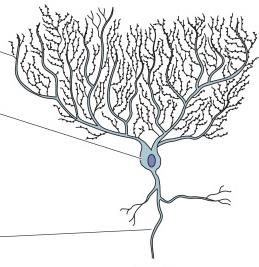
Gene expression is the process by which information encoded in DNA directs the synthesis of functional proteins. Although all cells in a multicellular organism contain the same DNA, they can look and function very differently due to differential gene expression. This is fundamental to the development of specialized cell types such as neurons and muscle cells.
Gene expression: The process of converting genetic information from DNA into functional products (proteins or RNA).
Cell differentiation: The process by which cells become specialized in structure and function.
Example: A neuron and a smooth muscle cell have identical DNA but express different sets of genes, resulting in distinct structures and functions.

Levels of Gene Expression Control in Eukaryotes
Nine Levels of Control
Eukaryotic gene expression is regulated at multiple levels, allowing for precise control over which genes are expressed, when, and how much. The nine major levels of control are:
1. Chromatin modification: DNA unpacking and histone modification regulate access to genes.
2. Transcription: Control of the initiation and rate of transcription.
3. RNA processing: Splicing, capping, and polyadenylation of pre-mRNA.
4. Transport to cytoplasm: Export of mature mRNA from the nucleus.
5. Degradation of mRNA: Regulation of mRNA stability and lifespan.
6. Translation: Control of protein synthesis from mRNA.
7. Protein processing: Post-translational modifications such as folding and cleavage.
8. Degradation of protein: Targeted destruction of proteins.
9. Transport of protein to cellular destination: Localization of proteins within the cell.
Unique to eukaryotes: Chromatin modification, RNA processing, and nuclear export are not found in prokaryotes.
Transcriptional Regulation: Prokaryotes vs. Eukaryotes
Prokaryotic Operons
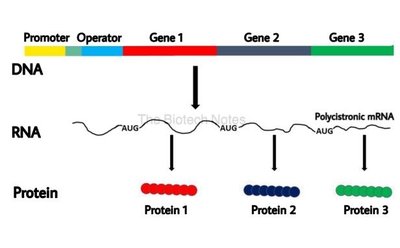
In prokaryotes, genes with related functions are often organized into operons, allowing coordinated expression from a single promoter. This results in a polycistronic mRNA that encodes multiple proteins.
Operon: A cluster of genes under the control of a single promoter and operator.
Polycistronic mRNA: A single mRNA molecule that encodes multiple proteins.
Eukaryotic Gene Regulation
Eukaryotes do not use operons. Genes that need coordinated expression are scattered throughout the genome, each with its own promoter. Coordination is achieved through shared control elements and transcription factors.
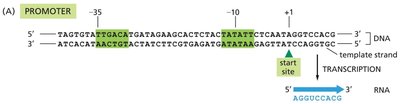
Promoter: DNA sequence where RNA polymerase and general transcription factors bind to initiate transcription.
Control elements: DNA sequences (such as enhancers and silencers) that regulate transcription by binding specific transcription factors.
Promoters and Consensus Sequences
Prokaryotic Promoters
Prokaryotic promoters contain conserved sequences at the -35 and -10 positions, recognized by sigma factors of RNA polymerase for basal transcription.
Eukaryotic Promoters
Eukaryotic promoters often contain a TATA box, CAAT box, and GC-rich box, which are recognized by general transcription factors.

Transcription Factors and Control Elements
General and Specific Transcription Factors
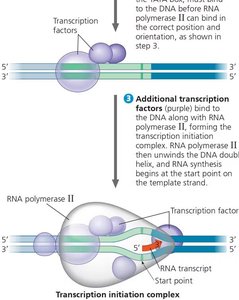
Transcription factors are proteins that regulate gene expression by binding to specific DNA sequences. General transcription factors are required for the transcription of all genes, while specific transcription factors regulate particular genes.
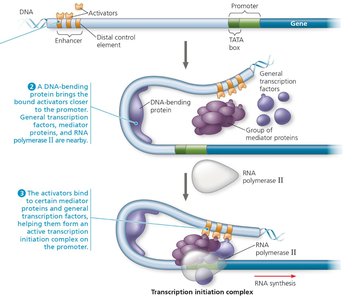
General transcription factors: Bind to the promoter and are necessary for the assembly of the transcription initiation complex.
Specific transcription factors: Bind to enhancers or silencers to increase or decrease transcription of specific genes.
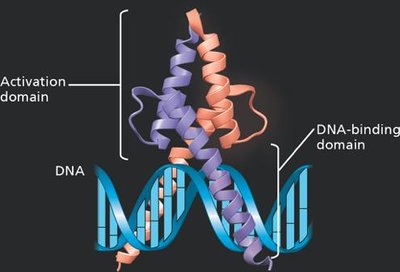
Enhancers and Silencers
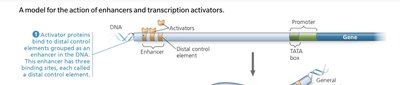
Enhancers are DNA elements that can be located far from the promoter and increase transcription when bound by activators. Silencers decrease transcription when bound by repressors. Both are types of cis-regulatory elements.
Enhancer: A set of control elements that serve as binding platforms for specific transcription factors, often acting at a distance from the gene.
Silencer: A DNA element that represses gene expression when bound by a repressor protein.
Experimental Analysis of Control Elements
Reporter Gene Assays
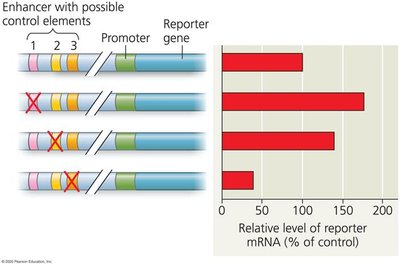
Reporter genes are used to study regulatory sequences by fusing potential control elements to a gene whose product is easily measured. Deletion analysis helps identify which elements are necessary for gene expression.
Reporter gene: A gene whose expression can be easily quantified, such as GFP (green fluorescent protein).
Deletion analysis: Systematic removal of DNA segments to determine their role in gene regulation.
Combinatorial Control and Cell-Specific Expression
How Different Cells Express Different Genes
All cells in an organism have the same DNA, but different cell types express different sets of genes due to the presence of different transcription factors and control elements. This combinatorial control allows for cell-specific gene expression.
Combinatorial control: The use of multiple regulatory elements and transcription factors to control gene expression in a cell-type-specific manner.
Example: Skin cells express keratin, while liver cells express fibrinogen, even though both genes are present in both cell types.
Hormonal Regulation of Gene Expression
Role of Hormones and Receptors
Hormones such as estrogen can regulate the expression of multiple genes in different tissues by binding to specific receptors, which act as transcription factors. These receptors have both a DNA-binding domain and a hormone-binding activation domain.
Estrogen receptor: A transcription factor that binds estrogen and specific DNA control elements to regulate gene expression.
DNA-binding domain: Region of the protein that binds to specific DNA sequences.
Activation domain: Region that interacts with other proteins to increase transcription.
Summary Table: Comparison of Prokaryotic and Eukaryotic Gene Regulation
Feature | Prokaryotes | Eukaryotes |
|---|---|---|
Organization of genes | Operons (polycistronic) | Individual genes (monocistronic) |
Promoter structure | -35 and -10 consensus sites | TATA box, CAAT box, GC-rich box |
Regulatory elements | Operator, promoter | Promoter, enhancers, silencers |
Transcription factors | Sigma factors | General and specific transcription factors |
RNA processing | Absent | Present (splicing, capping, polyadenylation) |
