 Indietro
Lecture 20 (Unit 2)-- Regulation of Gene Expression in Eukaryotes and Archaea
Guida di studio - Note intelligenti
 Appunti personalizzati basati sui tuoi materiali, ampliati con definizioni chiave, esempi e contesto.
Regulation of Gene Expression
Overview of Eukaryotic Gene Expression Regulation
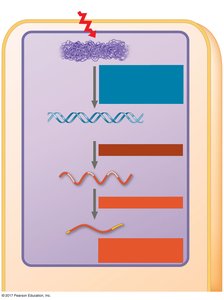
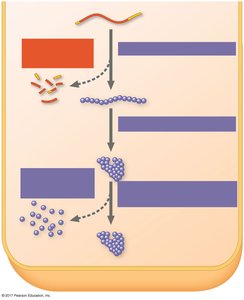
Eukaryotic gene expression is regulated at multiple levels, from chromatin structure to post-translational protein modification. This complexity allows cells to finely control which genes are expressed, when, and where, enabling processes such as differentiation and response to environmental signals.
Chromatin modification: DNA must be accessible for transcription; modifications such as acetylation of histones can open chromatin.
Transcriptional regulation: Involves RNA polymerases and transcription factors.
Post-transcriptional regulation: Includes mRNA processing, transport, and degradation.
Translational and post-translational regulation: Controls protein synthesis and degradation.
Chromatin Structure and Gene Expression
Chromatin Modification
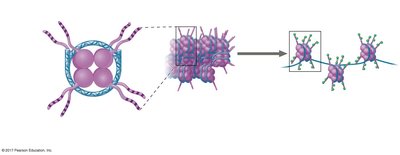
Chromatin structure is a key determinant of gene expression in eukaryotes. DNA is wrapped around histone proteins, forming nucleosomes. The degree of chromatin compaction affects accessibility to transcription machinery.
Heterochromatin: Highly condensed, generally not expressed.
Euchromatin: Looser, accessible for transcription.
Histone acetylation: Addition of acetyl groups to histone tails promotes euchromatin formation, allowing transcription.
Transcriptional Regulation
Eukaryotic RNA Polymerases
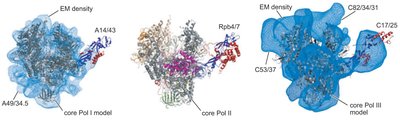
Eukaryotes possess three main RNA polymerases, each responsible for transcribing different types of genes.
RNA Polymerase I: Transcribes rRNA genes (except 5S rRNA).
RNA Polymerase II: Transcribes mRNA and some non-coding RNAs; requires general transcription factors to initiate transcription.
RNA Polymerase III: Transcribes tRNA, snRNA, and 5S rRNA genes.
Initiation of Transcription
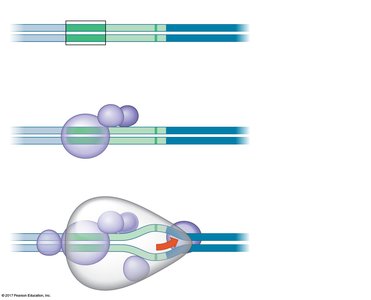
Transcription initiation in eukaryotes involves the assembly of a complex at the core promoter, often containing a TATA box. General transcription factors (e.g., TFIID, which includes TBP) recruit RNA polymerase II to the promoter.
Core promoter: Region adjacent to the transcription start site.
TATA box: Sequence motif recognized by TBP.
General transcription factors: Required for basal transcription of all protein-coding genes.
Specific Transcription Factors and Control Elements
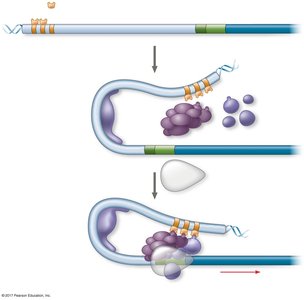
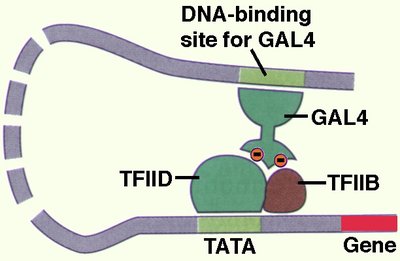
Specific transcription factors bind to control elements (enhancers or silencers) located proximal or distal to the core promoter. These factors can act as activators or repressors, influencing gene expression in a cell-type or condition-specific manner.
Control elements: DNA sequences that bind transcription factors; can be far from the promoter.
Activators: Bind positive control elements to enhance transcription.
Repressors: Bind negative control elements to inhibit transcription.
DNA bending and mediator proteins: Facilitate interactions between distant enhancers and the transcription initiation complex.

Combinatorial Control and Differential Gene Expression
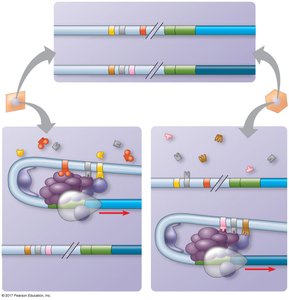
Combinatorial control refers to the use of multiple control elements and transcription factors to achieve precise spatial and temporal gene expression. The same DNA can be regulated differently in various cell types depending on the available transcription factors.
Example: Albumin gene expressed in liver cells, crystallin gene in lens cells, due to different activators present.
Genetic Analysis of Enhancer Elements
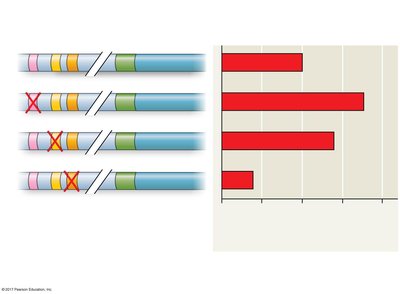
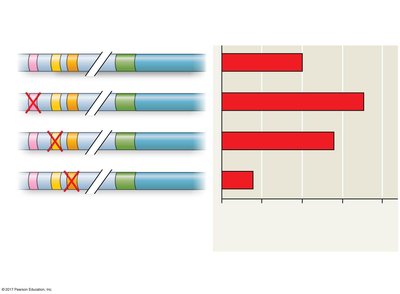
Mutational analysis of enhancer elements can reveal their function as positive or negative control elements. Reporter gene assays are used to measure the effect of mutations in control elements on gene expression.
Positive control element: Mutation decreases expression.
Negative control element: Mutation increases expression.
Model Organisms and Coordinate Gene Regulation
Budding Yeast as a Model Organism
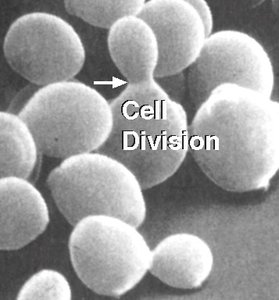
Saccharomyces cerevisiae is a widely used model for studying eukaryotic genetics. Yeast genes are not organized in operons, but coordinate regulation is achieved through shared control elements.
Unicellular, haploid, small genome (~12 Mb).
Knockout collections available for genetic studies.
Gene Organization in Yeast
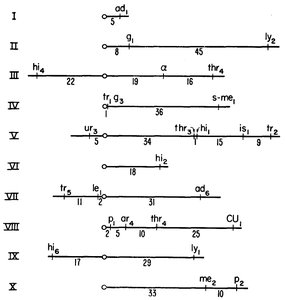
Unlike bacteria, eukaryotic genes are generally not functionally clustered. Genes involved in a common pathway (e.g., tryptophan biosynthesis) are scattered across different chromosomes.
Regulation of Galactose-Inducible Genes in Yeast
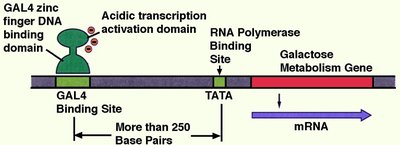
Galactose metabolism genes (GAL1, GAL7, GAL10) are coordinately activated by the transcription factor Gal4, which binds to a shared enhancer upstream of each gene.
Gal4: Positive regulator; zinc finger DNA-binding domain and activation domain.
Coordinate control: Achieved by placing the same control element upstream of each gene.
Gene Expression in Archaea
Comparison of Archaea, Bacteria, and Eukaryotes
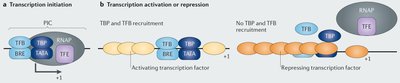
Gene expression in archaea shares features with both bacteria and eukaryotes. Genes are often organized in operons, but the transcription machinery resembles that of eukaryotes.
Operons: Functional gene clusters, as in bacteria.
Core promoter and TATA box: Similar to eukaryotes; TBP is present.
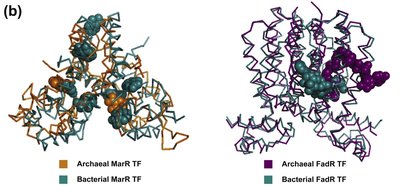
Specific transcription factors: Resemble bacterial factors and bind close to the promoter.
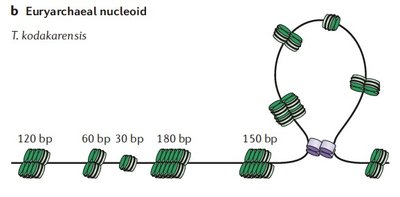
Chromatin: Some archaea have histones and simplified chromatin.
Post-Transcriptional Regulation
mRNA Processing in Eukaryotes
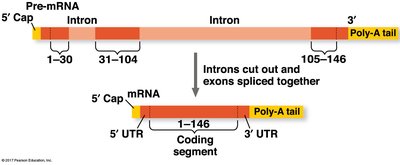
Eukaryotic mRNA undergoes several processing steps, including addition of a 5' cap, poly-A tail, and splicing to remove introns. These modifications protect mRNA and facilitate translation.
5' cap: Modified guanine nucleotide added to the 5' end.
Poly-A tail: 50–250 adenine nucleotides added to the 3' end.
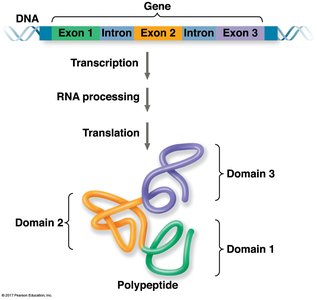
Splicing: Removal of introns and joining of exons.
Alternative RNA Splicing
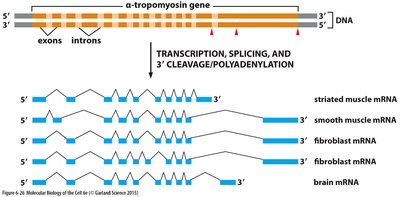
Alternative splicing allows a single gene to produce multiple mRNAs and proteins, increasing functional diversity. Exon skipping is the most common mode.
Example: Alpha-tropomyosin gene produces different isoforms in muscle and brain cells.
Regulation at the mRNA and Protein Levels
mRNA Degradation
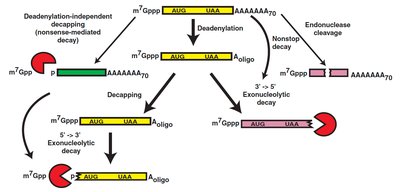
The steady-state level of mRNA is determined by the rates of synthesis and degradation. mRNA degradation can occur via removal of the cap or poly-A tail, followed by exonuclease activity.
Pathways: 5' to 3' and 3' to 5' exonucleolytic decay; endonuclease cleavage.
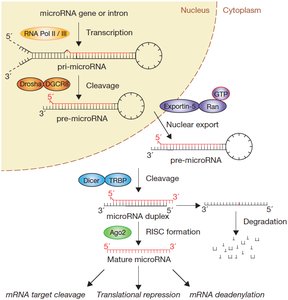
MicroRNAs (miRNAs) and RNA-Induced Silencing Complex (RISC)
miRNAs are small non-coding RNAs that regulate gene expression by promoting mRNA degradation or inhibiting translation. They are processed from primary transcripts and incorporated into RISC complexes.
miRNA biogenesis: Transcription, cleavage, export, and maturation.
RISC: Binds target mRNA for cleavage or translational repression.
Protein Degradation
The steady-state level of a protein is determined by its synthesis and degradation rates. Protein degradation is essential for regulating cellular function and removing damaged or unneeded proteins.
Regulation: Proteins can be targeted for degradation by specific signals or modifications.
Summary of Key Concepts
Eukaryotic gene expression is regulated at multiple levels: chromatin, transcription, RNA processing, mRNA degradation, translation, and protein degradation.
Chromatin structure and histone modification are critical for gene accessibility.
Transcription depends on RNA polymerase II, general and specific transcription factors, and control elements.
Coordinate control in eukaryotes is achieved by shared control elements, not operons.
Gene expression in archaea combines features of bacteria and eukaryotes.
Alternative splicing and mRNA degradation increase regulatory complexity.
miRNAs and RISC complexes are important for post-transcriptional regulation.
Protein degradation is essential for maintaining proper cellular function.
