 Indietro
Regulation of Gene Expression in Eukaryotes
Guida di studio - Note intelligenti
 Appunti personalizzati basati sui tuoi materiali, ampliati con definizioni chiave, esempi e contesto.
Regulation of Gene Expression
Overview of Gene Expression Regulation
Gene expression in eukaryotic cells is regulated at multiple stages, allowing cells to respond to internal and external signals. This regulation ensures that genes are turned on or off as needed, contributing to cellular differentiation, development, and adaptation.
Key Point 1: Regulation occurs at transcriptional, post-transcriptional, translational, and post-translational levels.
Key Point 2: Chromatin structure and epigenetic modifications play a central role in controlling gene accessibility.
Example: Genes required for liver function are expressed only in liver cells, not in other tissues.
Epigenetic Regulation
Epigenetic Effects
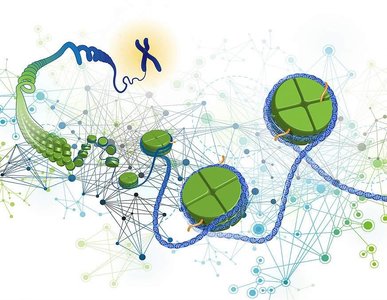
Epigenetic regulation involves heritable changes in gene expression that do not alter the DNA sequence. These changes affect chromatin structure and gene accessibility.
Key Point 1: Epigenetic effects include DNA methylation and histone modifications.
Key Point 2: Epigenetic inheritance refers to the transmission of traits via mechanisms other than the DNA sequence.
Example: DNA methylation patterns can be inherited and influence gene expression in offspring.
DNA Methylation
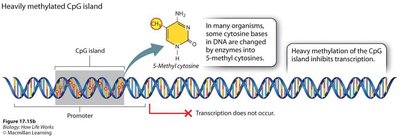
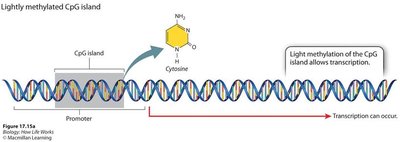
DNA methylation typically occurs at CpG islands near gene promoters. Heavy methylation represses gene expression, while light methylation allows transcription.
Key Point 1: Methylation of cytosine bases forms 5-methylcytosine.
Key Point 2: Methylation inhibits transcription by preventing transcription factor binding.
Example: Tumor suppressor genes may be silenced by methylation in cancer cells.
Histone Modifications
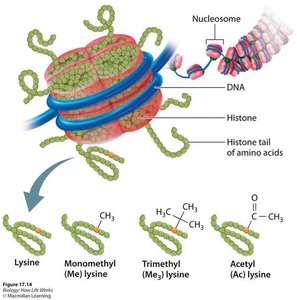
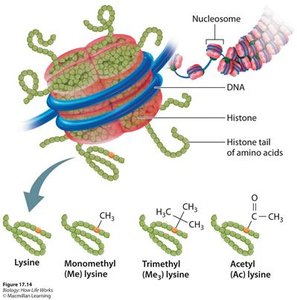
Histone proteins can be modified by methylation, acetylation, and other chemical changes. These modifications alter chromatin structure and influence gene expression.
Key Point 1: Acetylation of histone tails reduces their positive charge, decreasing DNA affinity and making promoter regions more accessible.
Key Point 2: Methylation can either activate or repress gene expression, depending on the context.
Example: Acetylation of histones is associated with active transcription.
Transcriptional Regulation
Control Elements and Transcription Factors
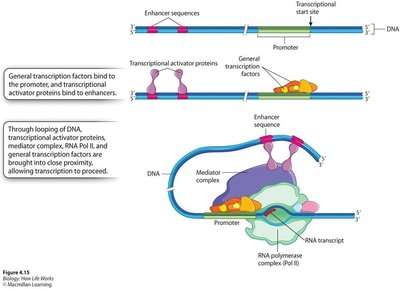
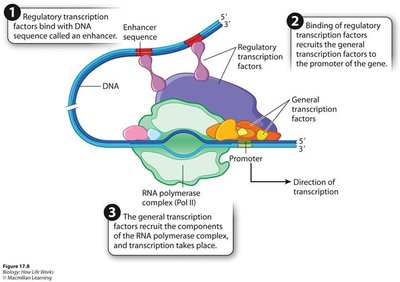
Transcriptional regulation involves control elements (enhancers and silencers) and transcription factors that bind to these DNA sequences to modulate gene expression.
Key Point 1: Most eukaryotic genes have multiple control elements that serve as binding sites for transcription factors.
Key Point 2: Regulatory transcription factors can activate or repress transcription by binding to enhancers or silencers.
Example: The albumin gene is expressed in liver cells due to the presence of specific activators.
Combinatorial Control and Cell-Type Specific Expression
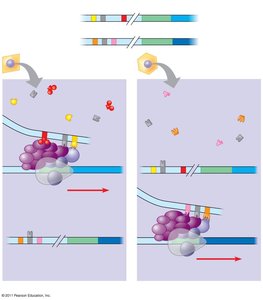
Gene expression is often regulated by the combination of multiple transcription factors, a phenomenon known as combinatorial control. This allows for cell-type specific expression of genes.
Key Point 1: General transcription factors are required for all protein-coding genes, while specific transcription factors act on individual genes.
Key Point 2: The combination of available activators determines which genes are expressed in a particular cell type.
Example: The crystallin gene is expressed in lens cells but not in liver cells.
Chromosomal Interactions and Transcription Factories
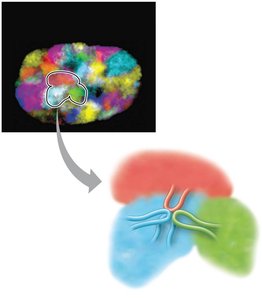
Chromatin loops from different chromosomes can congregate at specialized sites in the nucleus, known as transcription factories, which are rich in transcription factors and RNA polymerases.
Key Point 1: Transcription factories facilitate efficient transcription of genes by concentrating necessary components.
Key Point 2: Chromosomal interactions contribute to coordinated gene expression.
Example: Genes involved in a common pathway may be transcribed in the same factory.
Post-Transcriptional Regulation
RNA Processing and Alternative Splicing
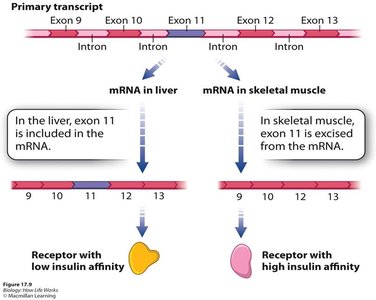
Post-transcriptional regulation includes RNA processing events such as capping, tailing, and splicing. Alternative splicing allows a single gene to produce multiple mRNA variants, expanding protein diversity.
Key Point 1: Exons can be included or excluded from the final mRNA, resulting in different protein isoforms.
Key Point 2: Alternative splicing is tissue-specific and regulated by splicing factors.
Example: The insulin receptor gene produces different isoforms in liver and muscle tissue.
RNA Editing
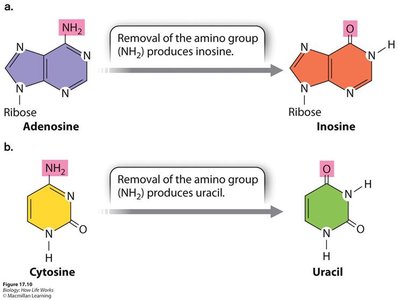
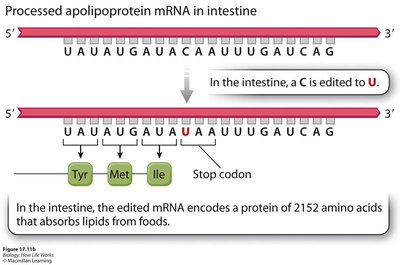
RNA editing involves chemical modifications of RNA molecules, such as deamination of adenosine to inosine or cytosine to uracil. This can alter the coding sequence and protein function.
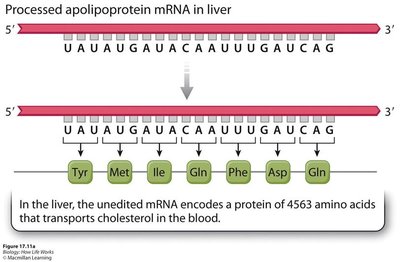
Key Point 1: RNA editing is often tissue-specific and can create stop codons or change amino acid sequences.
Key Point 2: Editing enzymes catalyze these modifications.
Example: Apolipoprotein B mRNA is edited differently in liver and intestine, resulting in distinct proteins.
Regulation by Noncoding RNA
RNA Interference (RNAi)
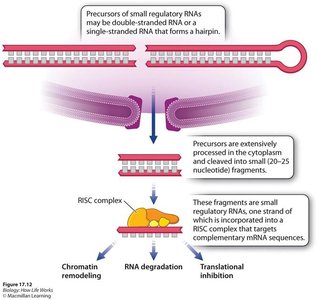
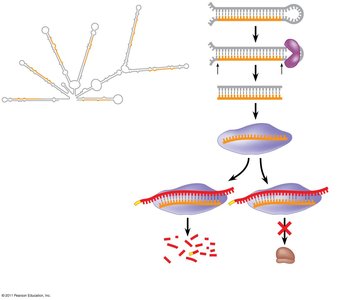
Noncoding RNAs, such as microRNAs (miRNAs) and small interfering RNAs (siRNAs), regulate gene expression by targeting mRNAs for degradation or blocking translation. This process is known as RNA interference.
Key Point 1: miRNAs and siRNAs are processed from precursor RNAs and incorporated into protein complexes.
Key Point 2: These complexes bind complementary mRNA sequences, leading to mRNA degradation or translational inhibition.
Example: miRNAs regulate developmental timing and cell differentiation.
Chromatin Remodeling by ncRNAs
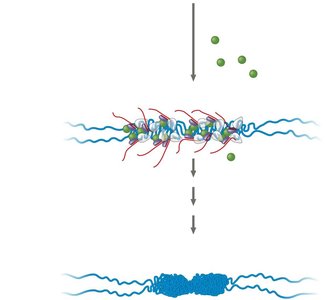
Some noncoding RNAs recruit chromatin-modifying enzymes to specific genomic regions, leading to changes in chromatin structure and gene expression.
Key Point 1: siRNA-protein complexes can induce heterochromatin formation at centromeres.
Key Point 2: Chromatin remodeling affects gene accessibility and transcription.
Example: ncRNAs are involved in X-chromosome inactivation and centromere function.
Translational and Posttranslational Regulation
Translational Regulation
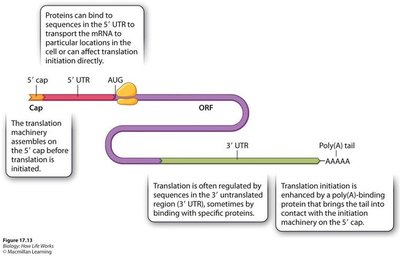
Translational regulation controls the efficiency and timing of protein synthesis from mRNA. Regulatory proteins can bind to untranslated regions (UTRs) of mRNA to influence translation initiation.
Key Point 1: Proteins binding to the 5' UTR can transport mRNA or inhibit translation.
Key Point 2: Poly(A)-binding proteins enhance translation initiation.
Example: Ferritin mRNA translation is regulated by iron levels in the cell.
Posttranslational Modification
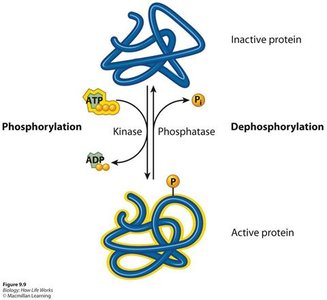
Protein activity can be regulated after translation by chemical modifications such as phosphorylation, acetylation, or ubiquitination. These modifications alter protein function, stability, or localization.
Key Point 1: Phosphorylation involves the addition of a phosphate group, often activating or deactivating proteins.
Key Point 2: Posttranslational modifications are essential for signal transduction and cellular responses.
Example: Kinases phosphorylate proteins in response to growth factors.
Summary Table: Major Mechanisms of Gene Expression Regulation
Stage | Mechanism | Example |
|---|---|---|
Epigenetic | DNA methylation, histone modification | Silencing of tumor suppressor genes |
Transcriptional | Control elements, transcription factors | Cell-type specific gene expression |
Post-transcriptional | Alternative splicing, RNA editing | Insulin receptor isoforms |
Noncoding RNA | miRNA, siRNA, chromatin remodeling | RNA interference |
Translational | UTR binding, translation initiation | Ferritin mRNA regulation |
Posttranslational | Phosphorylation, acetylation | Protein activation by kinases |
Additional info: These mechanisms collectively ensure precise control of gene expression, enabling complex multicellular life and adaptation to environmental changes.
