 Indietro
Lecture 19 (unit 2)- Regulation of Gene Expression in Prokaryotes: Operons and Transcriptional Control
Guida di studio - Note intelligenti
 Appunti personalizzati basati sui tuoi materiali, ampliati con definizioni chiave, esempi e contesto.
Regulation of Gene Expression
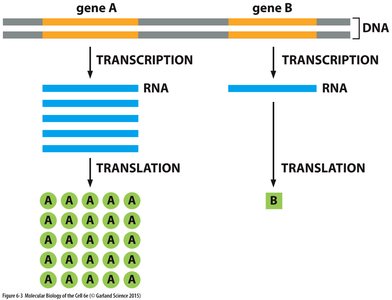
Overview of Gene Expression
Gene expression is the process by which information from a gene is used to synthesize a functional gene product, typically a protein or RNA. Cells regulate gene expression to control when and how much of a gene product is produced, allowing adaptation to environmental changes and efficient resource use.
Gene: A region of DNA that can be expressed to produce a final functional product (polypeptide or RNA).
Transcription: The synthesis of RNA from a DNA template.
Translation: The synthesis of protein from an RNA template.
Regulation: Most control occurs at the transcriptional level.
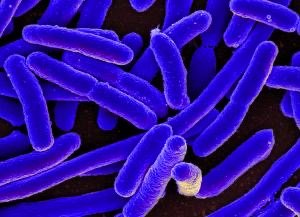
Model Organism: Escherichia coli
Why Use E. coli?
E. coli is a rod-shaped, Gram-negative bacterium commonly found in the human gut. It is widely used in laboratory studies due to its rapid growth and well-characterized genetics.
Rapid growth: Facilitates genetic experiments.
Genetic tractability: Many fundamental discoveries in genetics have been made using E. coli.
Conservation: Basic principles learned from E. coli often apply to other organisms.
Tryptophan Biosynthesis and Regulation
Pathway and Feedback Inhibition
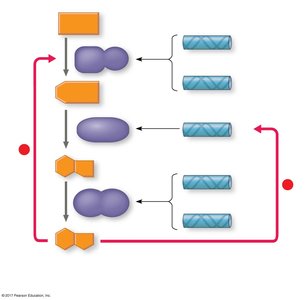
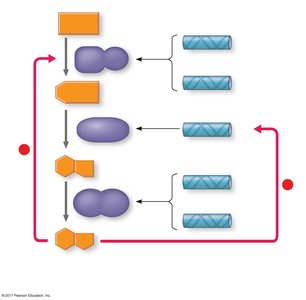
Tryptophan biosynthesis in E. coli involves a series of enzymes encoded by five genes (trpE, trpD, trpC, trpB, trpA). The pathway is regulated both at the level of enzyme activity and enzyme production.
Feedback inhibition: The end product (tryptophan) inhibits the first enzyme in the pathway, preventing overproduction.
Gene regulation: Tryptophan also regulates the transcription of its biosynthetic genes.
Operons: Organization and Regulation
Definition and Structure
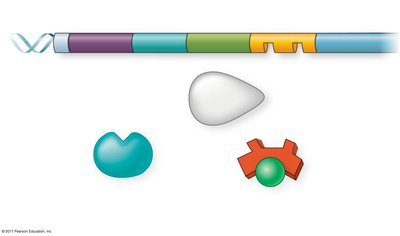
An operon is a cluster of genes under the control of a single promoter and regulatory elements, allowing coordinated expression. Operons are common in prokaryotes and enable efficient regulation of genes with related functions.
Promoter: DNA sequence where RNA polymerase binds to initiate transcription.
Operator: Regulatory DNA sequence where transcription factors (repressors/activators) bind.
Regulatory gene: Encodes a transcription factor that modulates operon expression.
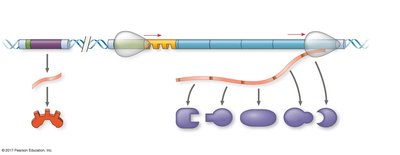
Repressible Operons: The trp Operon
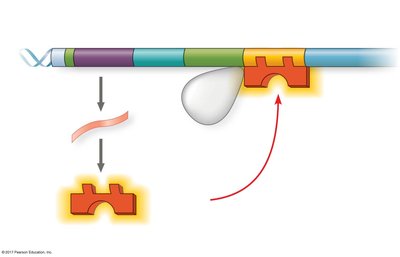
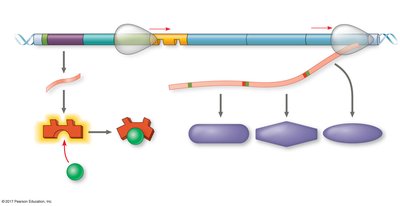
The trp operon is a classic example of a repressible operon. It is usually active, but can be turned off when tryptophan is abundant.
Repressor protein: Encoded by trpR, binds to the operator when activated by tryptophan (corepressor).
On-off switch: When tryptophan is absent, the repressor is inactive and the operon is transcribed. When tryptophan is present, the repressor is active and transcription is blocked.
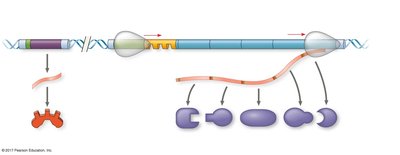
Inducible Operons: The lac Operon
Structure and Function
The lac operon enables E. coli to metabolize lactose. It is an inducible operon, usually off, but activated in the presence of an inducer (lactose or allolactose).
lacI gene: Encodes the LacI repressor protein.
lacZ, lacY, lacA: Encode enzymes for lactose metabolism (β-galactosidase, permease, transacetylase).
Inducer: Allolactose (or IPTG in lab) binds to the repressor, inactivating it and allowing transcription.
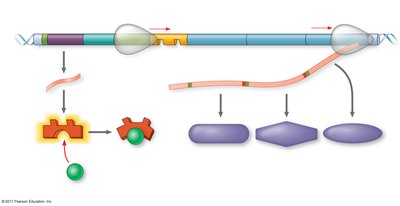
Regulation Mechanism
Negative regulation: In the absence of lactose, the LacI repressor binds to the operator, blocking transcription.
Induction: When lactose is present, allolactose binds to the repressor, causing it to release the operator and allowing transcription.
Constitutive expression: Loss-of-function mutations in the repressor or operator lead to continuous expression of the operon.
Transcription Factors and DNA Binding
Sequence-Specific DNA Binding
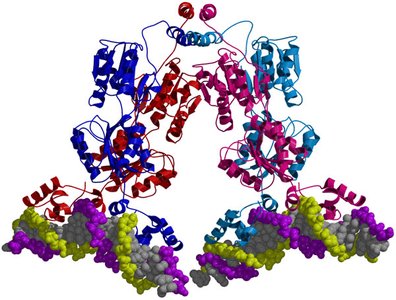
Transcription factors, such as repressors and activators, bind to specific DNA sequences to regulate gene expression. The LacI repressor is a tetramer that binds tightly to the operator sequence, preventing transcription.
Specificity: DNA-binding proteins recognize unique shapes and charge distributions of DNA sequences.
Allosteric regulation: Binding of small molecules (inducers or corepressors) alters the affinity of transcription factors for DNA.
Positive Regulation: The Role of CRP and cAMP
Glucose and Catabolite Repression
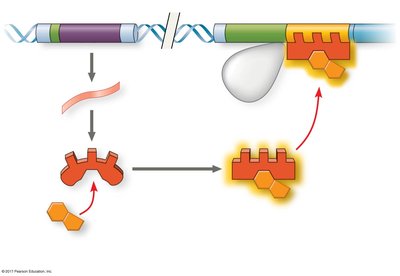
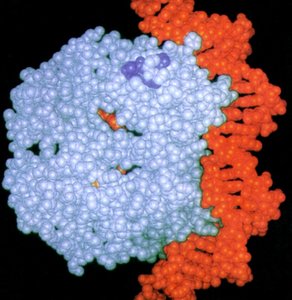
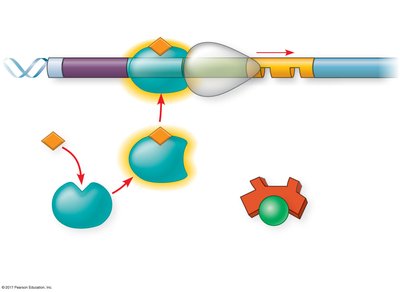
In addition to negative regulation, the lac operon is subject to positive regulation by the cyclic AMP receptor protein (CRP). When glucose is scarce, cAMP levels rise, activating CRP, which enhances transcription of the lac operon.
CRP (cAMP receptor protein): Functions as an activator when bound to cAMP.
cAMP: Produced when glucose is low; binds to CRP and enables it to bind the promoter.
Catabolite repression: High glucose inhibits cAMP synthesis, preventing CRP activation and lac operon transcription.
Combinatorial Control
The lac operon is regulated by both negative (LacI repressor) and positive (CRP activator) mechanisms, allowing sophisticated control based on environmental conditions.
Transcription occurs only when: Lactose is present and glucose is absent.
Logic gate: The operon acts as an AND gate, integrating multiple signals.
Glucose | Lactose | cAMP | Repressor Bound? | cAMP-CRP Bound? | Transcribed? |
|---|---|---|---|---|---|
Yes | No | Low | Yes | No | No |
No | No | High | Yes | Yes | No |
Yes | Yes | Low | No | No | No |
No | Yes | High | No | Yes | Yes |
Summary of Key Concepts
Gene expression is regulated at the transcriptional level in prokaryotes.
Operons allow coordinated control of genes with related functions.
Repressible operons (trp) are usually on, but can be turned off by a repressor-corepressor complex.
Inducible operons (lac) are usually off, but can be turned on by an inducer that inactivates the repressor.
Transcription factors (repressors and activators) bind specific DNA sequences to regulate gene expression.
Positive regulation (CRP/cAMP) enables transcription in response to environmental signals (glucose availability).
Combinatorial control integrates multiple regulatory inputs for precise gene expression.
