 Indietro
Regulation of Gene Expression in Prokaryotic Operons: The lac and trp Systems in E. coli
Guida di studio - Note intelligenti
 Appunti personalizzati basati sui tuoi materiali, ampliati con definizioni chiave, esempi e contesto.
Regulation of Gene Expression in Prokaryotes
Overview of Operons
Prokaryotic gene expression is often organized into operons, which are clusters of genes transcribed as a single mRNA molecule. Operons allow coordinated regulation of genes with related functions, such as those involved in metabolic pathways.
Promoter: DNA sequence where RNA polymerase binds to initiate transcription.
Operator: DNA segment that acts as a regulatory "switch"; binding site for repressor proteins.
Structural genes: Genes encoding proteins with related functions, transcribed together.
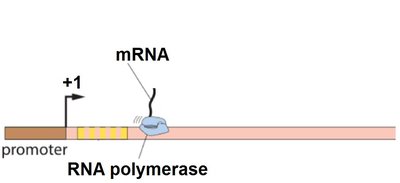
Transcription Initiation and mRNA Synthesis
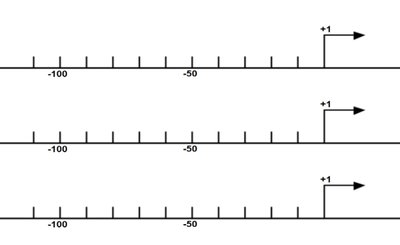
Transcription begins at the promoter, where RNA polymerase binds and starts synthesizing mRNA. The +1 site marks the transcription start point.
As RNA polymerase moves along the DNA, the mRNA strand elongates.
The direction of transcription is determined by the orientation of the promoter and the template strand.
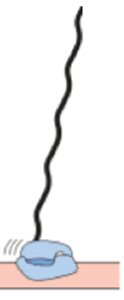
Anatomy of an Operon
Operons typically have:
One promoter and one transcription stop site for the entire operon.
Multiple translation start and stop sites—one for each gene within the operon.
A single mRNA transcript containing several protein-coding regions (polycistronic mRNA).

Cis-Elements and Trans-Acting Factors
Definitions and Examples
Gene regulation involves two main types of regulatory components:
Cis-elements: DNA sequences near the genes they regulate (e.g., promoters, operators, CRP binding sites).
Trans-acting factors: Proteins or RNAs that bind to cis-elements to regulate gene expression (e.g., repressors, activators, RNA polymerase).
Cis-Element | Trans-Acting Factor |
|---|---|
Lac operator | Lac repressor |
CRP binding site | CRP |
Promoter | RNA polymerase |
Trp operator | Trp repressor |
Consensus Sequences and Promoter Strength
Consensus Sequences in E. coli Promoters
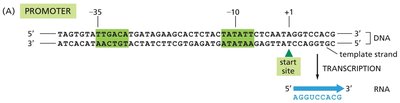
Promoters contain conserved DNA motifs, especially at the -10 and -35 positions relative to the transcription start site. The consensus sequence is the most common nucleotide at each position among many promoters.
Typical E. coli consensus: -35: TTGACA, -10: TATAAT
Promoters closer to the consensus bind RNA polymerase more efficiently, leading to higher transcription rates.
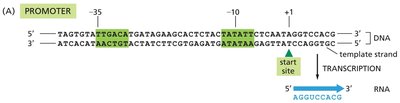
Determining a Consensus Sequence
To find a consensus sequence, align several promoter sequences and identify the most frequent base at each position.
Example: For the -35 region, if most sequences have 'C' at position 1, 'C' is the consensus base for that position.
Levels of Gene Expression
Basal, Repressed, and Activated Expression
The level of gene expression refers to the amount of protein produced per unit time. In prokaryotes, gene expression can be:
Basal: Default, low-level expression when neither repressed nor activated.
Repressed: Lower than basal due to negative regulation (repressor bound).
Activated: Higher than basal due to positive regulation (activator bound).
Basal expression depends on how well RNA polymerase binds the promoter, which is determined by the promoter's similarity to the consensus sequence.


Regulation of the trp Operon (Repressible System)
Function and Regulation
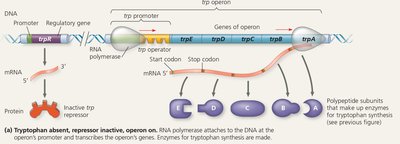
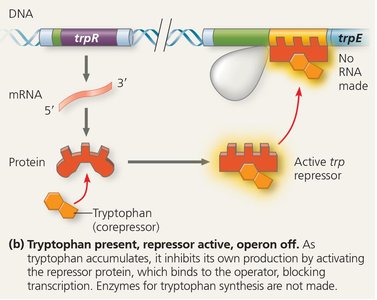
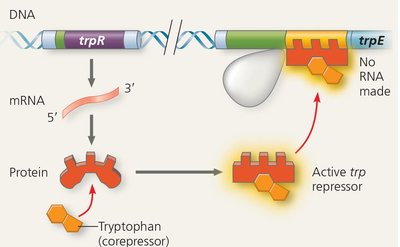
The trp operon encodes enzymes for tryptophan biosynthesis. It is a repressible operon: its default state is "on" (basal expression), but it can be repressed when tryptophan is abundant.
When tryptophan is absent: operon is expressed at basal level.
When tryptophan is present: tryptophan acts as a corepressor, activating the trp repressor, which binds the operator and blocks transcription.
Promoter Strength and Expression
The trp operon promoter has several differences from the consensus sequence, resulting in a relatively low basal transcription rate.
Regulation of the lac Operon (Inducible System)
Function and Regulation
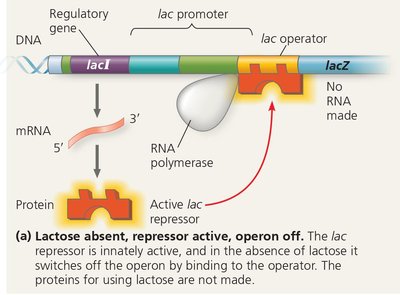
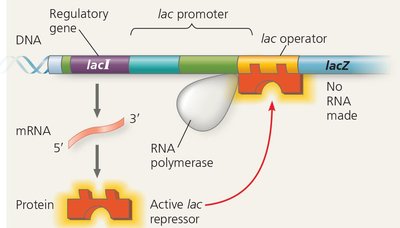
The lac operon encodes enzymes for lactose metabolism. It is an inducible operon: its default state is "off" (repressed), but it can be induced (turned on) in the presence of lactose.
Repressed: lactose absent (repressor bound to operator).
Basal: lactose present, glucose present (repressor released, but no activation).
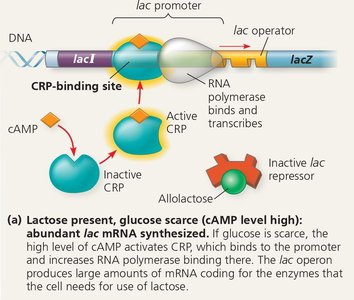
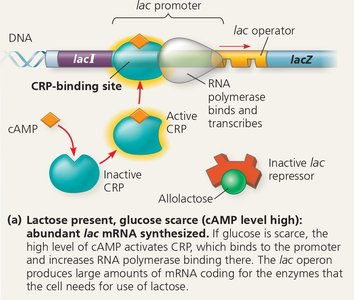
Activated: lactose present, glucose absent (CRP-cAMP complex binds, enhancing RNA polymerase binding).
Role of Allolactose and cAMP-CRP
Allolactose: Inducer molecule that binds the lac repressor, causing it to release the operator.
cAMP-CRP complex: When glucose is low, cAMP levels rise, activating CRP, which binds near the promoter and increases transcription.
Mutations in Operon Regulation
Effects of Mutations
Mutations in either cis-elements or trans-acting factors can disrupt normal operon regulation:
Mutation in operator: repressor cannot bind, operon always "on".
Mutation in repressor: cannot bind operator or ligand, operon always "on" or always "off" depending on the mutation.
Mutation in CRP or cAMP binding: lac operon cannot be activated, only basal expression possible.
Summary Table: lac Operon Expression Levels
Condition | Transcription Level |
|---|---|
Glucose present; lactose absent | Repressed |
Glucose and lactose present | Basal |
Glucose absent; lactose present | Activated |
Key Terms and Concepts
Operon: Cluster of genes under control of a single promoter and operator.
Cis-element: DNA sequence regulating nearby genes.
Trans-acting factor: Protein or RNA that regulates gene expression by binding to cis-elements.
Consensus sequence: Most common nucleotide sequence at each position in a set of similar DNA elements.
Basal expression: Default, unregulated level of gene expression.
Repressible operon: Operon that is usually on but can be turned off (e.g., trp operon).
Inducible operon: Operon that is usually off but can be turned on (e.g., lac operon).
