 Indietro
CH 18 - Regulation of Gene Expression: Mechanisms and Importance
Guida di studio - Note intelligenti
 Appunti personalizzati basati sui tuoi materiali, ampliati con definizioni chiave, esempi e contesto.
Regulation of Gene Expression
Importance of Gene Regulation
Gene regulation is essential for maintaining cellular functionality, development, and health. It ensures that cells produce the right proteins at the right time, which is crucial for cell specialization and organismal development. - Key Point 1: Proper gene regulation prevents inappropriate protein production, which could disrupt cellular function. - Key Point 2: Differential gene expression allows multicellular organisms to develop specialized cell types. - Example: Eye cells and stomach cells express different genes to perform their unique functions. 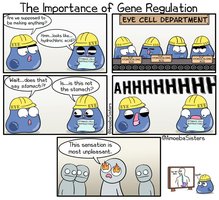
Differential Expression of Genes
Organisms regulate gene expression in response to environmental changes. In multicellular eukaryotes, this regulation is responsible for development and cell type differences. - Key Point: Protein and RNA molecules are central to gene regulation.
Gene Expression in Prokaryotes
Bacteria and Gene Transcription
Bacteria have evolved mechanisms to produce only necessary proteins, optimizing resource use. Feedback loops regulate gene expression in response to environmental cues. 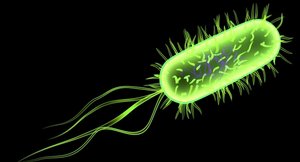
Bacterial Operons
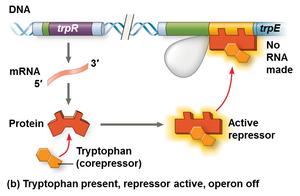
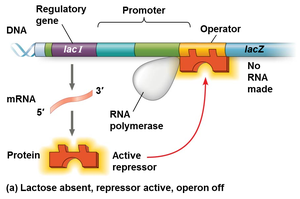
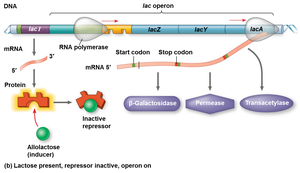
The operon model is a key mechanism for gene regulation in bacteria. - Definition: An operon is a cluster of functionally related genes controlled by a single operator (on-off switch). - Repressor: A protein produced by a regulatory gene that can switch the operon off. 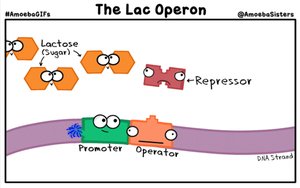
Repressible and Inducible Operons
Operons can be classified as repressible or inducible: - Repressible Operon: Usually on; repressor binding shuts off transcription (e.g., trp operon). - Inducible Operon: Usually off; inducer inactivates the repressor, turning transcription on (e.g., lac operon). 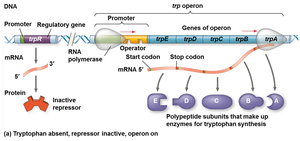
Negative and Positive Control
- Negative Control: Operons are switched off by active repressors (trp and lac operons). - Inducible Enzymes: Function in catabolic pathways; synthesis induced by chemical signals. - Repressible Enzymes: Function in anabolic pathways; synthesis repressed by end product. - Positive Control: Protein synthesis is stimulated by chemical cues (e.g., CAP system in lac operon). 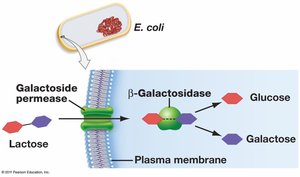
Gene Expression in Eukaryotes
Eukaryotic Gene Expression Regulation
Eukaryotes have complex regulatory mechanisms due to larger genomes and multiple chromosomes. - Key Point: Regulation occurs at many stages, including chromatin modification, transcription, and translation.
Regulation by Chromatin
Chromatin structure affects gene expression. - Euchromatin: Loosely packed, generally active in transcription. - Heterochromatin: Densely packed, usually not expressed. - Histone Acetylation: Acetyl groups added to histones loosen chromatin, promoting transcription. - DNA Methylation: Addition of methyl groups condenses chromatin, reducing transcription.
Epigenetic Inheritance
Epigenetic traits are inherited without changes to the DNA sequence. - Key Point: DNA and histone modifications can be passed to offspring and affect gene expression.
Eukaryotic Gene Structure and Control Elements
Eukaryotic genes have control elements (proximal and distal) that bind transcription factors. - Proximal Elements: Close to the promoter. - Distal Elements: Far from the gene, sometimes in introns.
Transcription Factors
- General Transcription Factors: Required for all protein-coding genes; lead to low-level transcription. - Specific Transcription Factors: Increase transcription of particular genes.
Enhancers and Activators
- Enhancers: Distal control elements that bind activators to stimulate transcription. - Combinatorial Control: Multiple transcription factors may be required for gene activation.
Transcriptional Repressors
Repressors can bind enhancers or other transcription factors to inhibit transcription. They may also recruit chromatin-modifying enzymes.
Post-Transcriptional Control
Regulation can occur after transcription, allowing rapid responses. - Alternative RNA Splicing: Different exons/introns can be selected, producing diverse proteins. - Translation Initiation Factors: Proteins that block or activate mRNA translation. - mRNA Lifespan: Influenced by the 3' UTR; nucleases degrade mRNA.
Protein Processing and Degradation
- Post-translational Modifications: Proteins can be modified after translation, affecting their function. - Ubiquitin: Marks proteins for degradation by proteasomes.
Noncoding RNAs
Noncoding RNAs (ncRNAs) regulate gene expression by affecting mRNA translation and chromatin structure. - MicroRNAs (miRNAs): Bind to mRNA, degrading or blocking translation. - Small Interfering RNAs (siRNAs): Cause RNA interference (RNAi), silencing genes.
Differential Gene Expression and Development
Cell Differentiation
Cell differentiation is the process by which cells become specialized, driven by differential gene expression. - Cytoplasmic Determinants: Maternal substances in the egg influence early development. - Induction: Signal molecules from embryonic cells cause transcriptional changes in nearby cells.
Gene Expression During Cellular Differentiation
- Determination: Irreversibly commits a cell to its final fate. - Example: Myoblasts become muscle cells with the help of the transcription factor MyoD.
Pattern Formation and Axis Development
Pattern formation establishes the spatial organization of tissues and organs. - Maternal Effect Genes: Encode cytoplasmic determinants that set up body axes. - Homeotic Genes: Control pattern formation in later stages. - Bicoid Gene: A morphogen gradient determines polarity and position in the embryo.
Cancer and Genetic Changes
Oncogenes and Proto-oncogenes
- Oncogenes: Cancer-causing genes, often derived from proto-oncogenes. - Proto-oncogenes: Normal genes regulating cell growth and division; mutations can convert them to oncogenes.
Tumor-Suppressor Genes
Tumor-suppressor genes prevent uncontrolled cell growth. - Functions: Repair DNA, control cell adhesion, inhibit cell cycle. - Mutations: Can contribute to cancer development.
Interference with Cell Signaling
Mutations in genes like ras and p53 are common in cancers. - p53: Prevents cells with damaged DNA from dividing.
Cancer Development
Multiple mutations are required for cancer; incidence increases with age. - Key Point: Cancerous cells often have active oncogenes and mutated tumor-suppressor genes.
Role of Viruses in Cancer
Some viruses can cause cancer by integrating into the host genome and disrupting gene regulation. - Viral Oncogenes: Can alter tumor suppressor genes and cell cycle checkpoints.
Summary Table: Operon Types and Regulation
Operon Type | Default State | Regulation Mechanism | Example |
|---|---|---|---|
Repressible | On | Repressor binds operator to shut off transcription | trp operon |
Inducible | Off | Inducer inactivates repressor to turn on transcription | lac operon |
Summary Table: Levels of Gene Regulation in Eukaryotes
Level | Mechanism | Example |
|---|---|---|
Chromatin | Histone acetylation, DNA methylation | Epigenetic inheritance |
Transcription | Transcription factors, enhancers, repressors | Combinatorial control |
Post-Transcription | Alternative splicing, mRNA stability | miRNA, siRNA |
Translation | Initiation factors, mRNA structure | Global translation in fertilized egg |
Post-Translation | Protein modification, degradation | Ubiquitin-proteasome pathway |
Summary Table: Cancer-Related Genes
Gene Type | Normal Function | Cancer Role |
|---|---|---|
Proto-oncogene | Stimulate cell growth/division | Mutation leads to oncogene |
Oncogene | Abnormal cell cycle stimulation | Promotes cancer |
Tumor-suppressor | Inhibit cell cycle, repair DNA | Mutation removes inhibition |
Additional info: Academic context was added to clarify mechanisms, definitions, and examples for completeness.
