 Indietro
Seed Plants: Gymnosperms – Structure, Evolution, and Diversity
Guida di studio - Note intelligenti
 Appunti personalizzati basati sui tuoi materiali, ampliati con definizioni chiave, esempi e contesto.
Seed Plants: Gymnosperms
Introduction to Seed Plants
Seed plants are a major evolutionary group within the plant kingdom, characterized by the production of seeds. This adaptation has allowed them to dominate terrestrial ecosystems. Seed plants are divided into two main groups: gymnosperms (naked seeds) and angiosperms (flowering plants).
Seed: A structure containing a sporophyte embryo, food supply, and a protective coat.
Gymnosperms: Seed plants with seeds not enclosed in fruits; includes conifers, cycads, ginkgos, and gnetophytes.
Angiosperms: Seed plants with seeds enclosed in fruits (developed from flowers).
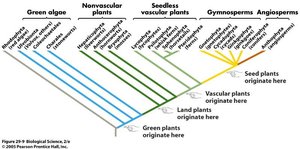
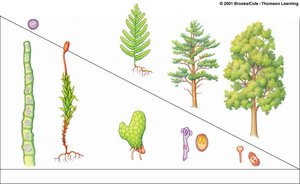
Evolutionary Trends in Seed Plants
Seed plants evolved several key adaptations that contributed to their success:
Reduced gametophyte generation: The gametophyte is microscopic and protected within the sporophyte.
Heterospory: Production of two types of spores: megaspores (female) and microspores (male).
Seeds: Enable long-distance dispersal and survival in harsh conditions.
Pollen: Allows fertilization without water, making reproduction independent of moist environments.
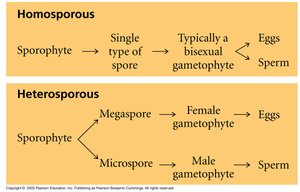
Homospory vs. Heterospory
Seed plants are heterosporous, a key evolutionary step from their ancestors.
Homospory: One type of spore produces a bisexual gametophyte (seen in most ferns and mosses).
Heterospory: Two types of spores: megaspores (female gametophyte) and microspores (male gametophyte).
Type | Spore Production | Gametophyte Type | Sex Cells Produced |
|---|---|---|---|
Homospory | Single type of spore | Bisexual gametophyte | Eggs & Sperm |
Heterospory | Megaspore & Microspore | Female & Male gametophytes | Eggs (female), Sperm (male) |
Seed Structure and Function
A typical seed consists of:
Embryo: The young sporophyte plant.
Food supply: Nutrient tissue to support early growth.
Seed coat: Protective outer covering.
Seeds can remain dormant for extended periods, allowing survival through unfavorable conditions and facilitating dispersal. 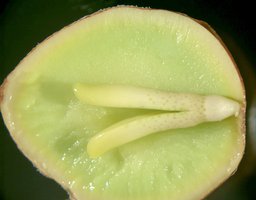
Key Features of Gymnosperms
No flowers or fruits; seeds are exposed ("naked").
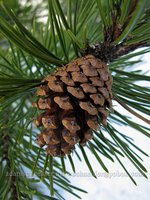
Seeds develop on the surfaces of sporophylls, usually in cones (strobili).
Separate male (pollen) and female (ovulate) cones.
Mostly wind pollinated.
Vascular tissue present for water and nutrient transport.
Dominant sporophyte generation.
Secondary Growth in Seed Plants
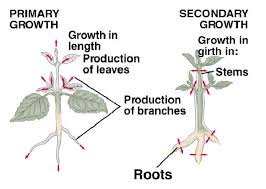
Secondary growth allows plants to increase in thickness (girth), supporting taller and larger structures.
Primary growth: Increases length (height) via apical meristems.
Secondary growth: Increases girth via lateral meristems (vascular cambium and cork cambium).
Gymnosperm Life Cycle
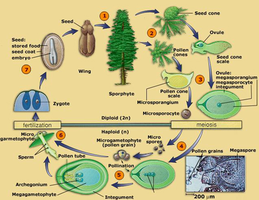
The gymnosperm life cycle is characterized by:
Reduction of gametophytes (microscopic, dependent on sporophyte).
Production of seeds as the dispersal stage.
Transfer of sperm to ovules by pollen (no need for water for fertilization).
Classification of Gymnosperms
There are four major phyla of gymnosperms:
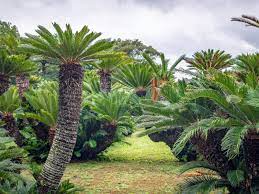
Cycadophyta (cycads): Mostly tropical, large cones, palm-like leaves, flagellated sperm, dioecious (separate sexes).
Ginkgophyta (ginkgo): Only one living species (Ginkgo biloba), fan-shaped leaves, dioecious, flagellated sperm.
Gnetophyta: Three genera (Gnetum, Ephedra, Welwitschia), diverse habitats, some angiosperm-like features (e.g., vessel elements, double fertilization in Ephedra).
Coniferophyta (conifers): Largest group, includes pines, firs, spruces; mostly evergreen, needle-like leaves, adapted to cold and dry environments.

Ecological and Economic Importance of Gymnosperms
Dominate boreal (northern) forests and many temperate regions.
Provide timber, paper, resins, and other products.
Important for carbon sequestration and as habitats for wildlife.
Summary Table: Major Gymnosperm Groups
Phylum | Key Features | Examples |
|---|---|---|
Cycadophyta | Large cones, palm-like leaves, flagellated sperm, dioecious | Cycads |
Ginkgophyta | Fan-shaped leaves, dioecious, only one living species | Ginkgo biloba |
Gnetophyta | Diverse forms, vessel elements, some double fertilization | Gnetum, Ephedra, Welwitschia |
Coniferophyta | Woody, needle-like leaves, mostly evergreen, wind pollinated | Pines, firs, spruces |
Key Terms
Sporophyte: Diploid, spore-producing phase of the plant life cycle.
Gametophyte: Haploid, gamete-producing phase.
Ovule: Structure that develops into a seed after fertilization.
Pollen: Male gametophyte, delivers sperm to ovule.
Strobilus (cone): Structure bearing sporangia (spore-producing organs).
Formulas and Equations
Alternation of generations:
