 Indietro
Seed Plants: Gymnosperms – Structure, Evolution, and Diversity
Guida di studio - Note intelligenti
 Appunti personalizzati basati sui tuoi materiali, ampliati con definizioni chiave, esempi e contesto.
Seed Plants: Gymnosperms
Introduction to Seed Plants
Seed plants are a major group of land plants that reproduce and disperse via seeds. This adaptation has allowed them to dominate terrestrial ecosystems. Seed plants are divided into two main groups: gymnosperms (naked seeds) and angiosperms (flowering plants).
Evolutionary Trends in Land Plants
Land plants evolved from green algae, with several key innovations marking their evolutionary history. The reduction of the haploid gametophyte generation and the development of seeds were crucial for colonization of terrestrial environments.
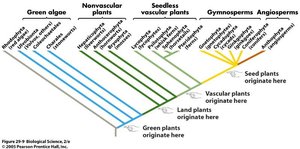
Green Algae: Aquatic ancestors of land plants.
Bryophytes: Nonvascular plants (e.g., mosses) with dominant gametophyte generation.
Seedless Vascular Plants: Ferns and relatives, with dominant sporophyte generation but still reliant on water for fertilization.
Seed Plants: Gymnosperms and angiosperms, with seeds as the main reproductive unit.
Key Innovations of Seed Plants
Reduced Gametophytes: Gametophytes develop within the protective tissues of the sporophyte, reducing desiccation risk.
Heterospory: Production of two types of spores—microspores (male) and megaspores (female).
Seeds from Ovules: Seeds develop from fertilized ovules, containing an embryo, food supply, and protective coat.
Pollen: Sperm are delivered to the ovule via pollen, making fertilization independent of water.
Seeds vs. Spores
Seeds provide several evolutionary advantages over spores:
Protection of the embryo
Food supply for the developing plant
Ability to remain dormant until conditions are favorable
Enhanced dispersal mechanisms
Homospory vs. Heterospory
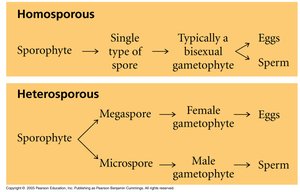
Seed plants evolved from ancestors that were homosporous (producing one type of spore) to heterosporous (producing two types of spores):
Homospory | Heterospory |
|---|---|
Single type of spore Bisexual gametophyte Produces both eggs and sperm | Megaspore → Female gametophyte → Eggs Microspore → Male gametophyte → Sperm |
Secondary Growth
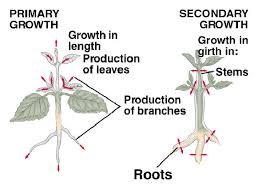
Secondary growth is the increase in thickness or girth of plant stems and roots, allowing plants to grow taller and stronger. This is a key feature of many seed plants, especially gymnosperms.
Gymnosperms: Structure and Life Cycle
General Characteristics of Gymnosperms
No flowers or fruits; seeds are exposed ("naked") on sporophylls, usually in cones.
Separate male (pollen) and female (ovule) cones.
Mostly wind-pollinated.
Vascular tissue for water and nutrient transport.
Dominant sporophyte generation.
Heterosporous life cycle.
Gymnosperm Life Cycle
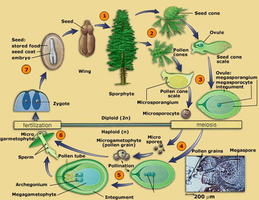
The gymnosperm life cycle is characterized by the reduction of the gametophyte, seed production, and pollen-mediated fertilization. The embryo develops within the seed, which can remain dormant until conditions are suitable for germination.
Structure of Cones
Male Cones (Microstrobili): Produce pollen grains (male gametophytes).
Female Cones (Megastrobili): Contain ovules, which develop into seeds after fertilization.
Seed Structure
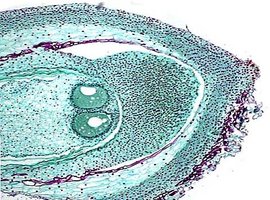
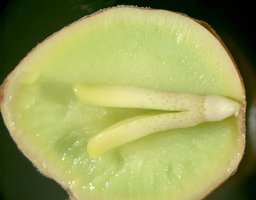
A typical gymnosperm seed consists of:
Embryo: Young sporophyte plant.
Food Storage Tissue: Nourishes the embryo during germination.
Seed Coat: Protective outer layer.
Diversity and Classification of Gymnosperms
Major Gymnosperm Phyla
Cycadophyta (Cycads): Mostly tropical, dioecious, large cones, flagellated sperm.
Ginkgophyta (Ginkgo): Only one living species (Ginkgo biloba), dioecious, fan-shaped leaves, flagellated sperm.
Gnetophyta: Three genera (Gnetum, Ephedra, Welwitschia), diverse habitats, some angiosperm-like features (e.g., vessel elements in xylem).
Coniferophyta (Conifers): Largest group, mostly evergreen trees, needle-like leaves, important for timber production.
Ecological and Economic Importance
Dominate boreal forests and many temperate regions.
Provide habitat and food for wildlife.
Source of timber, paper, and other products.
Examples of Gymnosperms
Pines (Pinus): Adapted to dry areas, thick cuticle, sunken stomata, needle-like leaves in bundles, monoecious (male and female cones on the same tree).
Bristlecone Pine (Pinus longaeva): Among the oldest living trees, over 4,700 years old.
Summary Table: Key Features of Gymnosperms
Feature | Gymnosperms |
|---|---|
Seeds | Naked, not enclosed in fruit |
Flowers | Absent |
Pollination | Mostly wind |
Vascular Tissue | Present |
Dominant Generation | Sporophyte |
Examples | Pine, Cycad, Ginkgo, Welwitschia |
