 Indietro
Speciation and Extinction: Mechanisms, Patterns, and Concepts
Guida di studio - Note intelligenti
 Appunti personalizzati basati sui tuoi materiali, ampliati con definizioni chiave, esempi e contesto.
Macroevolution: Speciation & Extinction
Introduction to Speciation
Speciation is a fundamental process in evolutionary biology, describing the formation of new and distinct species in the course of evolution. It is a lineage-splitting event that produces two or more separate species from a single ancestral population.
Speciation: The process by which populations evolve to become distinct species.
Extinction: The complete loss of a species when its last individual dies.
Types of Speciation
Allopatric Speciation
Allopatric speciation occurs when populations are geographically separated, leading to the formation of new species due to physical barriers that prevent gene flow.
Geographic isolation is the main driver, such as mountains, rivers, or distance.
Genetic divergence accumulates over time, resulting in reproductive isolation.
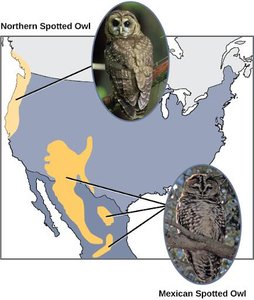
Example: The Northern and Mexican Spotted Owls are separated by geographic barriers, leading to speciation.
Peripatric Speciation
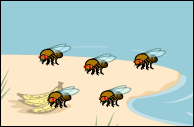
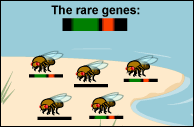
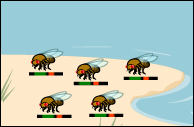
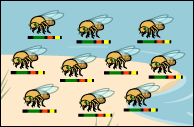
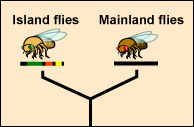
Peripatric speciation is a special case of allopatric speciation where a small population becomes isolated at the edge of a larger population, often leading to rapid genetic changes due to genetic drift and founder effects.
Founder effect: Small population size increases the impact of genetic drift.
New species form in peripheral habitats.
Parapatric Speciation
Parapatric speciation occurs when populations are partially separated and have a narrow zone of contact. Gene flow is reduced, and divergent selection leads to speciation.
Populations are adjacent but occupy different habitats.
Hybrid zones may form where ranges overlap.
Sympatric Speciation
Sympatric speciation occurs without geographic isolation. Instead, reproductive isolation arises within a single population due to ecological, behavioral, or genetic factors.
Often involves polyploidy in plants or disruptive selection in animals.
Populations diverge while inhabiting the same geographic region.
Polyploidy and Hybrid Speciation
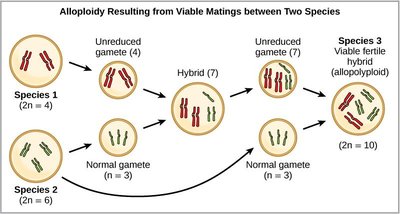
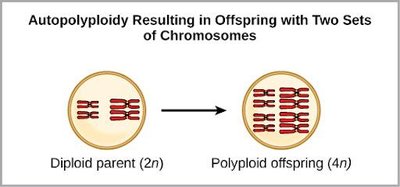
Polyploidy is a major mechanism of sympatric speciation, especially in plants. It involves the duplication of chromosome sets, leading to reproductive isolation from the parent population.
Allopolyploidy: Hybridization between two species followed by chromosome doubling.
Autopolyploidy: Chromosome duplication within a single species.
Patterns of Speciation
Adaptive Radiation
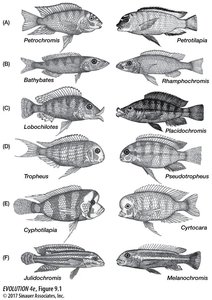
Adaptive radiation is the rapid evolution of many species from a common ancestor, often following the colonization of new environments or the evolution of a novel trait.
Driven by ecological opportunities and sexual selection.
Results in species adapted to different niches.
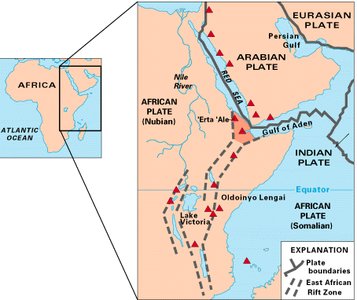
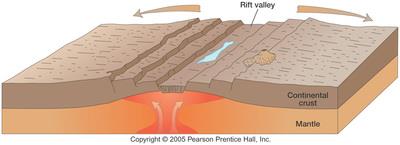
Example: Cichlid fishes in East African Rift Lakes have diversified into hundreds of species.
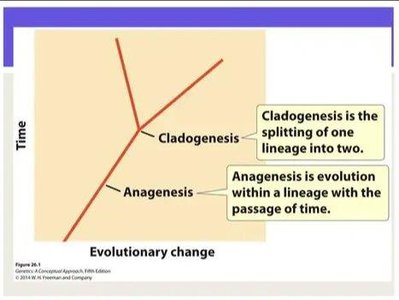
Anagenesis vs. Cladogenesis
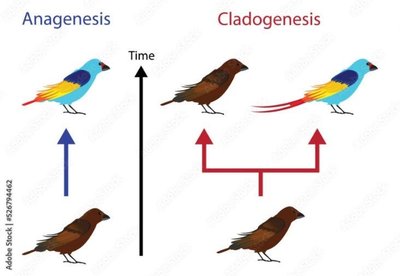
Speciation can occur through two main evolutionary patterns:
Anagenesis: Evolution within a single lineage over time without branching.
Cladogenesis: Splitting of one lineage into two or more distinct lineages (true speciation event).
Species Concepts
Morphological Species Concept
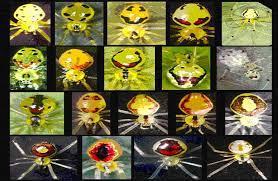
The morphological species concept defines species based on physical similarities and differences. It is useful for classifying fossils and organisms with limited behavioral data but can be problematic due to morphological variation within species and similarity between distinct species.
Example: Theridion grallator spiders show extreme morphological diversity within a single species.
Biological Species Concept (BSC)
The BSC, formalized by Ernst Mayr, defines species as groups of actually or potentially interbreeding natural populations that are reproductively isolated from other such groups.
Focuses on reproductive isolation as the key criterion.
Widely used but limited to sexually reproducing organisms.
Hybridization and allopatric populations present challenges to this concept.
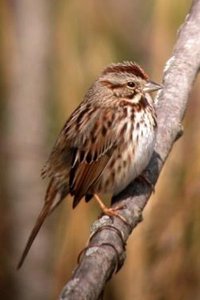
Example: Eastern and Western Meadowlarks are morphologically similar but do not interbreed.
Phylogenetic Species Concept (PSC)
The PSC defines species as the smallest group of individuals that share a common ancestor and possess one or more unique, derived traits. It is based on evolutionary history and can be applied to both sexual and asexual organisms.
Useful for identifying cryptic species and allopatric populations.
Does not require demonstration of reproductive isolation.
Reproductive Isolation Mechanisms
Prezygotic Barriers
Prezygotic barriers prevent mating or fertilization between species. These include:
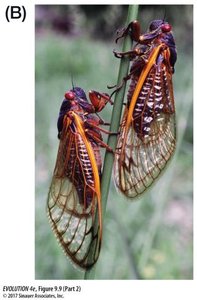
Temporal Isolation: Species breed at different times (e.g., cicadas with different emergence cycles).
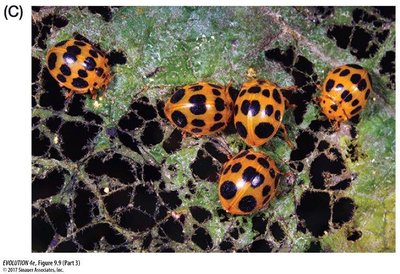
Ecological Isolation: Species occupy different habitats or niches (e.g., ladybird beetles on different host plants).
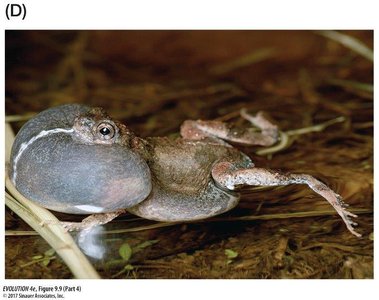
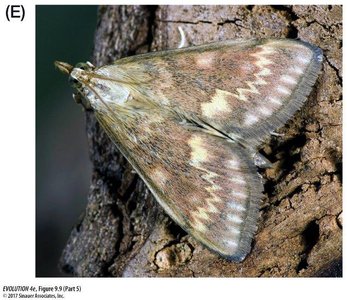
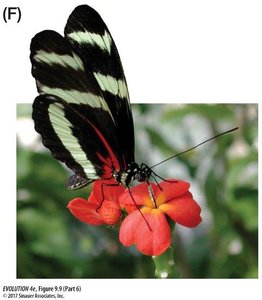
Behavioral Isolation: Differences in mating behaviors or signals (e.g., frog calls, pheromones in moths, butterfly wing patterns).
Mechanical Isolation: Incompatible reproductive structures.
Gametic Isolation: Incompatibility between gametes prevents fertilization.
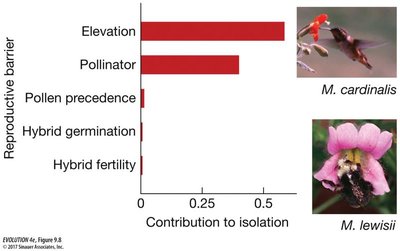
Postzygotic Barriers
Postzygotic barriers occur after fertilization and reduce the viability or reproductive capacity of hybrid offspring.
Hybrid inviability: Hybrids fail to develop or reach maturity.
Hybrid sterility: Hybrids are sterile (e.g., mule).
Hybrid breakdown: Hybrids are fertile but their offspring are inviable or sterile.
Extrinsic and intrinsic factors: Reduced fitness can be due to environmental interactions or genetic incompatibilities.
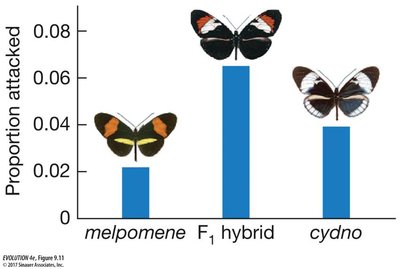
Example: Heliconius butterfly hybrids have intermediate warning patterns, leading to higher predation rates.
Hybridization and Hybrid Zones
Hybridization
Hybridization is the process of producing offspring by mating individuals from different species or genetically distinct populations. Hybrid zones are regions where hybridization occurs and can provide insights into the mechanisms of reproductive isolation and speciation.
Hybrid zones often occur in areas of secondary contact between diverged populations.
Hybrids may have intermediate traits and reduced fitness.
Example: Red wolves are hybrids between coyotes and gray wolves.
Extinction
Definition and Types
Extinction is the permanent loss of a species. It can occur naturally or be accelerated by human activities.
Background extinction rate: The natural rate of extinction, typically 1–5 species per year.
Mass extinction: Periods when large numbers of species go extinct in a short time (e.g., End Permian, Cretaceous).
Coextinction: The loss of one species leads to the extinction of another dependent species.
Modern causes: Habitat loss, human impact, invasive species, and climate change.
Summary Table: Types of Speciation
Type | Geographic Context | Main Mechanism | Example |
|---|---|---|---|
Allopatric | Geographic isolation | Physical barrier, genetic divergence | Spotted Owls |
Peripatric | Peripheral isolation | Founder effect, genetic drift | Island flies |
Parapatric | Adjacent populations | Divergent selection, hybrid zones | Hybrid zones in plants/animals |
Sympatric | Same geographic area | Polyploidy, ecological/behavioral isolation | Polyploid plants |
