 Indietro
Speciation: Mechanisms, Evidence, and Patterns
Guida di studio - Note intelligenti
 Appunti personalizzati basati sui tuoi materiali, ampliati con definizioni chiave, esempi e contesto.
Speciation and Its Mechanisms
Sexual Selection and Speciation
Sexual selection is a form of natural selection where individuals with certain traits are more likely to attract mates and reproduce. This process can lead to reproductive isolation and eventually speciation, especially in environments with rapidly diversifying populations.
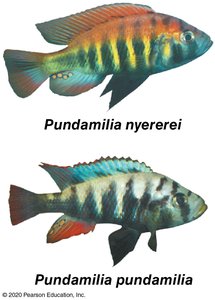
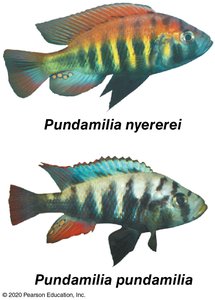
Key Point 1: Sexual selection has played a significant role in the diversification of cichlid fish species in Lake Victoria.
Key Point 2: Reproductive isolation between closely related species, such as Pundamilia nyererei and Pundamilia pundamilia, can be attributed to differences in mate choice and sexual selection.
Example: Biologists study recently arisen species to test hypotheses about speciation, using cichlids as a model for sexual selection-driven speciation.
Adaptive Radiation and Island Speciation
Adaptive Radiation on Isolated Islands
Adaptive radiation is the evolution of many diverse species from a common ancestor, often occurring in isolated environments such as islands. These settings provide unique opportunities for speciation due to repeated isolation, speciation, and recolonization events.
Key Point 1: Isolated island chains, like the Galápagos, are hotspots for adaptive radiations, resulting in species found nowhere else.
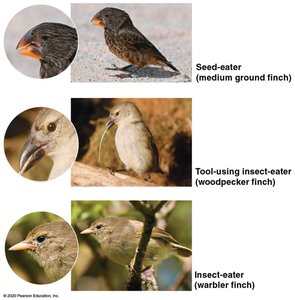
Key Point 2: Differences in beak shape and size among Galápagos finches illustrate adaptation to specific diets and ecological niches.
Example: Galápagos finches evolved distinct beak morphologies to exploit different food sources, demonstrating adaptive radiation.
Natural Selection During Environmental Change
Environmental changes, such as droughts, can exert strong selective pressures on populations, leading to observable evolutionary changes.
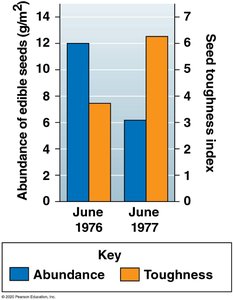
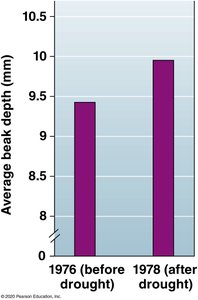
Key Point 1: During the severe drought in the 1970s in the Galápagos, only tough, hard-to-crack seeds were available.
Key Point 2: Finches with larger, stronger beaks were more likely to survive and reproduce, increasing the proportion of large-beaked individuals.
Example: The average beak depth of finches increased after the drought, a direct result of natural selection.
Hybrid Zones and Reproductive Isolation
Hybrid Zones as Natural Laboratories
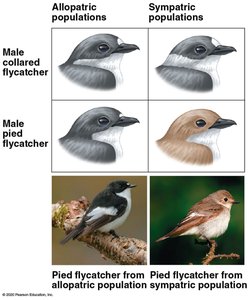
Hybrid zones are regions where populations of different species meet and mate, producing hybrid offspring. These zones provide valuable opportunities to study the mechanisms of reproductive isolation and speciation.
Key Point 1: In hybrid zones, reinforcement may strengthen reproductive barriers, or fusion may reverse speciation as gene flow increases.
Key Point 2: Stable hybrid zones produce a limited number of hybrid offspring over time.
Example: The pied flycatcher exhibits differences in appearance between allopatric and sympatric populations, illustrating reinforcement of reproductive barriers.
Tempo of Speciation: Models and Patterns
Punctuated Equilibrium vs. Gradualism
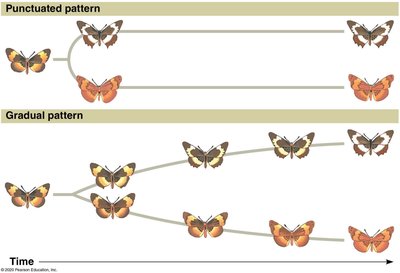
Speciation can occur at different rates, described by two main models: punctuated equilibrium and gradualism. These models help explain the tempo and pattern of evolutionary change observed in the fossil record and living species.
Key Point 1: Punctuated equilibrium describes rapid changes during speciation, followed by long periods of stasis.
Key Point 2: Gradualism describes slow, continuous evolutionary change over time.
Example: The time interval between speciation events can range from thousands to millions of years, depending on the model.
Summary Table: Speciation Mechanisms and Patterns
Mechanism | Description | Example |
|---|---|---|
Sexual Selection | Mate choice leads to reproductive isolation | Cichlid fish in Lake Victoria |
Adaptive Radiation | Diversification from a common ancestor | Galápagos finches |
Hybrid Zones | Regions of interbreeding between species | Pied flycatchers |
Punctuated Equilibrium | Rapid speciation followed by stasis | Butterfly evolutionary patterns |
Gradualism | Slow, continuous change | Butterfly evolutionary patterns |
Key Concepts for Review
Describe the circumstances that led to the adaptive radiation of the Galápagos finches.
Explain why isolated islands are often sites of speciation.
Explain how hybrid zones are useful in the study of reproductive isolation.
Compare the gradual model and the punctuated equilibrium model of evolution.
Additional info: Adaptive radiation, sexual selection, and hybrid zones are central to understanding speciation. The models of speciation tempo provide insight into evolutionary dynamics across different taxa.
