 Indietro
Species Interactions: Competition, Consumption, and Mutualism
Guida di studio - Note intelligenti
 Appunti personalizzati basati sui tuoi materiali, ampliati con definizioni chiave, esempi e contesto.
Species Interactions and Their Ecological Impact
Competition: Effects and Types
Competition is a fundamental ecological interaction where individuals or species vie for the same limited resources, resulting in reduced fitness for all involved. It can occur within a species (intraspecific) or between different species (interspecific), and shapes population dynamics and evolutionary outcomes.
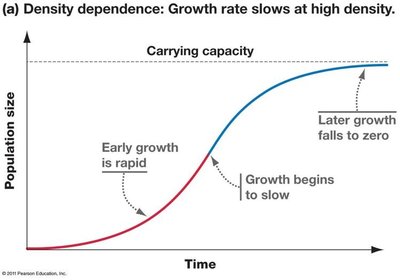
Intraspecific Competition: Occurs among members of the same species. As population density increases, competition intensifies, leading to density-dependent growth.
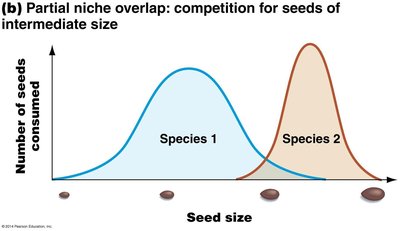
Interspecific Competition: Occurs between different species using overlapping resources. This interaction influences natural selection and niche evolution.
Competition is always a -/- interaction: Both parties experience a fitness decline.
Ecological Niche and Niche Overlap
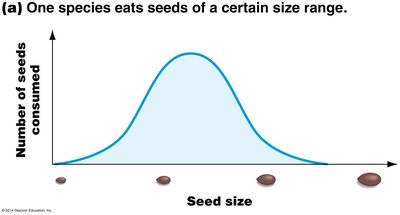
An ecological niche describes the range of resources a species can use and the environmental conditions it can tolerate. When niches overlap, competition arises.
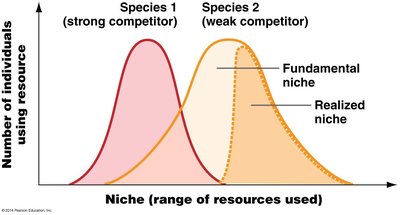
Fundamental Niche: The full range of resources and conditions a species can utilize in the absence of competitors.
Realized Niche: The actual range used in the presence of competitors, often reduced due to competition.
Asymmetric Competition: One species suffers a greater fitness decline than the other.
Symmetric Competition: Both species experience similar fitness reductions.
Competitive Exclusion Principle
When two species' niches overlap completely and competition is asymmetric, the stronger competitor can drive the weaker to local extinction. This is known as the competitive exclusion principle.
Competitive Exclusion Principle: No two species can coexist indefinitely in the same niche.
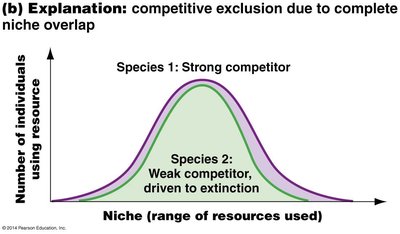
Resource Partitioning and Character Displacement
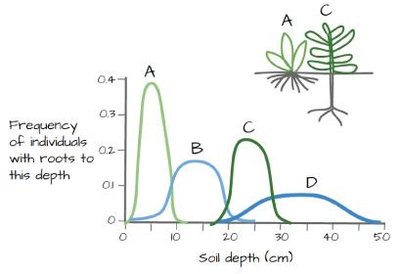
To reduce competition, species may evolve differences in resource use, a process called resource partitioning. This often results in character displacement, where traits diverge to minimize niche overlap.
Niche Differentiation: Evolutionary change in traits reduces niche overlap and competition.
Character Displacement: Trait divergence due to competition.
Consumption: Types and Effects
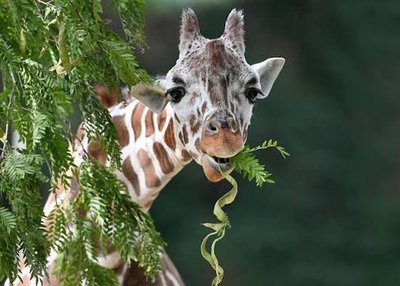
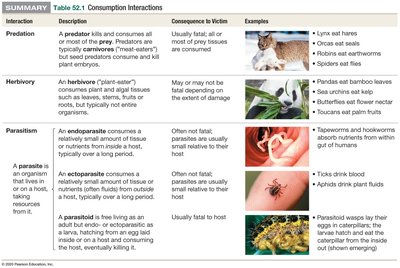
Consumption is a +/– interaction where one organism benefits by eating another. It includes herbivory, parasitism, and predation.
Herbivory: Consumption of plant tissues by herbivores.
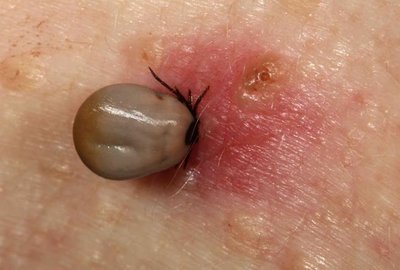
Parasitism: Consumption of small amounts of tissue from a host by a parasite.
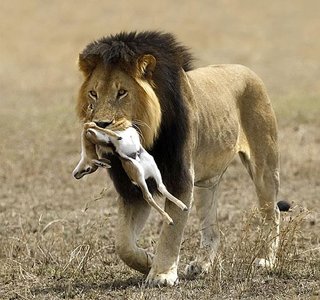
Predation: Killing and consumption of prey by a predator.
Interaction | Description | Consequence to Victim | Examples |
|---|---|---|---|
Predation | Predator kills and consumes prey | Usually fatal | Lynx eat hares, Crocs eat snails |
Herbivory | Herbivore eats plant tissues | May or may not be fatal | Pandas eat bamboo, Butterflies feed on nectar |
Parasitism | Parasite consumes tissues from host | Often not fatal | Ticks drink blood, Tapeworms absorb nutrients |
Evolutionary Arms Race
Consumption interactions often lead to an evolutionary arms race, where prey evolve defenses and predators evolve counter-adaptations.
Prey: Develop mechanisms for avoidance or defense.
Predators: Evolve greater efficiency in capturing prey.
Mutualism: +/+ Interactions
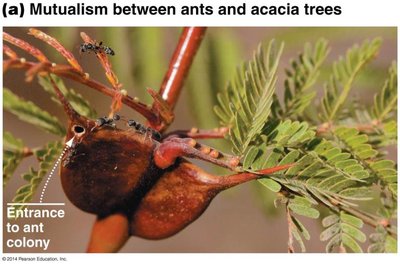
Mutualism is an interaction where both species benefit. Examples include pollination, mycorrhizal fungi and plant roots, and ants with acacia trees.
Pollination: Plants provide nectar; pollinators ensure reproduction.
Mycorrhizal Fungi: Fungi provide water/minerals; plants provide sugars.
Ants and Acacia Trees: Ants protect trees; trees provide shelter and food.
Short-term and Long-term Impacts of Species Interactions
Species interactions affect both the distribution and abundance of organisms in the short term, and drive co-evolutionary changes in the long term.
Short-term impacts: Changes in population size, resource use, and distribution.
Long-term impacts: Co-evolution, adaptation, and speciation.
Impact | Short-term | Long-term |
|---|---|---|
Species Interactions | Distribution & Abundance | Co-evolution |
Summary Table: Types of Species Interactions
Interaction Type | Effect on Species 1 | Effect on Species 2 | Example |
|---|---|---|---|
Competition | - | - | Birds competing for seeds |
Consumption | + | - | Lion eating antelope |
Mutualism | + | + | Ants and acacia trees |
Additional info: Academic context was added to clarify definitions, examples, and the ecological significance of each interaction type.
