 Indietro
Study Guide: Bacteria and Archaea (Campbell Biology Chapter 27)
Guida di studio - Note intelligenti
 Appunti personalizzati basati sui tuoi materiali, ampliati con definizioni chiave, esempi e contesto.
Bacteria and Archaea
Introduction to Prokaryotes
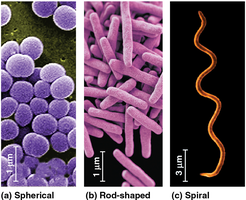
Prokaryotes, comprising the domains Bacteria and Archaea, are single-celled organisms that are highly adapted to diverse and extreme environments. They are the most abundant organisms on Earth and were the first to inhabit it. Most prokaryotes are unicellular, though some form colonies, and their cell sizes range from 0.5–5 µm, much smaller than typical eukaryotic cells (10–100 µm). Prokaryotes exhibit a variety of shapes, including spheres (cocci), rods (bacilli), and spirals.
Key Point: Prokaryotes thrive in environments that are inhospitable to most other organisms.
Key Point: Their small size and rapid reproduction contribute to their abundance.
Example: The pink color of hypersaline lakes is caused by prokaryotes adapted to high salinity.
Cell-Surface Structures
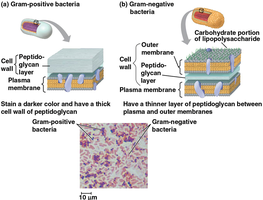
The cell wall is a critical structure for prokaryotes, maintaining cell shape, protecting the cell, and preventing lysis in hypotonic environments. Most prokaryotes lose water and experience plasmolysis in hypertonic environments, which is why salt is used as a preservative.
Bacterial cell walls contain peptidoglycan, a network of sugar polymers cross-linked by polypeptides.
Archaeal cell walls lack peptidoglycan and instead contain a variety of polysaccharides and proteins.
Eukaryotic cell walls are made of cellulose or chitin.
Gram Stain Classification
The Gram stain is used to classify bacteria based on cell wall composition:
Gram-positive bacteria: Thick peptidoglycan layer, stain darker, simpler walls.
Gram-negative bacteria: Thin peptidoglycan layer, complex walls with an outer membrane containing lipopolysaccharides, more resistant to antibiotics.
Additional Cell-Surface Features
Capsule: A sticky layer of polysaccharide or protein surrounding the cell wall, aiding in adherence, preventing dehydration, and protecting against the host immune system.
Endospore: Metabolically inactive, durable structures formed under harsh conditions, allowing survival for centuries.
Fimbriae: Hairlike appendages for attachment to substrates or other cells.
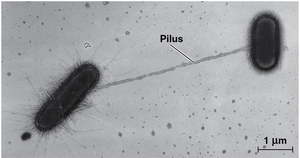
Pili (sex pili): Longer than fimbriae, facilitate DNA exchange between cells.
Prokaryote Motility
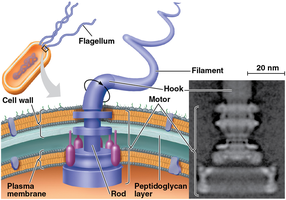
About half of prokaryotes exhibit taxis, movement toward or away from stimuli. Chemotaxis is movement in response to chemical stimuli. Flagella are the most common structures used for movement, differing in structure and mechanism from eukaryotic flagella.
Evolutionary Origins of Flagella
Bacterial flagella are composed of multiple proteins forming a motor, hook, and filament.
Flagella likely evolved through exaptation, where existing proteins were repurposed for new functions.
Prokaryotic Chromosome and Plasmids
Prokaryotes have less DNA than eukaryotes, typically a single circular chromosome located in the nucleoid region. They may also possess plasmids, small rings of independently replicating DNA.
Key Point: Differences in DNA replication, transcription, and translation between prokaryotes and eukaryotes allow antibiotics to target bacteria without harming human cells.
Genetic Diversity in Prokaryotes
Three factors contribute to high genetic diversity:
Rapid reproduction
Mutation
Genetic recombination
Although binary fission produces genetically identical cells, mutations accumulate rapidly due to short generation times and large populations, enabling rapid adaptation.
Genetic Recombination
Genetic recombination combines DNA from two sources, increasing diversity. Mechanisms include:
Transformation: Uptake of foreign DNA from surroundings.
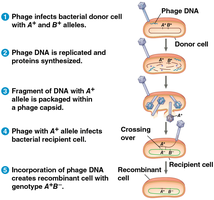
Transduction: Transfer of DNA via bacteriophages (viruses that infect bacteria).
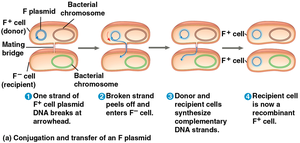
Conjugation: Direct transfer of DNA between cells via pili.
Conjugation and Plasmids
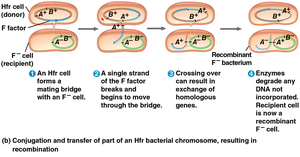
Conjugation involves the transfer of DNA from a donor to a recipient cell, often mediated by the F factor (fertility factor), which can exist as a plasmid or chromosomal segment.
F+ cells: Contain F plasmid, act as donors.
F- cells: Lack F plasmid, act as recipients.
Hfr cells: F factor integrated into chromosome, can transfer chromosomal genes.
R Plasmids and Antibiotic Resistance
R plasmids: Carry genes for antibiotic resistance and for pili, enabling rapid spread of resistance.
Nutritional and Metabolic Adaptations
Prokaryotes are classified by how they obtain energy and carbon:
Phototrophs: Energy from light
Chemotrophs: Energy from chemicals
Autotrophs: Carbon from CO2 or related compounds
Heterotrophs: Carbon from organic nutrients
Mode | Energy Source | Carbon Source |
|---|---|---|
Photoautotroph | Light | CO2 |
Chemoautotroph | Inorganic chemicals | CO2 |
Photoheterotroph | Light | Organic compounds |
Chemoheterotroph | Organic compounds | Organic compounds |
The Role of Oxygen in Metabolism
Obligate aerobes: Require O2 for respiration
Obligate anaerobes: Poisoned by O2, use fermentation or anaerobic respiration
Facultative anaerobes: Can use O2 or ferment/respire anaerobically
Nitrogen Metabolism
Nitrogen fixation: Conversion of atmospheric N2 to ammonia (NH3), essential for amino acid and nucleic acid synthesis
Metabolic Cooperation
Prokaryotes may cooperate to use resources unavailable to individual cells, forming biofilms or specialized cells (e.g., heterocysts in cyanobacteria for nitrogen fixation).
Prokaryotic Diversity
Prokaryotes are divided into Bacteria and Archaea, inhabiting every environment that supports life. Horizontal gene transfer has played a key role in their evolution.
Bacteria
Include most familiar prokaryotes
Represent all major nutritional and metabolic modes
Examples: Proteobacteria (diverse group), Chlamydias (animal cell parasites), Spirochetes (helical pathogens), Cyanobacteria (photoautotrophs, origin of chloroplasts), Gram-positive bacteria (soil decomposers, pathogens)
Archaea
Share traits with both bacteria and eukaryotes
Extremophiles: Halophiles (saline environments), Thermophiles (high temperatures), Methanogens (produce methane, obligate anaerobes)
Supergroup TACK: Thaumarchaeota, Aigarchaeota, Crenarchaeota, Korarchaeota
Lokiarchaeotes: Closely related to eukaryotes
Prokaryotes in the Biosphere
Prokaryotes are essential for recycling chemical elements, decomposing organic matter, and converting molecules into forms usable by other organisms. They play crucial roles in nitrogen fixation and increasing soil nutrient availability.
Ecological Interactions
Symbiosis: Close ecological relationship between two species (mutualism, commensalism, parasitism)
Prokaryotes often form symbiotic relationships with larger organisms
Prokaryotes and Humans
Prokaryotes have both beneficial and harmful impacts on humans. While some are pathogens, many are mutualists, aiding in digestion and nutrient synthesis.
Pathogenic bacteria: Cause diseases such as tuberculosis, Lyme disease, cholera, and food poisoning.
Exotoxins: Proteins secreted by bacteria causing disease (e.g., cholera toxin).
Endotoxins: Lipopolysaccharide components released when bacteria die (e.g., Salmonella).
Horizontal gene transfer can spread virulence genes.
Antibiotic Resistance
Rapid reproduction and horizontal gene transfer enable quick spread of resistance genes.
Drug-resistant strains of bacteria pose significant health challenges.
Prokaryotes in Research and Technology
Used in food production (cheese, yogurt, beer, wine, etc.)
Advances in DNA technology (gene cloning, PCR, CRISPR-Cas9)
Production of biodegradable plastics (PHA)
Bioremediation: Removal of pollutants from soil, air, or water
Summary Table: Major Nutritional Modes
Mode | Energy Source | Carbon Source |
|---|---|---|
Photoautotroph | Light | CO2 |
Chemoautotroph | Inorganic chemicals | CO2 |
Photoheterotroph | Light | Organic compounds |
Chemoheterotroph | Organic compounds | Organic compounds |
Key Equations
Nitrogen Fixation:
Binary Fission:
Additional info: This study guide expands on brief points from the original notes, providing definitions, examples, and context for General Biology students.
