 Indietro
Study Guide: Bacteria and Archaea (General Biology)
Guida di studio - Note intelligenti
 Appunti personalizzati basati sui tuoi materiali, ampliati con definizioni chiave, esempi e contesto.
Bacteria and Archaea
What are Prokaryotes?
Prokaryotes are single-celled organisms classified in the domains Bacteria and Archaea. They are adapted to diverse and extreme environments and are the most abundant organisms on Earth.
Domains: Bacteria and Archaea
Habitat: Found in nearly every environment, including extreme conditions
Abundance: Most numerous life forms
Prokaryotic Success
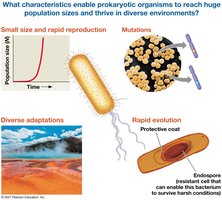
Prokaryotes were the first organisms to inhabit Earth. Most are unicellular, but some species form colonies. Their small size and rapid reproduction contribute to their evolutionary success.
Cell Size: 0.5–5 µm (much smaller than eukaryotic cells)
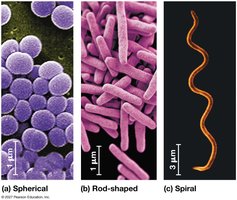
Shapes: Spheres (cocci), rods (bacilli), spirals
Colony Formation: Some species form colonies for survival
Cell Surface Structures
Prokaryotic cell walls differ from those of eukaryotes. Most bacterial cell walls contain peptidoglycan, while archaeal cell walls lack peptidoglycan and contain other polysaccharides and proteins.
Bacterial Cell Walls: Peptidoglycan network
Archaeal Cell Walls: Polysaccharides and proteins, no peptidoglycan
Eukaryotic Cell Walls: Cellulose (plants) or chitin (fungi)
Gram Stain
The Gram stain is used to classify bacteria based on cell wall composition.
Gram-positive: Thick peptidoglycan layer, simpler walls
Gram-negative: Thin peptidoglycan, complex walls with outer membrane (lipopolysaccharides)
Antibiotic Resistance: Gram-negative bacteria are more resistant due to their outer membrane
Antibiotic Target: Peptidoglycan (human cells lack this)
Capsules and Slime Layers
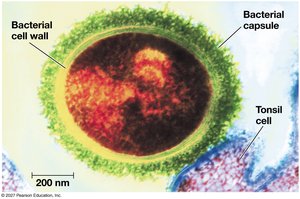
Many prokaryotes have a sticky layer of polysaccharide or protein surrounding the cell wall. This layer is called a capsule if dense and well-defined, or a slime layer if less organized. These structures aid in adherence, prevent dehydration, and protect against the host immune system.
Endospores
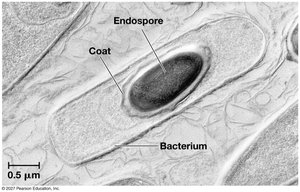
Some bacteria form metabolically inactive endospores when conditions are harsh. Endospores can survive extreme environments and remain viable for centuries.
Formation: Chromosome copied and surrounded by multilayered structure
Function: Survival in extreme conditions
Fimbriae and Pili
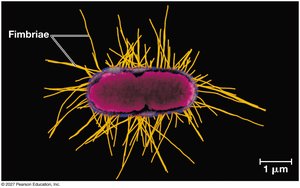
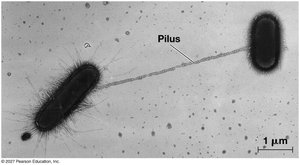
Prokaryotes may have hairlike appendages called fimbriae for attachment. Pili (or sex pili) are longer and facilitate DNA exchange between cells.
Fimbriae: Attachment to substrate or colony
Pili: DNA transfer (conjugation)
Motility
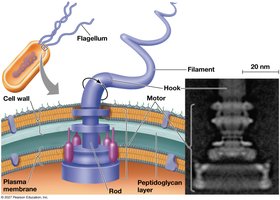
About half of prokaryotes exhibit taxis, movement toward or away from stimuli. Flagella are the most common structures for movement, either scattered or concentrated at cell ends.
Chemotaxis: Movement in response to chemical stimulus
Flagella: Motor, hook, filament structure
Internal Organization
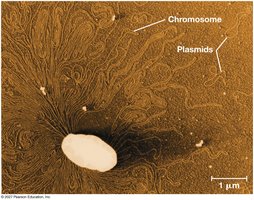
Prokaryotes have less DNA than eukaryotes and lack a nucleus. Their chromosome is circular and located in the nucleoid region. They may also have plasmids, small rings of DNA.
Chromosome: Single, circular
Nucleoid: Region without membrane
Plasmids: Independently replicating DNA rings
Reproduction
Prokaryotes reproduce rapidly by binary fission, dividing every 1–3 hours under optimal conditions. Their small size, rapid reproduction, and short generation times contribute to their evolutionary success.
Binary Fission: Simple cell division
Generation Time: Short, leading to rapid population growth
Genetic Diversity in Prokaryotes
Three factors contribute to high genetic diversity: rapid reproduction, mutation, and genetic recombination. Mutations accumulate quickly due to short generation times, enabling rapid adaptation.
Rapid Reproduction: Increases mutation rate
Mutation: Source of genetic variation
Genetic Recombination: Combining DNA from two sources
Genetic Recombination
Genetic recombination increases diversity through transformation, transduction, and conjugation. Horizontal gene transfer moves genes between species.
Transformation: Uptake of foreign DNA
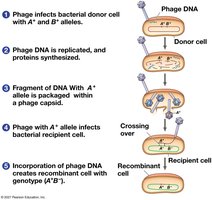
Transduction: DNA transfer via bacteriophages
Conjugation: DNA transfer between cells via pili
Transformation and Transduction
In transformation, cells incorporate DNA from their surroundings. In transduction, bacteriophages transfer DNA between cells.
Conjugation
Conjugation involves DNA transfer from a donor to a recipient cell via a pilus and a temporary mating bridge.
Conjugation and Antibiotic Resistance
R plasmids carry antibiotic resistance genes and can be transferred between cells, enabling rapid spread of resistance.
Antibiotic Resistance: R plasmids encode resistance and pili for transfer
Multiple Resistance: Some plasmids carry resistance to several antibiotics
Nutritional Adaptations in Bacteria and Archaea
Prokaryotes are classified by how they obtain energy and carbon.
Phototrophs: Energy from light
Chemotrophs: Energy from chemicals
Autotrophs: Carbon from CO2 or related compounds
Heterotrophs: Carbon from organic nutrients
Oxygen and Metabolism
Prokaryotic metabolism varies with respect to oxygen.
Obligate Aerobes: Require O2 for respiration
Obligate Anaerobes: Poisoned by O2, use fermentation or other electron acceptors
Facultative Anaerobes: Can use O2 or ferment
Lineages of Bacteria and Archaea
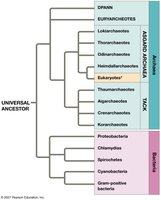
Prokaryotes date back 3.5 billion years and inhabit every environment. Advances in genomics reveal vast diversity.
Named Species: ~16,000
Soil Diversity: A handful of soil may contain 10,000 species
Exploring Bacterial Diversity
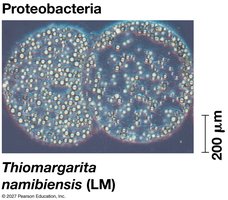
Proteobacteria
Gram-negative bacteria including photoautotrophs, chemoautotrophs, and heterotrophs. Some are pathogens.
Example: Thiomargarita namibiensis (sulfur bacterium)
Pathogens: Neisseria gonorrhoeae, Vibrio cholerae, Helicobacter pylori
Chlamydias
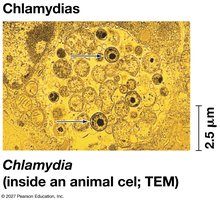
All species parasitize animal cells and have gram-negative walls lacking peptidoglycan.
Example: Chlamydia trachomatis (causes urethritis)
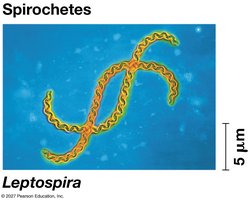
Spirochetes
Helical gram-negative heterotrophs that move by rotating internal filaments. Some are pathogens.
Examples: Treponema pallidum (syphilis), Borrelia burgdorferi (Lyme disease)
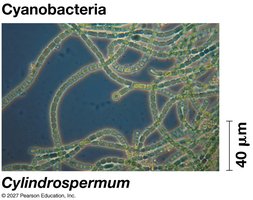
Cyanobacteria
Gram-negative photoautotrophs. Plant chloroplasts likely evolved from cyanobacteria via endosymbiosis.
Abundance: Major component of phytoplankton
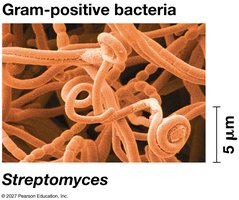
Gram-Positive Bacteria
Diverse group including actinomycetes, pathogens, and soil decomposers.
Actinomycetes: Colony-forming, source of antibiotics
Pathogens: Staphylococcus aureus, Bacillus anthracis, Clostridium botulinum
Archaea Diversity
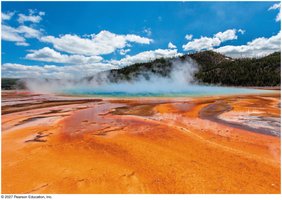
Archaea share traits with both bacteria and eukaryotes, and have unique characteristics. Extremophiles live in extreme environments.
Extreme Halophiles: Tolerate or require high salinity
Extreme Thermophiles: Stable DNA/proteins at high temperatures
Methanogens
Methanogens are obligate anaerobes that produce methane. Found in ice, swamps, and animal guts.
Clades: Euryarchaeota (includes many methanogens and halophiles), Crenarchaeota (most thermophiles)
TACK and Asgardarcheota
TACK is a supergroup of closely related archaea clades. Asgardarcheota may be closely related to Eukarya.
Role of Prokaryotes in the Biosphere
Prokaryotes recycle chemical elements between living and nonliving components. Some are decomposers, others fix nitrogen for plants.
Decomposers: Break down dead organisms and wastes
Nitrogen Fixers: Convert nitrogen for plant use
Ecological Interactions
Prokaryotes often form symbiotic relationships with other organisms.
Mutualism: Both benefit
Commensalism: One benefits, other unaffected
Parasitism: Parasite harms host (pathogens cause disease)
Impacts on Humans
While some prokaryotes are pathogens, many have positive roles in agriculture, industry, and human health.
Mutualism: Intestinal bacteria aid nutrient absorption
Population: Bacterial cells outnumber human cells in the body
Pathogenic Bacteria
All known pathogenic prokaryotes are bacteria. They cause about half of all human diseases, including tuberculosis and Lyme disease. Antibiotic resistance is a growing concern.
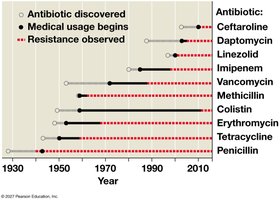
Human Use of Bacteria in Food
Bacteria are used in the production of foods such as cheese, yogurt, beer, wine, pepperoni, sauerkraut, and soy sauce.
----------------------------------------
