Indietro
Study Guide: Carbon and the Molecular Diversity of Life & Structure and Function of Large Biological Molecules
Guida di studio - Note intelligenti
 Appunti personalizzati basati sui tuoi materiali, ampliati con definizioni chiave, esempi e contesto.
Chapter 4: Carbon and the Molecular Diversity of Life
Organic vs Inorganic Molecules
Organic molecules are fundamental to life, distinguished by their carbon skeletons and the presence of C–C bonds. Inorganic compounds, such as H2O and CO2, lack this combination. The versatility of carbon enables the formation of a vast array of organic compounds, including macromolecules essential for biological processes.
Organic Compounds: Contain carbon skeletons, strong C–C bonds, and modular subunits.
Inorganic Compounds: Lack C–H combination; examples include water and carbon dioxide.
Electron Configuration: Determines the types and number of bonds an atom can form.
Carbon Atom Bonding and Molecular Shape
Carbon atoms form four covalent bonds, allowing for complex three-dimensional molecular shapes. The freedom to rotate around single C–C bonds permits various shapes, which are crucial for biological function.
Molecule Shape: Determines biological properties and function.
Single, Double, Triple Bonds: Carbon can form multiple types of bonds, affecting molecular structure.
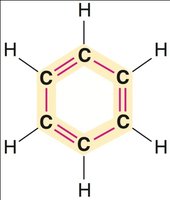
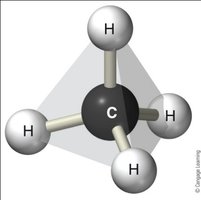
Formation of Bonds with Carbon
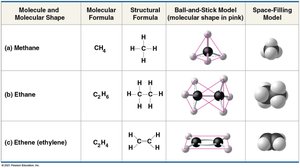
Carbon's ability to form four covalent bonds results in tetrahedral shapes (e.g., ethane) and planar structures when double bonds are present (e.g., ethene).
Molecule and Molecular Shape | Molecular Formula | Structural Formula | Ball-and-Stick Model | Space-Filling Model |
|---|---|---|---|---|
Methane | CH4 | H–C–H | Tetrahedral | Compact sphere |
Ethane | C2H6 | H–C–C–H | Tetrahedral | Compact sphere |
Ethene (ethylene) | C2H4 | H2C=CH2 | Planar | Compact sphere |
Valence Electrons and Bonding
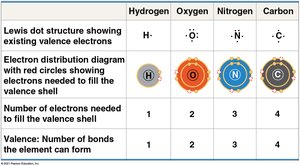
The number of unpaired electrons in the valence shell determines the number of covalent bonds an atom can form. Carbon's frequent bonding partners are hydrogen, oxygen, and nitrogen.
Element | Valence Electrons | Valence (Bonds Formed) |
|---|---|---|
Hydrogen | 1 | 1 |
Oxygen | 2 | 2 |
Nitrogen | 3 | 3 |
Carbon | 4 | 4 |
Hydrocarbons
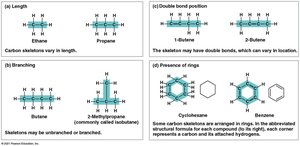
Hydrocarbons are organic compounds consisting only of carbon and hydrogen. They are non-polar, hydrophobic, and serve as energy sources and structural components in fats.
Shapes: Chains, branches, rings
Energy: Can undergo reactions that release large amounts of energy
Isomers
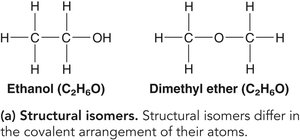
Isomers are molecules with the same molecular formula but different structures and properties. There are three main types: structural, geometric (cis-trans), and enantiomers.
Structural Isomers: Differ in covalent bond arrangement
Geometric Isomers: Same covalent bonds, different spatial arrangement
Enantiomers: Mirror images
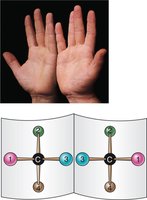
Functional Groups
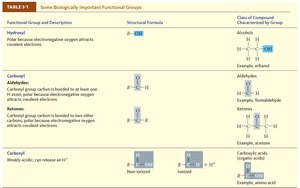
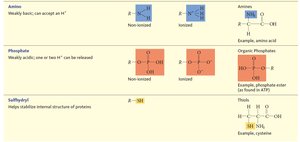
Functional groups are specific chemical groups common in organic molecules. They determine the unique properties and chemical reactivity of molecules, often being more reactive than the carbon backbone.
Functional Group | Structure | Properties | Example |
|---|---|---|---|
Hydroxyl | -OH | Polar, forms hydrogen bonds | Ethanol |
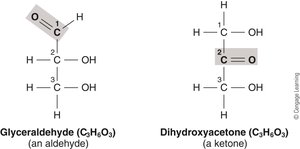
Carbonyl | C=O | Polar, found in ketones and aldehydes | Acetone, formaldehyde |
Carboxyl | -COOH | Acidic, found in amino acids | Acetic acid |
Amino | -NH2 | Basic, found in proteins | Amino acids |
Phosphate | -PO4 | Energy transfer, found in nucleic acids | ATP |
Sulfhydryl | -SH | Stabilizes proteins | Cysteine |
Methyl | -CH3 | Nonpolar | Methylated DNA |
Chapter 5: Structure and Function of Large Biological Molecules
Macromolecules and Polymers
Macromolecules are large organic molecules composed of repeating subunits called monomers. The four major classes are carbohydrates, lipids, proteins, and nucleic acids.
Monomer: Small organic molecule
Dimer: Two monomers joined
Polymer: Chains of monomers
Macromolecule: Very large organic molecule
Synthesis and Breakdown of Polymers
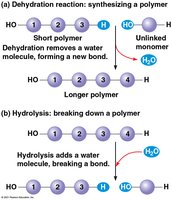
Polymers are synthesized by dehydration (condensation) reactions, which remove water to form bonds. They are broken down by hydrolysis, which adds water to break bonds.
Dehydration Reaction: Monomers bond together, water is removed
Hydrolysis Reaction: Polymers are disassembled, water is added


Classes of Organic Molecules
The four major classes of macromolecules are carbohydrates, lipids, proteins, and nucleic acids. Each class has unique structures and functions essential for life.
Carbohydrates: Energy storage and structural support
Lipids: Energy storage, membrane structure, hormones
Proteins: Enzymes, structural support, transport, signaling
Nucleic Acids: Genetic information storage and transfer
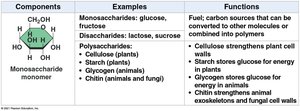
Carbohydrates
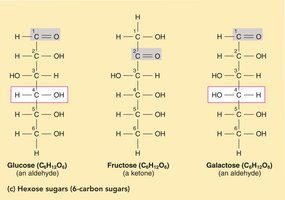
Carbohydrates are composed of carbon, hydrogen, and oxygen in a 1:2:1 ratio. They are hydrophilic and include sugars, starches, glycogen, and cellulose.
Monosaccharides: Single sugar units (3–7 carbons), energy source
Disaccharides: Two sugar units, short-term energy storage
Polysaccharides: Many sugar units, long-term energy storage and structural support
Polysaccharides
Polysaccharides differ in structure and function. Starch and glycogen are energy storage molecules, while cellulose is structural and non-digestible.
Starch: Plants, energy storage
Glycogen: Animals, energy storage
Cellulose: Plants, structural support
Lipids
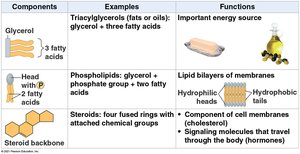
Lipids are hydrophobic molecules composed mainly of carbon and hydrogen. They include triglycerides, phospholipids, steroids, and carotenoids.
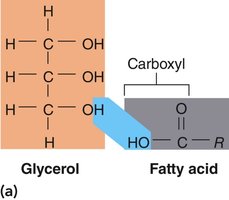
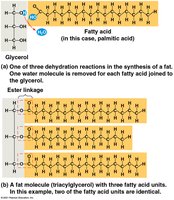
Triglycerides: Main energy storage lipid, composed of glycerol and three fatty acids
Phospholipids: Amphipathic, major component of cell membranes
Steroids: Four fused carbon rings, hormones and membrane components
Saturated vs Unsaturated Fatty Acids
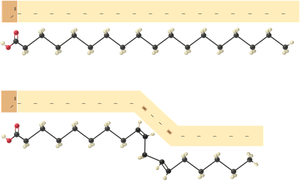
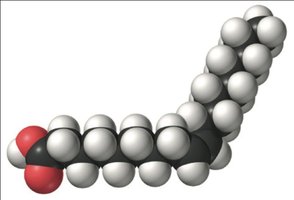
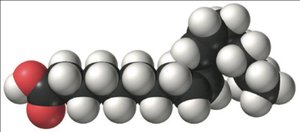
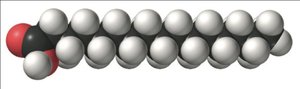
Saturated fatty acids have only single bonds and are solid at room temperature. Unsaturated fatty acids contain one or more double bonds, causing bends in the chain and are liquid at room temperature.
Saturated: Animal fats, solid
Unsaturated: Plant oils, fish fats, liquid
Phospholipids and Cell Membranes
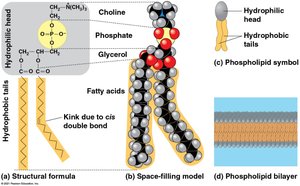
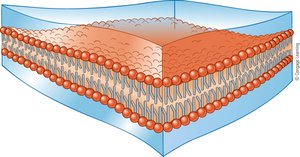
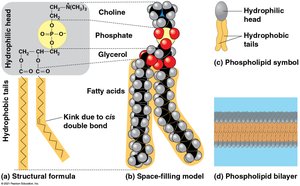
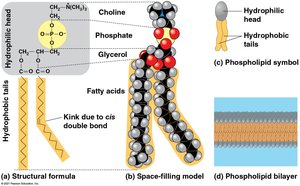
Phospholipids are amphipathic molecules with hydrophilic heads and hydrophobic tails. They self-assemble into bilayers, forming the structural basis of cell membranes.
Hydrophilic Head: Glycerol, phosphate, organic group
Hydrophobic Tails: Two fatty acids
Steroids
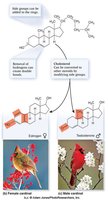
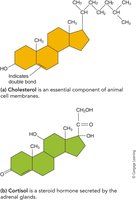
Steroids are lipids with a four-ring carbon structure. Cholesterol is a key component of animal cell membranes and a precursor for steroid hormones.
Cholesterol: Membrane component, precursor for hormones
Hormones: Testosterone, estrogen
Proteins
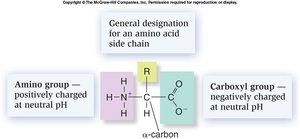
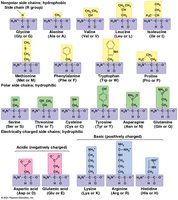
Proteins are macromolecules composed of amino acids. They perform a wide range of functions, including catalysis, structure, transport, and signaling.
Amino Acids: 20 types, each with a unique R group
Polypeptide: Chain of amino acids
Protein Structure: Determined by sequence and folding
Protein Structure and Folding
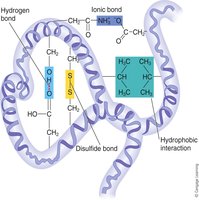
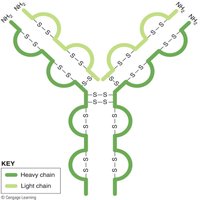
Proteins fold into specific three-dimensional shapes, which determine their function. There are four levels of protein structure: primary, secondary, tertiary, and quaternary.
Primary: Amino acid sequence
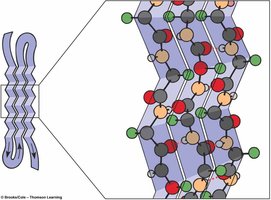
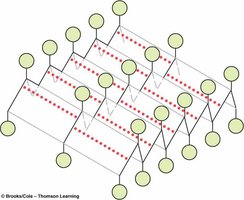
Secondary: Hydrogen bonding (alpha helix, beta sheet)
Tertiary: 3D shape, interactions between R groups
Quaternary: Multiple polypeptides
Protein Structure and Disease
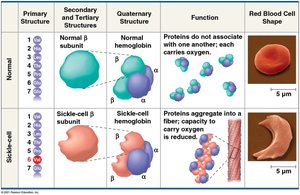
A change in primary structure can affect protein function. Sickle-cell disease results from a single amino acid substitution in hemoglobin, causing red blood cells to deform.
Protein Denaturation
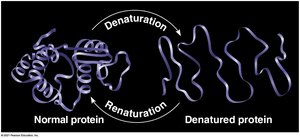
Denaturation is the loss of a protein's native structure, often caused by heat, pH changes, or chemicals. This process is usually irreversible and results in loss of function.
Nucleic Acids
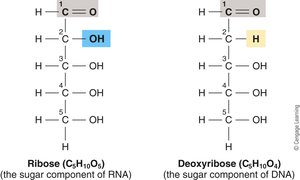
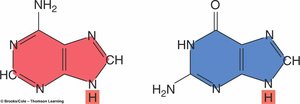
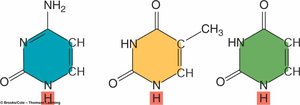
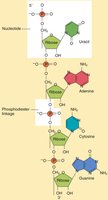
Nucleic acids are polymers of nucleotides, which consist of a phosphate group, a sugar (ribose or deoxyribose), and a nitrogenous base. DNA and RNA are the two main types.
DNA: Double-stranded, stores genetic information
RNA: Single-stranded, directs protein synthesis
Summary Table: Classes of Biologically Important Organic Compounds
Class | Components | Examples | Functions |
|---|---|---|---|
Carbohydrates | Monosaccharides | Glucose, fructose | Energy source, structural support |
Lipids | Glycerol, fatty acids | Triglycerides, phospholipids, steroids | Energy storage, membrane structure, hormones |
Proteins | Amino acids | Enzymes, structural proteins | Catalysis, structure, transport, signaling |
Nucleic Acids | Nucleotides | DNA, RNA | Genetic information storage and transfer |