 Indietro
Ch. 27/28 Study Guide: Domains of Life, Prokaryote Diversity, and Protists
Guida di studio - Note intelligenti
 Appunti personalizzati basati sui tuoi materiali, ampliati con definizioni chiave, esempi e contesto.
Domains of Life
Three Domains: Bacteria, Archaea, and Eukarya
The classification of life into three domains—Bacteria, Archaea, and Eukarya—is based on fundamental differences in cellular structure, genetics, and biochemistry. Understanding these domains is essential for grasping the diversity and evolutionary relationships among living organisms.
Bacteria: Prokaryotic, cell walls contain peptidoglycan, lack membrane-bound organelles.
Archaea: Prokaryotic, cell walls lack peptidoglycan, unique membrane lipids, some genes similar to eukaryotes.
Eukarya: Eukaryotic, cells have membrane-bound organelles, nuclear envelope, includes protists, fungi, plants, and animals.
Key Characters that Set Domains Apart:
Initiator amino acid for protein synthesis
Presence/absence of nuclear envelope
Membrane lipid structure
Cell wall composition
Number and type of RNA polymerases
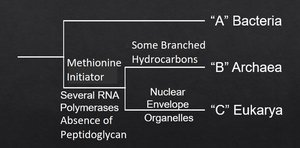
Phylogenetic Relationships
Phylogenetic trees illustrate evolutionary relationships among the three domains, showing their divergence from a universal ancestor and the major groups within each domain.
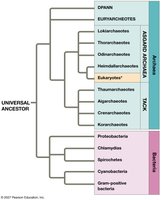
Prokaryote Diversity
Major Groups of Bacteria and Archaea
Bacteria and Archaea are highly diverse, with numerous phyla distinguished by structural, metabolic, and ecological characteristics. The ongoing debate about the placement of Eukarya within the tree of life highlights the complexity of evolutionary relationships.
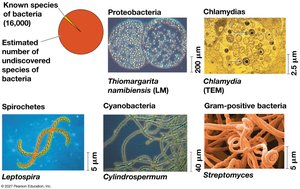
Prokaryote Structure
Prokaryotes are unicellular organisms (sometimes colonial) with a simple cellular structure. They lack membrane-bound organelles and have circular chromosomes.
Size range: 1–5 µm (some exceptions, e.g., Thiomargarita namibiensis up to 750 µm)
No membrane-bound organelles
Circular chromosomes (loop)
Cell-Surface Structures
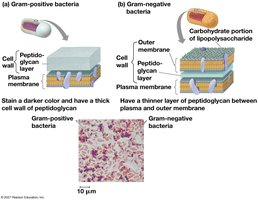
The cell wall is a critical structure in prokaryotes, providing shape and protection. Bacterial cell walls contain peptidoglycan, while archaeal cell walls are chemically distinct.
Gram-positive bacteria: Thick peptidoglycan layer, stains dark purple.
Gram-negative bacteria: Thin peptidoglycan layer, outer membrane, stains pink.
Motility and Internal Structures
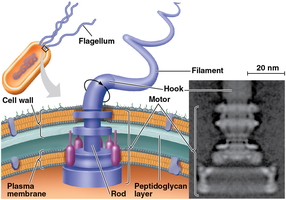
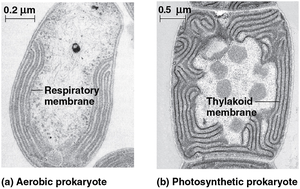
Many prokaryotes are motile, moving by means of flagella. Prokaryotic flagella are structurally different from those of eukaryotes. Some prokaryotes have specialized membranes for metabolic functions.
Flagella: Used for movement, distinct structure from eukaryotic flagella.
Specialized membranes: Respiratory or photosynthetic membranes.
DNA Structure and Genome
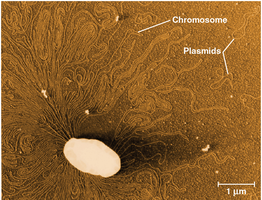
Prokaryotic genomes are typically small and consist of circular, naked DNA. Bacteria lack histones, while some archaeans possess them.
Genome size: About 1/1000 that of eukaryotes
Plasmids: Small, circular DNA molecules separate from the chromosome
Growth and Reproduction
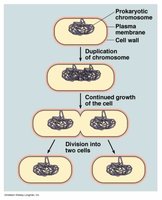
Prokaryotes reproduce rapidly by binary fission, an asexual process. This rapid reproduction, combined with mutation and genetic recombination, generates significant genetic variation.
Binary fission: Simple cell division
Mutation rate: High due to large population sizes
Genetic recombination: Transformation, transduction, conjugation
Genetic Recombination in Prokaryotes
Genetic recombination increases genetic diversity in prokaryotes, contributing to adaptation and antibiotic resistance.
Transformation: Uptake of foreign DNA from the environment
Transduction: Transfer of DNA by bacteriophages (viruses)
Conjugation: Direct transfer of DNA between cells via a pilus
Example: A nonpathogenic cell can acquire pathogenic traits through transformation.
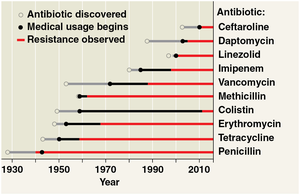
Antibiotic Resistance
Antibiotic resistance arises from genetic variation and recombination, posing a major challenge in medicine. Resistance can develop rapidly after the introduction of new antibiotics.
Nutritional Modes
Prokaryotes exhibit diverse nutritional strategies, classified as autotrophs or heterotrophs.
Mode | Energy Source | Carbon Source |
|---|---|---|
Photoautotroph | Light | CO2 |
Chemolithoautotroph | Inorganic chemicals | CO2 |
Photoheterotroph | Light | Organic compounds |
Chemoheterotroph | Organic compounds | Organic compounds |
Ecological Importance and Symbiosis
Bacteria and archaea are essential components of ecosystems, participating in nutrient cycling and forming symbiotic relationships with other organisms.
Mutualistic: Both partners benefit
Commensalistic: One benefits, the other is unaffected
Microbiome: Community of microorganisms living in and on organisms
Protists
Kingdom Protista: Characteristics and Diversity
Protists are eukaryotic, mostly unicellular organisms with highly diverse structures, nutritional modes, and reproductive strategies. The kingdom Protista is not monophyletic, meaning it does not include all descendants of a common ancestor.
Eukaryotic, mostly unicellular
Diverse in nutrition, movement, and reproduction
Not a monophyletic group
Protist Supergroups
Protists are classified into four major supergroups based on molecular and structural characteristics:
Excavata: Characterized by cytoskeleton and feeding groove
SAR: Monophyletic, includes stramenopiles, alveolates, rhizarians
Archaeplastida: Includes red algae, green algae, and plants
Unikonta: Includes animals, fungi, and some protists
Example: Plants are descended from green algae within Archaeplastida.
Diversity of Structure and Movement
Protists display a wide range of structural adaptations and movement mechanisms.
Some lack mitochondria (thought to be ancient eukaryotes)
Movement by flagella, cilia, or pseudopodia
Examples: Euglena (flagella), Paramecium (cilia), amoebas (pseudopodia)
Diversity of Nutrition
Protists include photosynthetic, heterotrophic, and mixotrophic species.
Photosynthetic: Euglenozoans, diatoms, golden algae, dinoflagellates, brown algae, red algae, green algae
Heterotrophic: Many amoebas, ciliates
Mixotrophic: Some protists can switch between nutritional modes
Reproductive Strategies
Protists have varied reproductive strategies, including zygotic life cycles and alternation of generations.
Zygotic life cycle: Haploid cells become gametes, fuse to form zygotes (e.g., Plasmodium)
Alternation of generations: Two types of multicellular organisms (haploid and diploid), common in algae and land plants
Summary: The domains of life, prokaryote diversity, and protists represent fundamental concepts in biology, illustrating the complexity and variety of life forms, their evolutionary relationships, and their ecological roles.
