 Indietro
Study Guide: Domains of Life, Prokaryote Diversity, and Protists
Guida di studio - Note intelligenti
 Appunti personalizzati basati sui tuoi materiali, ampliati con definizioni chiave, esempi e contesto.
Domains of Life
Three Domains: Bacteria, Archaea, and Eukarya
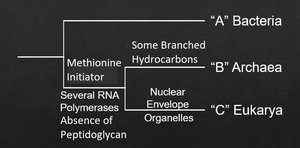
The classification of life is organized into three major domains: Bacteria, Archaea, and Eukarya. Each domain is defined by unique structural, genetic, and biochemical characteristics.
Bacteria: Prokaryotic, cell walls contain peptidoglycan, lack membrane-bound organelles.
Archaea: Prokaryotic, cell walls lack peptidoglycan, unique membrane lipids, some genes similar to eukaryotes.
Eukarya: Eukaryotic, cells have membrane-bound organelles, nuclear envelope, includes plants, animals, fungi, and protists.
Key distinguishing traits: Initiator methionine, RNA polymerases, presence/absence of peptidoglycan, nuclear envelope, and organelles.
Phylogenetic Relationships
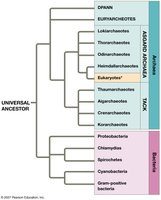
Phylogenetic trees illustrate evolutionary relationships among the domains and their major groups. The universal ancestor gave rise to diverse lineages within Bacteria and Archaea, with Eukarya branching from within Archaea.
Prokaryote Diversity
Bacterial Diversity
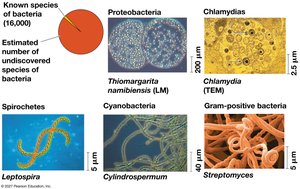
Bacteria are highly diverse, with thousands of known species and many more undiscovered. Major groups include Proteobacteria, Chlamydias, Spirochetes, Cyanobacteria, and Gram-positive bacteria.
Proteobacteria: Includes many well-known bacteria, such as Thiomargarita namibiensis.
Chlamydias: Intracellular parasites.
Spirochetes: Spiral-shaped, some cause disease.
Cyanobacteria: Photosynthetic, important for oxygen production.
Gram-positive bacteria: Thick peptidoglycan cell wall.
Archaeal Diversity
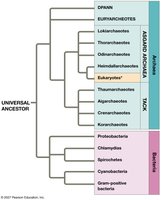
Archaea are found in extreme environments and include groups such as Euryarchaeotes, Thaumarchaeotes, and others. Some are extremophiles, thriving in high temperatures or salinity.
Prokaryote Structure
Cell Surface Structures
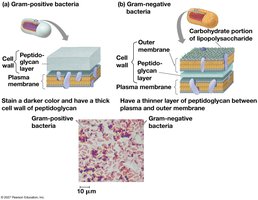
Prokaryotes have cell walls that provide shape and protection. Bacterial cell walls contain peptidoglycan, while archaeal cell walls are chemically distinct.
Gram-positive bacteria: Thick peptidoglycan layer, stains dark purple.
Gram-negative bacteria: Thin peptidoglycan layer, outer membrane, stains pink.
Motility and Internal Structures
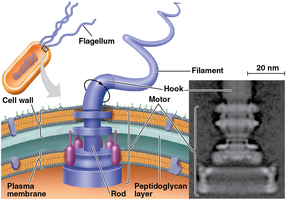
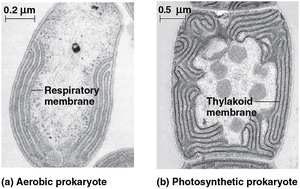
Many prokaryotes are motile, moving via flagella. Prokaryotic flagella are structurally distinct from eukaryotic flagella. Some prokaryotes have specialized membranes for metabolic functions.
DNA Structure and Genome
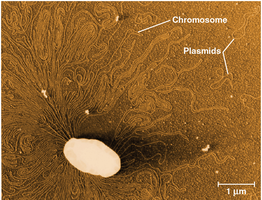
Prokaryotic genomes are typically circular and lack histones (except some Archaea). The genome size is much smaller than that of eukaryotes.
Prokaryote Growth and Reproduction
Binary Fission
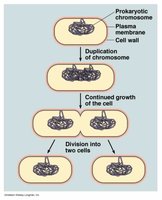
Prokaryotes reproduce asexually by binary fission, a process in which the cell duplicates its chromosome and divides into two identical cells. This allows rapid population growth.
Binary fission: Simple cell division, no mitosis.
Mutation: High rates of mutation due to rapid reproduction.
Genetic Variation and Recombination
Despite asexual reproduction, prokaryotes achieve genetic variation through mutation and three processes of genetic recombination:
Transformation: Uptake of foreign DNA from the environment.
Transduction: Transfer of DNA by bacteriophages (viruses).
Conjugation: Direct transfer of DNA between cells via a pilus.
Antibiotic Resistance
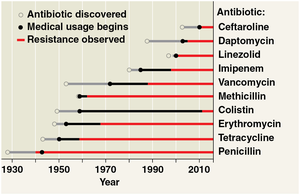
Genetic variation and recombination contribute to the evolution of antibiotic resistance in prokaryotes. Resistance can arise quickly due to mutation and horizontal gene transfer.
Nutritional Modes of Prokaryotes
Major Nutritional Modes
Prokaryotes display diverse nutritional strategies:
Autotrophs: Use inorganic carbon (CO2) as a carbon source.
Heterotrophs: Require organic carbon sources.
Phototrophs: Use light as an energy source.
Chemotrophs: Use chemicals as an energy source.
Ecological Importance of Prokaryotes
Symbiotic Relationships
Prokaryotes play essential roles in ecosystems, including symbiotic relationships with other organisms. These relationships can be mutualistic, commensalistic, or parasitic.
Protists
Defining Protists
Protists are eukaryotic organisms, mostly unicellular, and highly diverse. They are not a monophyletic group, meaning they do not all share a single common ancestor exclusive to them.
Protist Supergroups
Protists are classified into four major supergroups based on molecular and structural characteristics:
Excavata: Characterized by a unique cytoskeleton and, in some, an excavated feeding groove.
SAR: Monophyletic group including Stramenopiles, Alveolates, and Rhizarians.
Archaeplastida: Includes red algae, green algae, and plants; plastids originated from endosymbiosis with cyanobacteria.
Unikonta: Includes animals, fungi, and some protists; divided into amoebozoans and opisthokonts.
Diversity of Nutrition, Movement, and Reproduction
Protists exhibit a wide range of nutritional modes (photosynthetic, heterotrophic), movement (flagella, cilia, pseudopodia), and reproductive strategies (asexual, sexual, alternation of generations).
Movement: Flagella (e.g., Euglena), cilia (e.g., Paramecium), pseudopodia (e.g., amoebas).
Reproduction: Zygotic life cycle, alternation of generations.
Example: Plasmodium (causes malaria) has a complex life cycle involving two hosts.
Additional info: Protists are important in aquatic ecosystems, as primary producers and as part of food webs.
