 Indietro
Study Guide: Evolution, Gene Regulation, and Phylogeny (Chapters 23, 24, 20)
Guida di studio - Note intelligenti
 Appunti personalizzati basati sui tuoi materiali, ampliati con definizioni chiave, esempi e contesto.
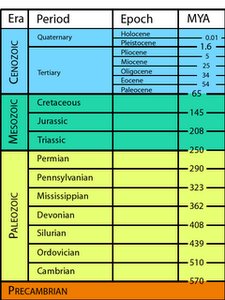
Q1. Use the tables to suggest which radioisotopic elements should be measured to determine the age of samples believed to be taken from the Permian period. Explain your answer.
Background
Topic: Radiometric Dating and Geological Time
This question tests your understanding of how scientists use radioactive isotopes to date rocks and fossils, and how to select the appropriate isotope based on the age of the sample.
Key Terms and Concepts:
Radioisotope: An isotope with an unstable nucleus that decays over time, releasing radiation.
Half-life: The time it takes for half of a radioactive substance to decay.
Radiometric dating: A method for determining the age of rocks and fossils using the decay rates of radioactive isotopes.
Permian period: A geological period that occurred approximately 290–250 million years ago.
Step-by-Step Guidance
Identify the age range of the Permian period using the geological time scale (approximately 290–250 million years ago).
Examine the table of radioisotopic decay rates and their useful dating ranges.
Compare the age of the Permian period to the useful dating ranges for each isotope.
Eliminate isotopes whose useful dating range does not include the Permian period (e.g., Carbon-14 is only useful up to 60,000 years).
Set up your answer by listing the isotopes that are appropriate for dating rocks from the Permian period, based on their half-lives and useful ranges.
Try solving on your own before revealing the answer!
Final Answer:
The Permian period is approximately 290–250 million years ago. The appropriate radioisotopic elements to measure would be Potassium-40 (useful dating range: 10 million–4.5 billion years) and Uranium-238 (useful dating range: 10 million–4.5 billion years). Both have half-lives long enough to accurately date rocks from the Permian period. Carbon-14 is not suitable because its range is much too short.
Q2. There was a major accumulation of oxygen in the atmosphere 2.7 billion years ago. What led to this change in the environment and why is it significant in the history of life on Earth?
Background
Topic: Evolution of Earth's Atmosphere and Biological Impact
This question explores the origin of atmospheric oxygen and its effects on the evolution of life.
Key Terms and Concepts:
Photosynthesis: The process by which certain organisms convert light energy into chemical energy, producing oxygen as a byproduct.
Cyanobacteria: Early photosynthetic prokaryotes responsible for oxygen production.
Great Oxygenation Event: The period when oxygen began to accumulate in Earth's atmosphere.
Step-by-Step Guidance
Recall which organisms were responsible for the initial production of oxygen on Earth.
Describe the process by which these organisms produced oxygen.
Explain how the accumulation of oxygen changed Earth's environment.
Discuss the significance of this event for the evolution of aerobic organisms and the development of complex life.
Try solving on your own before revealing the answer!
Final Answer:
The accumulation of oxygen in the atmosphere was primarily due to photosynthetic activity by cyanobacteria. This oxygenation event allowed for the evolution of aerobic respiration and paved the way for more complex, multicellular life forms. It also led to the formation of the ozone layer, which protects life from harmful UV radiation.
Q3. List some of the evidence supporting an endosymbiotic origin of mitochondria and plastids.
Background
Topic: Endosymbiotic Theory
This question tests your understanding of the evidence that mitochondria and plastids (e.g., chloroplasts) originated from free-living prokaryotes that were engulfed by ancestral eukaryotic cells.
Key Terms and Concepts:
Endosymbiosis: A symbiotic relationship where one organism lives inside another.
Mitochondria and plastids: Organelles in eukaryotic cells responsible for energy production and photosynthesis, respectively.
Step-by-Step Guidance
Recall the main features of mitochondria and plastids that suggest a prokaryotic origin.
List structural and genetic evidence (e.g., double membranes, circular DNA, ribosomes).
Consider similarities between these organelles and modern prokaryotes (e.g., size, reproduction by binary fission).
Set up your answer by organizing the evidence into categories (structural, genetic, biochemical).
Try solving on your own before revealing the answer!
Final Answer:
Evidence for the endosymbiotic origin of mitochondria and plastids includes: (1) both have double membranes, (2) they contain their own circular DNA similar to bacterial genomes, (3) they have ribosomes similar to those of bacteria, and (4) they reproduce independently within the cell by a process similar to binary fission. These features strongly support the hypothesis that these organelles originated from engulfed prokaryotes.
Q4. Based on the fossil record, the invasion of land by animals occurred around 150 mya. Describe the types of fossil evidence of animal morphology you would look for to support this statement.
Background
Topic: Fossil Evidence for Evolutionary Transitions
This question asks you to consider what morphological features in fossils would indicate the transition of animals from water to land.
Key Terms and Concepts:
Transitional fossils: Fossils that show intermediate states between ancestral forms and their descendants.
Adaptations for terrestrial life: Features such as limbs, lungs, and changes in body structure.
Step-by-Step Guidance
Identify key adaptations that would be necessary for life on land (e.g., limbs for walking, lungs for breathing air).
Describe what types of fossilized structures you would expect to find (e.g., limb bones, vertebral columns, evidence of digits).
Explain how these features differ from those of fully aquatic ancestors.
Set up your answer by listing the morphological evidence you would look for in the fossil record.
Try solving on your own before revealing the answer!
Final Answer:
Fossil evidence supporting the invasion of land by animals would include the presence of limb bones with joints and digits, changes in the structure of the vertebral column for supporting body weight, and evidence of lungs or other adaptations for breathing air. Transitional fossils like Tiktaalik show these features, bridging the gap between aquatic and terrestrial vertebrates.
Q5. Marsupials probably evolved in what is now North America and Asia, yet their greatest diversity is found in Australia. How can you account for this biogeographic distribution?
Background
Topic: Biogeography and Continental Drift
This question explores how the movement of continents and the isolation of populations can explain the current distribution of marsupials.
Key Terms and Concepts:
Biogeography: The study of the geographic distribution of species.
Continental drift: The movement of Earth's continents over geological time.
Adaptive radiation: The diversification of a group of organisms into forms filling different ecological niches.
Step-by-Step Guidance
Recall the history of continental drift and the breakup of supercontinents like Pangaea and Gondwana.
Explain how ancestral marsupials could have dispersed to Australia before it became isolated.
Discuss how isolation and lack of competition in Australia allowed marsupials to diversify.
Set up your answer by connecting these concepts to the observed distribution of marsupials.
Try solving on your own before revealing the answer!
Final Answer:
Marsupials likely originated in North America or Asia and dispersed to Australia via land connections before the continents separated. Once Australia became isolated, marsupials underwent adaptive radiation in the absence of placental mammal competitors, leading to their high diversity there today.
Q6. Mammals originated 180 million years ago but did not change much until their adaptive radiation 65 mya. Explain this observation using your understanding of mass extinctions and speciation.
Background
Topic: Mass Extinction and Adaptive Radiation
This question asks you to connect the timing of mammalian diversification to major extinction events and the opening of ecological niches.
Key Terms and Concepts:
Mass extinction: A rapid decrease in the diversity and abundance of life on Earth.
Adaptive radiation: The rapid evolution of diversely adapted species from a common ancestor.
Speciation: The formation of new and distinct species in the course of evolution.
Step-by-Step Guidance
Recall when mammals first appeared and when the mass extinction at the end of the Cretaceous occurred (about 65 mya).
Explain how the extinction of dominant groups (e.g., dinosaurs) opened up ecological niches.
Describe how mammals diversified to fill these niches after the extinction event.
Set up your answer by linking the timing of adaptive radiation to the mass extinction event.
Try solving on your own before revealing the answer!
Final Answer:
Mammals remained relatively unchanged while dinosaurs dominated most ecological niches. After the mass extinction event 65 million years ago, many niches became available, allowing mammals to undergo adaptive radiation and diversify into the forms we see today.
Q7. How does Hawaii illustrate the concept of adaptive radiation?
Background
Topic: Adaptive Radiation in Isolated Environments
This question focuses on how isolated environments like Hawaii promote the diversification of species from a common ancestor.
Key Terms and Concepts:
Adaptive radiation: The evolution of many diverse species from a common ancestor in response to the availability of new habitats and resources.
Endemism: Species that are found only in a specific geographic location.
Step-by-Step Guidance
Recall what makes Hawaii unique in terms of geography and isolation.
Describe how a small number of colonizing species can give rise to many new species in an isolated environment.
Give examples of Hawaiian organisms that have undergone adaptive radiation (e.g., honeycreepers, silversword plants).
Set up your answer by explaining the process and significance of adaptive radiation in Hawaii.
Try solving on your own before revealing the answer!
Final Answer:
Hawaii's isolation allowed a few colonizing species to diversify into many new species, each adapted to different ecological niches. This is seen in groups like the Hawaiian honeycreepers and silversword plants, which show a wide variety of forms and functions due to adaptive radiation.
